

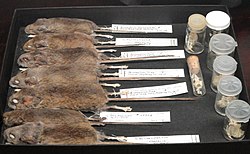


Deer Mouse
Peromyscus maniculatus
Silhouette: Nina Skinner · PhyloPic
- KingdomAnimalia (Animals)
- PhylumChordata (Chordates)
- ClassMammalia (Mammals)
- OrderRodentia (Rodents)
- FamilyCricetidae (Hamsters, Voles, Lemmings, and Allies)
- GenusPeromyscus (North American Deer Mice)
- SpeciesPeromyscus maniculatus (Deer Mouse)
About the Deer Mouse
The eastern deer mouse (Peromyscus maniculatus) is a rodent native to eastern North America. It is a species of the genus Peromyscus, a closely related group of New World mice often called "deermice". When formerly grouped with the western deermouse (P. sonoriensis), it was once referred to as the North American deermouse, a species that is no longer recognized. It is fairly widespread across most of North America east of the Mississippi River, with the major exception being the lowland Southeastern United States.
Like certain other Peromyscus species, it can be a vector and carrier of emerging infectious diseases such as hantaviruses and Lyme disease. It is closely related to Peromyscus leucopus, the white-footed mouse. The species in its former broad sense had 61 subspecies, but some of these now belong to P. sonoriensis. They are all tiny mammals that are plentiful in number. The eastern deermouse is a small rodent that lives in eastern North America and is closely related to the white-footed mouse, Peromyscus leucopus. Because the two species are extremely similar in appearance, they are best distinguished through red blood cell agglutination tests or karyotype techniques... Wikipedia →
Recent sightings of Deer Mouse in Olympic National Park
LIVEiNaturalistClosest Relatives at Olympic National Park
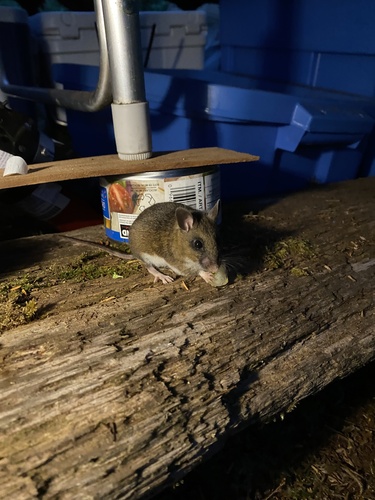
 Northwestern Deermouse
Peromyscus keeni

 Townsend's Vole
Microtus townsendii

 Bushy-tailed Wood Rat
Neotoma cinerea

 Muskrat
Ondatra zibethicus

 Southern Red-backed Vole
Myodes gapperi

Creeping Vole
Microtus oregoni

 Douglas' Squirrel
Tamiasciurus douglasii

 Olympic Marmot
Marmota olympus

 Yellow-pine Chipmunk
Tamias amoenus

Townsend's Chipmunk
Tamias townsendii

American Red Squirrel
Tamiasciurus hudsonicus

 Eastern Gray Squirrel
Sciurus carolinensis
Global Distribution
Warmer areas are where this animal is recorded most often.
Parks Where Found
| # | Park | Country | Daily sighting probability |
|---|---|---|---|
| 1 | Isle Royale National Park | 🇺🇸 United States | |
| 2 | Point Pelee National Park | 🇨🇦 Canada | |
| 3 | Acadia National Park | 🇺🇸 United States | |
| 4 | Cape Breton Highlands National Park | 🇨🇦 Canada | |
| 5 | Yosemite National Park | 🇺🇸 United States | |
| 6 | Shenandoah National Park | 🇺🇸 United States |
Quick answers
What are the chances of seeing a Deer Mouse in Olympic National Park?
Under 5% of wildlife watchers report a Deer Mouse sighting in Olympic National Park, based on 15 verified sightings from GBIF citizen-science data.
When is the best time to see Deer Mouse in Olympic National Park?
September has the highest sighting rate for Deer Mouse in Olympic National Park in our monthly data.