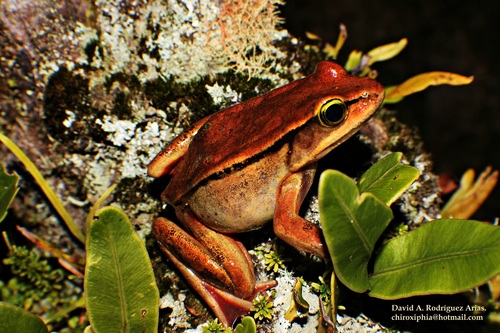

Rana Montanera
Lithobates vibicarius
Silhouette: Jose Carlos Arenas-Monroy · PhyloPic
- KingdomAnimalia (Animals)
- PhylumChordata (Chordates)
- ClassAmphibia (Amphibians)
- OrderAnura (Frogs and Toads)
- FamilyRanidae (Typical Frogs)
- GenusLithobates (American Water Frogs)
- SpeciesLithobates vibicarius (Rana Montanera)
About the Rana Montanera
Lithobates vibicarius, commonly known as either green-eyed frog (after its green eyes) or Rancho Redondo frog (after its type locality in Costa Rica), is a species of frog in the family Ranidae from highland rainforests in Costa Rica and western Panama.
Lithobates vibicarius are relatively large frogs, 6–9 cm (2.4–3.5 in) in snout–vent length. Dorsal colouration is variable: golden, greenish, or dull brown; juveniles are usually green. There are at least some darker markings on the dorsum of most individuals. The dorsolateral folds typically have black linings on the outer edges. A black face mask is typical. The upper lip has white lining. The iris is green. Feet are extensively webbed.
Breeding may occur throughout the year but is concentrated to the early parts of the rainy season. Calling and mating take place at night. Males generally call from vegetation in water. The call is a low, harsh trill. Eggs are laid in large, round gelatinous masses in shallow bodies of water, attached to the vegetation.
Lithobates vibicarius is a semi-aquatic frog found in lower montane and lower portions of montane rainforest. They... Wikipedia →
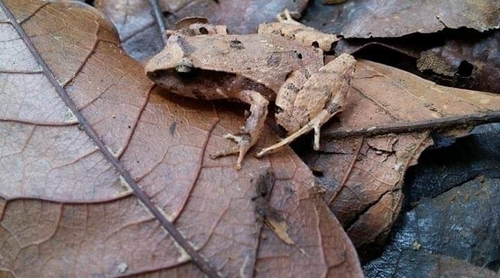
Recent sightings of Rana Montanera in Poás Volcano National Park
LIVEiNaturalistClosest Relatives at Poás Volcano National Park




Global Distribution
Warmer areas are where this animal is recorded most often.
Parks Where Found
| # | Park | Country | Daily sighting probability |
|---|---|---|---|
| 1 | Poás Volcano National Park | 🇨🇷 Costa Rica | |
| 2 | Braulio Carrillo National Park | 🇨🇷 Costa Rica | |
| 3 | Arenal Volcano National Park | 🇨🇷 Costa Rica |
Quick answers
What are the chances of seeing a Rana Montanera in Poás Volcano National Park?
About 10% of wildlife watchers report a Rana Montanera sighting in Poás Volcano National Park, based on 8 verified sightings from GBIF citizen-science data.
When is the best time to see Rana Montanera in Poás Volcano National Park?
July has the highest sighting rate for Rana Montanera in Poás Volcano National Park in our monthly data.