


Brown Tree Snake
Boiga irregularis
- KingdomAnimalia (Animals)
- PhylumChordata (Chordates)
- ClassSquamata
- FamilyColubridae (Colubrid Snakes)
- GenusBoiga (Australasian Cat Snakes)
- SpeciesBoiga irregularis (Brown Tree Snake)
About the Brown Tree Snake
The brown tree snake (Boiga irregularis), also known as the brown catsnake, is an arboreal rear-fanged colubrid snake native to eastern and northern coastal Australia, eastern Indonesia (Sulawesi to Papua), Papua New Guinea, and many islands in northwestern Melanesia. The snake is slender, which facilitates climbing, and can reach up to 2 metres in length. Its coloration may also vary, some being brown, green, or even red. Brown tree snakes prey on a wide range of animals, from invertebrates to birds and even some small mammals. It is one of the very few colubrids found in Australia, where elapids are more common.
Due to an accidental introduction after the events of World War II, this snake is now infamous for being an invasive species responsible for extirpating the majority of the native bird population in Guam. Currently, efforts are being made to reduce and control the population on Guam and prevent the snake from spreading to other locations. Researchers are employing various methods, including aerial baiting, to attempt to control the population, while multiple agencies continue to fund and support the species' removal.
The brown tree snake is a nocturnal, arboreal... Wikipedia →
Closest Relatives at Raja Ampat
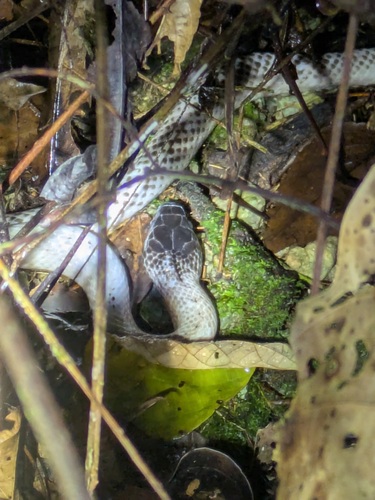
Rainbow Ground Snake
Stegonotus iridis
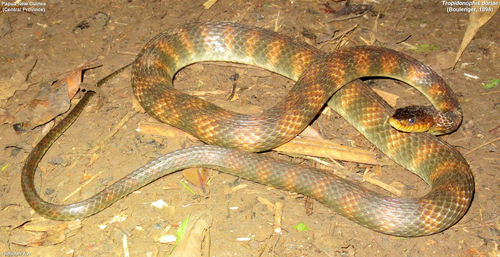
Barred keelback
Tropidonophis doriae

Coconut Tree Snake
Dendrelaphis calligaster
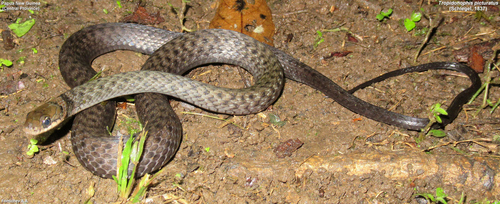
Painted keelback
Tropidonophis picturatus
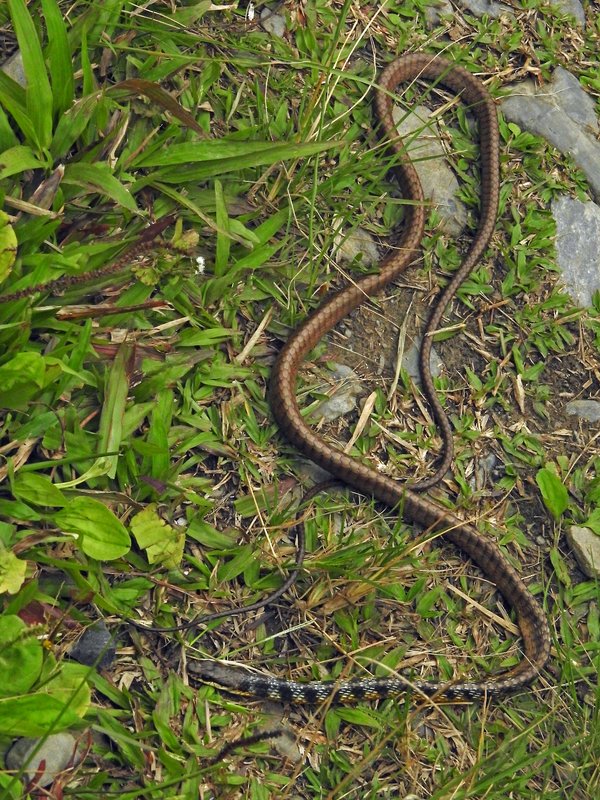
New Guinea Bronzeback
Dendrelaphis lineolatus

De Rooij's Groundsnake
Stegonotus derooijae
Bird's Head Peninsula Groundsnake
Stegonotus cucullatus
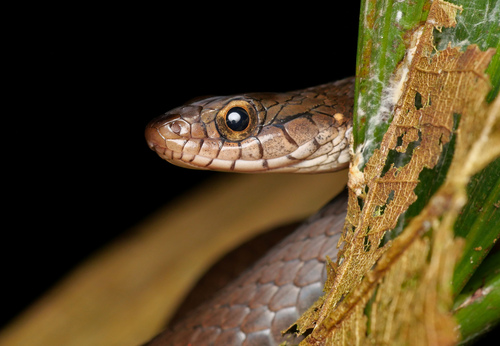
Many-scaled keelback
Tropidonophis multiscutellatus
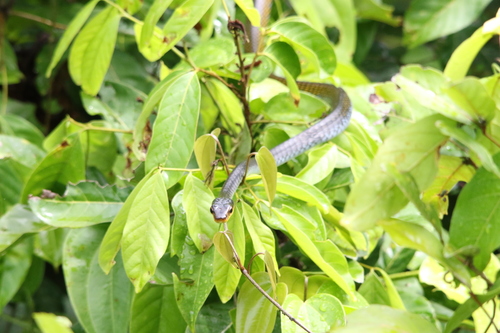
Big-eyed Tree Snake
Dendrelaphis macrops
Global Distribution
Where this species is recorded worldwide. Restricted to human observations from 2019 onwards — the same kind of record and the same period the probabilities on this page are built from, so collar-tracking studies, camera-trap arrays and museum specimens are excluded. Around Santa Rosa that removes 5,924 GPS fixes from a handful of tagged jaguars.
where this species is recorded (GBIF density — it tracks where observers go, not how likely a sighting is) · parks where it occurs — tap a pin for the sighting probability there
Parks Where Found
| # | Park | Country | Daily sighting probability |
|---|---|---|---|
| 1 | Litchfield National Park | 🇦🇺 Australia | |
| 2 | Daintree National Park | 🇦🇺 Australia | |
| 3 | Kakadu National Park | 🇦🇺 Australia | |
| 4 | Tangkoko Nature Reserve | 🇮🇩 Indonesia | |
| 5 | Raja Ampat | 🇮🇩 Indonesia | |
| 6 | Nitmiluk National Park | 🇦🇺 Australia | |
| 7 | Lamington National Park | 🇦🇺 Australia | |
| 8 | Springbrook National Park | 🇦🇺 Australia | |
| 9 | Noosa National Park | 🇦🇺 Australia | |
| 10 | Royal National Park | 🇦🇺 Australia | |
| 11 | Blue Mountains National Park | 🇦🇺 Australia |
Quick answers
What are the chances of seeing a Brown Tree Snake in Raja Ampat?
About 30% of wildlife watchers report a Brown Tree Snake sighting in Raja Ampat, based on 31 verified sightings from GBIF citizen-science data.
When is the best time to see Brown Tree Snake in Raja Ampat?
February has the highest sighting rate for Brown Tree Snake in Raja Ampat in our monthly data.