


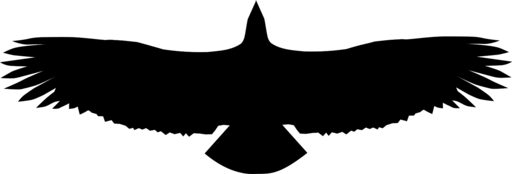
Himalayan Vulture
Gyps himalayensis
Silhouette: Shyamal · PhyloPic
- KingdomAnimalia (Animals)
- PhylumChordata (Chordates)
- ClassAves (Birds)
- OrderAccipitriformes (Hawks, Eagles, Kites, and Allies)
- FamilyAccipitridae (Hawks, Eagles, and Kites)
- GenusGyps (Griffon Vultures)
- SpeciesGyps himalayensis (Himalayan Vulture)
About the Himalayan Vulture
The Himalayan vulture (Gyps himalayensis) or Himalayan griffon vulture is an Old World vulture native to the Himalayas and foothills in North and Northeastern India, as well as the adjacent Tibetan Plateau. After the cinereous vulture (Aegypius monachus), it is the second-largest Old World vulture species, and among the world's largest true raptors. It is listed as Near Threatened on the IUCN Red List. It is not to be confused with the Eurasian griffon vulture (Gyps fulvus), which is a visually similar, sympatric species.
The Himalayan vulture has dark brown greater covert feathers, tail and wing quills, but a pale buff uniform upperside and paler tipped inner secondaries; its legs are covered with buffy feathers and vary in colour from greenish grey to pale brown. The underside and under-wing coverts are pale brown or buff, almost white in some individuals. The whitish down on the head of immatures changes to yellowish in adults who have a long and pale brown ruff with white streaks and long and spiky ruff feathers.
The pale blue facial skin is lighter than the dark blue in Gyps fulvus with this species having a yellowish bill. In flight the long fingers are splayed... Wikipedia →
Recent sightings of Himalayan Vulture in Ranthambore National Park
LIVEiNaturalistClosest Relatives at Ranthambore National Park

 Indian Vulture
Gyps indicus

Indian White-rumped Vulture
Gyps bengalensis

 Griffon Vulture
Gyps fulvus

 Crested Serpent Eagle
Spilornis cheela

 Black-winged Kite
Elanus caeruleus

 Oriental Honey-buzzard
Pernis ptilorhynchus

White-eyed Buzzard
Butastur teesa

 Black Kite
Milvus migrans

 Hen Harrier
Circus cyaneus

 Bonelli's Eagle
Aquila fasciata

 Red-headed Vulture
Sarcogyps calvus

 Egyptian Vulture
Neophron percnopterus
Global Distribution
Warmer areas are where this animal is recorded most often.
Parks Where Found
| # | Park | Country | Daily sighting probability |
|---|---|---|---|
| 1 | Jiuzhaigou National Park | 🇨🇳 China | |
| 2 | Kaziranga National Park | 🇮🇳 India | |
| 3 | Langtang National Park | 🇳🇵 Nepal | |
| 4 | Jim Corbett National Park | 🇮🇳 India | |
| 5 | Gobi Gurvansaikhan National Park | 🇲🇳 Mongolia | |
| 6 | Chitwan National Park | 🇳🇵 Nepal | |
| 7 | Royal Bardia National Park | 🇳🇵 Nepal | |
| 8 | Khangchendzonga National Park | 🇮🇳 India | |
| 9 | Royal Manas National Park | 🇧🇹 Bhutan | |
| 10 | Manas National Park | 🇮🇳 India | |
| 11 | Namdapha National Park | 🇮🇳 India | |
| 12 | Bandhavgarh National Park | 🇮🇳 India | |
| 13 | Keoladeo National Park | 🇮🇳 India | |
| 14 | Kanha National Park | 🇮🇳 India | |
| 15 | Khao Yai National Park | 🇹🇭 Thailand | |
| 16 | Ranthambore National Park | 🇮🇳 India |