
Red Tree Vole
Arborimus longicaudus
- KingdomAnimalia (Animals)
- PhylumChordata (Chordates)
- ClassMammalia (Mammals)
- OrderRodentia (Rodents)
- FamilyCricetidae (Hamsters, Voles, Lemmings, and Allies)
- GenusArborimus (Tree Voles)
- SpeciesArborimus longicaudus (Red Tree Vole)
About the Red Tree Vole
The red tree vole (Arborimus longicaudus) is a rodent of the Pacific Northwest, found in the US states of Oregon and California. They were formerly known as Phenacomys longicaudus and have also been called the red tree mouse.
The red tree vole is a rodent in the family Cricetidae. It is found only in coastal forests of Oregon and northern California. They feed exclusively on the needles of conifers, primarily Douglas-fir (Pseudotsuga menziesii), though they occasionally eat the needles of western hemlock (Tsuga heterophylla), Sitka spruce (Picea sitchensis), grand fir (Abies grandis), and Bishop pine (Pinus muricata).
Red tree voles are about 6-8 in long, including the tail. When they are young, they exhibit a dull brown coat and develop a more reddish color with age. They are nocturnal and very difficult to see, but they can be detected by finding piles or wads of resin ducts (see below) on the ground.
Red tree voles live almost exclusively in Douglas-fir trees, though they have occasionally been found in Sitka spruce and western hemlock (Tsuga heterophylla). They sometimes spend their lives in just one tree, and in very large trees with... Wikipedia →
Closest Relatives at Redwood National Park

Sonoma Tree Vole
Arborimus pomo

Deer Mouse
Peromyscus maniculatus

Western Red-backed Vole
Myodes californicus

Dusky-footed Woodrat
Neotoma fuscipes

Douglas' Squirrel
Tamiasciurus douglasii

Shadow Chipmunk
Tamias senex

American Beaver
Castor canadensis

Western Gray Squirrel
Sciurus griseus

Mountain Beaver
Aplodontia rufa

Fox Squirrel
Sciurus niger

Sonoma Chipmunk
Tamias sonomae
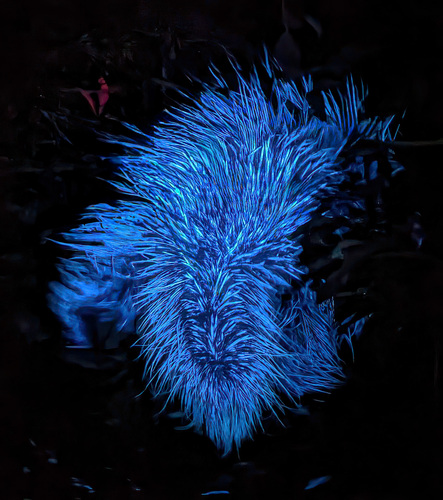
Quiller
Erethizon dorsatus
Global Distribution
Where this species is recorded worldwide. Restricted to human observations from 2019 onwards — the same kind of record and the same period the probabilities on this page are built from, so collar-tracking studies, camera-trap arrays and museum specimens are excluded. Around Santa Rosa that removes 5,924 GPS fixes from a handful of tagged jaguars.
where this species is recorded (GBIF density — it tracks where observers go, not how likely a sighting is) · parks where it occurs — tap a pin for the sighting probability there
Parks Where Found
| # | Park | Country | Daily sighting probability |
|---|---|---|---|
| 1 | Redwood National Park | 🇺🇸 United States |
More parks will be added in future updates.