


African Clawed Frog
Xenopus laevis
- KingdomAnimalia (Animals)
- PhylumChordata (Chordates)
- ClassAmphibia (Amphibians)
- OrderAnura (Frogs and Toads)
- FamilyPipidae (Clawed Frogs)
- GenusXenopus (African Clawed Frogs)
- SpeciesXenopus laevis (African Clawed Frog)
About the African Clawed Frog
The African clawed frog (Xenopus laevis), also known as simply xenopus, African clawed toad, African claw-toed frog or the platanna) is a species of African aquatic frog of the family Pipidae. Its name is derived from the short black claws on its feet. The word Xenopus means 'strange foot' and laevis means 'smooth'.
The species is found throughout much of Sub-Saharan Africa (Nigeria and Sudan to South Africa), and in isolated, introduced populations in North America, South America, Europe, and Asia. All species of the family Pipidae are tongueless, toothless and completely aquatic. They use their hands to shove food in their mouths and down their throats and a hyobranchial pump to draw or suck things in their mouth. Pipidae have powerful legs for swimming and lunging after food. They also use the claws on their feet to tear pieces of large food. They have no external eardrums, but instead subcutaneous cartilaginous disks that serve the same function. They use their sensitive fingers and sense of smell to find food. Pipidae are scavengers and will eat almost anything living, dying, or dead and any type of organic waste.
It is considered an invasive species in several countries, including across Europe. Wikipedia →
Closest Relatives at Saguaro National Park

Red-spotted Toad
Anaxyrus punctatus

Colorado River Toad
Incilius alvarius

Canyon Tree Frog
Dryophytes arenicolor

American Bullfrog
Lithobates catesbeianus

Couch's Spadefoot
Scaphiopus couchii

Lowland Leopard Frog
Lithobates yavapaiensis

Great Plains Toad
Anaxyrus cognatus

Mexican Spadefoot
Spea multiplicata
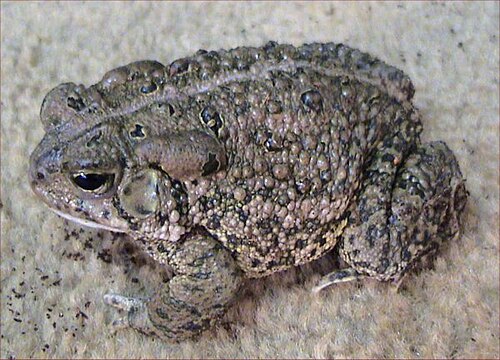
Woodhouse's Toad
Anaxyrus woodhousii
Global Distribution
Where this species is recorded worldwide. Restricted to human observations from 2019 onwards — the same kind of record and the same period the probabilities on this page are built from, so collar-tracking studies, camera-trap arrays and museum specimens are excluded. Around Santa Rosa that removes 5,924 GPS fixes from a handful of tagged jaguars.
where this species is recorded (GBIF density — it tracks where observers go, not how likely a sighting is) · parks where it occurs — tap a pin for the sighting probability there
Parks Where Found
| # | Park | Country | Daily sighting probability |
|---|---|---|---|
| 1 | Addo Elephant National Park | 🇿🇦 South Africa | |
| 2 | Garden Route National Park | 🇿🇦 South Africa | |
| 3 | iSimangaliso Wetland Park | 🇿🇦 South Africa | |
| 4 | Table Mountain National Park | 🇿🇦 South Africa | |
| 5 | Namib-Naukluft National Park | 🇳🇦 Namibia | |
| 6 | Kruger National Park | 🇿🇦 South Africa | |
| 7 | Channel Islands National Park | 🇺🇸 United States | |
| 8 | Waterberg Plateau Park | 🇳🇦 Namibia | |
| 9 | Nairobi National Park | 🇰🇪 Kenya | |
| 10 | Liwonde National Park | 🇲🇼 Malawi | |
| 11 | Moremi Game Reserve | 🇧🇼 Botswana | |
| 12 | Hluhluwe-Imfolozi Park | 🇿🇦 South Africa | |
| 13 | Pilanesberg National Park | 🇿🇦 South Africa | |
| 14 | Saguaro National Park | 🇺🇸 United States |