


Icterine Greenbul
Phyllastrephus icterinus
Silhouette: PhyloPic · PhyloPic
- KingdomAnimalia (Animals)
- PhylumChordata (Chordates)
- ClassAves (Birds)
- OrderPasseriformes (Perching Birds)
- FamilyPycnonotidae (Bulbuls)
- GenusPhyllastrephus (Typical Greenbuls and Brownbuls)
- SpeciesPhyllastrephus icterinus (Icterine Greenbul)
About the Icterine Greenbul
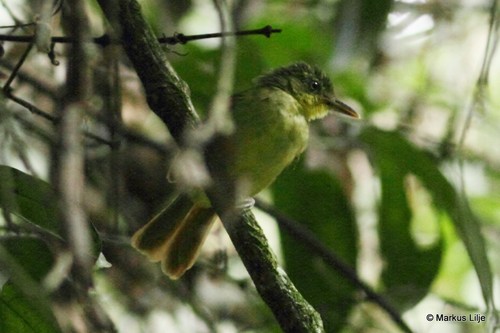
The icterine greenbul (Phyllastrephus icterinus) is a species of songbird in the bulbul family, Pycnonotidae. It is native to the African tropical rainforest. The icterine greenbul was originally described in the genus Trichophorus (a synonym for Criniger). The term icterine refers to its yellowish colouration. Formerly, some authorities have considered Sassi's greenbul to be a subspecies of the icterine greenbul. Alternate names for the icterine greenbul include the lesser icterine bulbul.
Until 2018, a rare colour morph of the icterine greenbul from the Cavalla forest in south-eastern Liberia was believed to be a separate species. The Liberian greenbul (Phyllastrephus leucolepis) was known from only a few sightings between 1981 and 1984, and a specimen collected in 1984. This specimen is now considered to have been a plumage aberration. A 2017 DNA analysis revealed that the bird(s) were common icterine greenbuls, albeit with unusual plumage colouring, which may have been caused by a nutritional deficiency. Alternative names for the Liberian greenbul included the spot-winged bulbul, spot-winged greenbul and white-winged greenbul... Wikipedia →
Recent sightings of Icterine Greenbul in Semuliki National Park
LIVEiNaturalistClosest Relatives at Semuliki National Park
 Xavier's Greenbul
Phyllastrephus xavieri

Toro Olive-Greenbul
Phyllastrephus hypochloris

White-throated Greenbul
Phyllastrephus albigularis

Leaf-love
Phyllastrephus scandens

Cabanis's Greenbul
Phyllastrephus cabanisi

Yellow-streaked Bulbul
Phyllastrephus flavostriatus
_(18173983286)%2C_Phyllastrephus_lorenzi.jpg/330px-Annalen_des_Naturhistorischen_Museums_in_Wien_(1916)_(18173983286)%2C_Phyllastrephus_lorenzi.jpg)
Sassi's Greenbul
Phyllastrephus lorenzi

Red-tailed Greenbul
Criniger calurus

 Common Bulbul
Pycnonotus barbatus

Little Greenbul
Eurillas virens

Common Bristlebill
Bleda syndactylus

Yellow-whiskered Greenbul
Eurillas latirostris
Global Distribution
Warmer areas are where this animal is recorded most often.
Parks Where Found
| # | Park | Country | Daily sighting probability |
|---|---|---|---|
| 1 | Semuliki National Park | 🇺🇬 Uganda | |
| 2 | Bwindi Impenetrable National Park | 🇺🇬 Uganda | |
| 3 | Virunga National Park | 🇨🇩 Democratic Republic of the Congo |
Quick answers
What are the chances of seeing a Icterine Greenbul in Semuliki National Park?
About 20% of wildlife watchers report a Icterine Greenbul sighting in Semuliki National Park, based on 75 verified sightings from GBIF citizen-science data.
When is the best time to see Icterine Greenbul in Semuliki National Park?
August has the highest sighting rate for Icterine Greenbul in Semuliki National Park in our monthly data.