


Bornean Crested Fireback
Lophura ignita
- KingdomAnimalia (Animals)
- PhylumChordata (Chordates)
- ClassAves (Birds)
- OrderGalliformes (Landfowl)
- FamilyPhasianidae (Pheasants, Grouse, and Allies)
- GenusLophura (Gallopheasants)
- SpeciesLophura ignita (Bornean Crested Fireback)
About the Bornean Crested Fireback
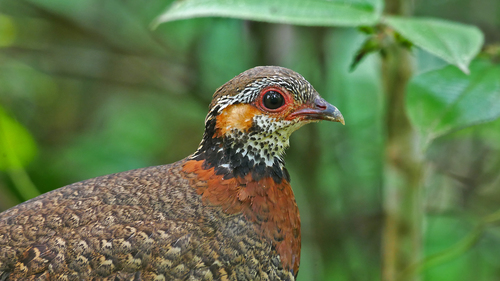
The Bornean crested fireback, Lophura ignita, is a large, sexually dimorphic, and distinctly-coloured pheasant of the family Galliformes endemic to the rainforests of Borneo and the surrounding islands. It is a non-migrating omnivorous species, often seen in groups of 5–6 in the rainforest lowlands. As of 2020 they were classified as Vulnerable by the IUCN due to population decline from habitat loss and deforestation, hunting, and trapping for the cage bird trade.
The Bornean crested fireback maintains a similar body plan to most other species in Galliformes (heavy bodied ground-dwellers). Similar to other species in the genus Lophura, L. ignita has strong coloration, with a dark plumage contrasting vibrant accents.
Before sex-specific coloration appears, juvenile females may be distinguished from males by their overall lighter plumage. The juveniles' plumage is like that of adult females, although they lack the crest seen on adults and have large black spots on the upper wing coverts. The adult female of related species, L. bulweri, often look like juvenile L. ignitia, but they can be distinguished by the black covert spots seen in L. ignitia. As well... Wikipedia →


Global Distribution
Where this species is recorded worldwide. Restricted to human observations from 2019 onwards — the same kind of record and the same period the probabilities on this page are built from, so collar-tracking studies, camera-trap arrays and museum specimens are excluded. Around Santa Rosa that removes 5,924 GPS fixes from a handful of tagged jaguars.
where this species is recorded (GBIF density — it tracks where observers go, not how likely a sighting is) · parks where it occurs — tap a pin for the sighting probability there
Parks Where Found
| # | Park | Country | Daily sighting probability |
|---|---|---|---|
| 1 | Way Kambas National Park | 🇮🇩 Indonesia | |
| 2 | Danum Valley Conservation Area | 🇲🇾 Malaysia | |
| 3 | Taman Negara National Park | 🇲🇾 Malaysia | |
| 4 | Kinabatangan Wildlife Sanctuary | 🇲🇾 Malaysia | |
| 5 | Kaeng Krachan National Park | 🇹🇭 Thailand | |
| 6 | Tanjung Puting National Park | 🇮🇩 Indonesia | |
| 7 | Sepilok | 🇲🇾 Malaysia | |
| 8 | Kinabalu Park | 🇲🇾 Malaysia |