


Pale Giant Squirrel
Ratufa affinis
- KingdomAnimalia (Animals)
- PhylumChordata (Chordates)
- ClassMammalia (Mammals)
- OrderRodentia (Rodents)
- FamilySciuridae (Squirrels)
- GenusRatufa (Asian Giant Squirrels)
- SpeciesRatufa affinis (Pale Giant Squirrel)
About the Pale Giant Squirrel
The cream-coloured giant squirrel or pale giant squirrel (Ratufa affinis) is a large tree squirrel in the genus Ratufa found in forests in the Thai-Malay Peninsula, Sumatra (Indonesia), Borneo (Brunei, Indonesia and Malaysia) and nearby small islands. The species is near threatened and vulnerable to habitat degradation, and it has probably been extirpated in Singapore where the last sighting was in 1995. Reported sightings in Vietnam in 1984 are considered to be dubious.
The cream-coloured giant squirrel is one of the largest squirrels. It has a head–and–body length of 31–38 cm (1 ft 0 in – 1 ft 3 in), a tail length of 37–44 cm (1 ft 3 in – 1 ft 5 in) and weighs 875–1,500 g (1.929–3.307 lb). On average, adults of both sexes have a head–and–body length of about 34 cm (1 ft 1 in) and tail length of 42 cm (1 ft 5 in), while females weight about 1,250 g (2.76 lb) and males 1,050 g (2.31 lb).
As suggested by its name, the cream-coloured giant squirrel is typically overall cream to very light orangish-brown, while the underparts are whitish-cream. In Borneo and nearby small islands where it is the only Ratufa giant squirrel, some populations resemble cream-coloured giant... Wikipedia →
Closest Relatives at Sepilok

Prevost's Squirrel
Callosciurus prevostii

Red Giant Flying Squirrel
Petaurista petaurista

Plantain Squirrel
Callosciurus notatus

Least Pygmy Squirrel
Exilisciurus exilis

Black Flying Squirrel
Aeromys tephromelas

Low's Squirrel
Sundasciurus lowii

Ear-spot Squirrel
Callosciurus adamsi

Thomas's Flying Squirrel
Aeromys thomasi
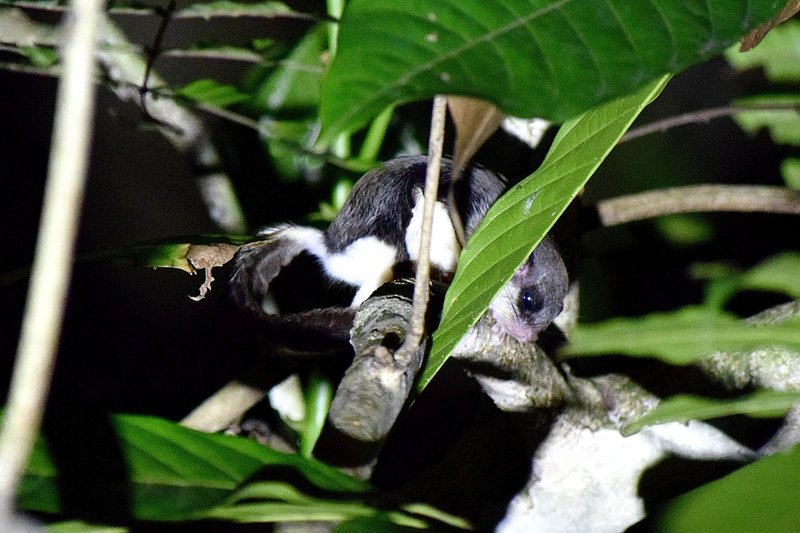
Hose's Pygmy Flying Squirrel
Petaurillus hosei
Global Distribution
Where this species is recorded worldwide. Restricted to human observations from 2019 onwards — the same kind of record and the same period the probabilities on this page are built from, so collar-tracking studies, camera-trap arrays and museum specimens are excluded. Around Santa Rosa that removes 5,924 GPS fixes from a handful of tagged jaguars.
where this species is recorded (GBIF density — it tracks where observers go, not how likely a sighting is) · parks where it occurs — tap a pin for the sighting probability there
Parks Where Found
| # | Park | Country | Daily sighting probability |
|---|---|---|---|
| 1 | Sepilok | 🇲🇾 Malaysia | |
| 2 | Danum Valley Conservation Area | 🇲🇾 Malaysia | |
| 3 | Kinabalu Park | 🇲🇾 Malaysia | |
| 4 | Kinabatangan Wildlife Sanctuary | 🇲🇾 Malaysia | |
| 5 | Way Kambas National Park | 🇮🇩 Indonesia | |
| 6 | Khao Luang National Park | 🇹🇭 Thailand | |
| 7 | Taman Negara National Park | 🇲🇾 Malaysia | |
| 8 | Gunung Leuser National Park | 🇮🇩 Indonesia |
Quick answers
What are the chances of seeing a Pale Giant Squirrel in Sepilok?
About 40% of wildlife watchers report a Pale Giant Squirrel sighting in Sepilok, based on 57 verified sightings from GBIF citizen-science data.
When is the best time to see Pale Giant Squirrel in Sepilok?
November has the highest sighting rate for Pale Giant Squirrel in Sepilok in our monthly data.