Gunung Leuser National Park
🇮🇩 Indonesia
🦧 Wild Sumatran Orangutans Roam FreelyGunung Leuser National Park is a vast tropical rainforest reserve on the island of Sumatra in Indonesia. Its dense canopy, steep jungle ridges, and muddy footpaths create a challenging environment for walking, yet this thick vegetation supports an extraordinary density of tree-dwelling wildlife. The park is especially famous for sheltering the Sumatran Orangutan, alongside energetic troops of Thomas’s Langur and social groups of Crab-eating Macaque that frequently forage near the forest edges during daylight hours.
3.305° N 97.661° E
Wildlife
⭐ Iconic Species
 ★
★ Sumatran Orangutan
Pongo abelii
 ★
★ Thomas’s Langur
Presbytis thomasi
 ★
★ Crab-eating Macaque
Macaca fascicularis
 ★
★ Rhinoceros Hornbill
Buceros rhinoceros
📊 Most Spotted

Wagler's Pit Viper
Tropidolaemus wagleri

Southern Pig-tailed Macaque
Macaca nemestrina

Yellow-vented Bulbul
Pycnonotus goiavier

Common Water Monitor
Varanus salvator

Lar Gibbon
Hylobates lar

Black-eared Barbet
Psilopogon duvaucelii

Many-lined Sun-skink
Eutropis multifasciata

River Toad
Phrynoidis asper

Oriental Garden Lizard
Calotes versicolor

Blue-crowned Hanging-Parrot
Loriculus galgulus

Common Bronze-back
Dendrelaphis pictus

Silvered Leaf Monkey
Trachypithecus cristatus
⭐ Iconic Species
★ Sumatran Orangutan
Pongo abelii
★ Thomas’s Langur
Presbytis thomasi
★ Crab-eating Macaque
Macaca fascicularis
📊 Most Spotted
Southern Pig-tailed Macaque
Macaca nemestrina
Lar Gibbon
Hylobates lar
Silvered Leaf Monkey
Trachypithecus cristatus

Siamang
Symphalangus syndactylus

Diadem Roundleaf Bat
Hipposideros diadema

Plantain Squirrel
Callosciurus notatus

Prevost's Squirrel
Callosciurus prevostii

Black Giant Squirrel
Ratufa bicolor

Black Sumatran Langur
Presbytis sumatrana

Sumatra Slow Loris
Nycticebus hilleri

Sun Bear
Helarctos malayanus

lesser sheath-tailed bat
Emballonura monticola
⭐ Iconic Species
📊 Most Spotted
Yellow-vented Bulbul
Pycnonotus goiavier
Black-eared Barbet
Psilopogon duvaucelii
Blue-crowned Hanging-Parrot
Loriculus galgulus

Gray-rumped Treeswift
Hemiprocne longipennis

Red-eyed Bulbul
Pycnonotus brunneus

Sooty-headed Bulbul
Pycnonotus aurigaster

Dark-necked Tailorbird
Orthotomus atrogularis

Ashy Tailorbird
Orthotomus ruficeps

Zebra Dove
Geopelia striata

Spectacled Bulbul
Rubigula erythropthalmos

Brown-throated Sunbird
Anthreptes malacensis

Common Iora
Aegithina tiphia
📊 Most Spotted
Wagler's Pit Viper
Tropidolaemus wagleri
Common Water Monitor
Varanus salvator
Many-lined Sun-skink
Eutropis multifasciata
Oriental Garden Lizard
Calotes versicolor
Common Bronze-back
Dendrelaphis pictus

Flat-tailed House Gecko
Hemidactylus platyurus

Malayan Soft-shelled Turtle
Dogania subplana

Green Crested Lizard
Bronchocela cristatella

Spiny Terrapin
Heosemys spinosa

Malayan Crested Lizard
Gonocephalus grandis

Spotted House Gecko
Gekko monarchus

Large Forest Gecko
Gekko smithii
📊 Most Spotted
River Toad
Phrynoidis asper

Common Tree Frog
Polypedates leucomystax

Poisonous Rock Frog
Odorrana hosii

Common Indian Toad
Duttaphrynus melanostictus

North Sumatra White-lipped Frog
Chalcorana parvaccola

Horned Toad
Megophrys nasuta

Alpine Cricket Frog
Fejervarya limnocharis

Green Paddy Frog
Hylarana erythraea

Kerinci Cascade Frog
Sumaterana crassiovis

Blyth's River Frog
Limnonectes blythii

Peter's Tree Frog
Nyctixalus pictus
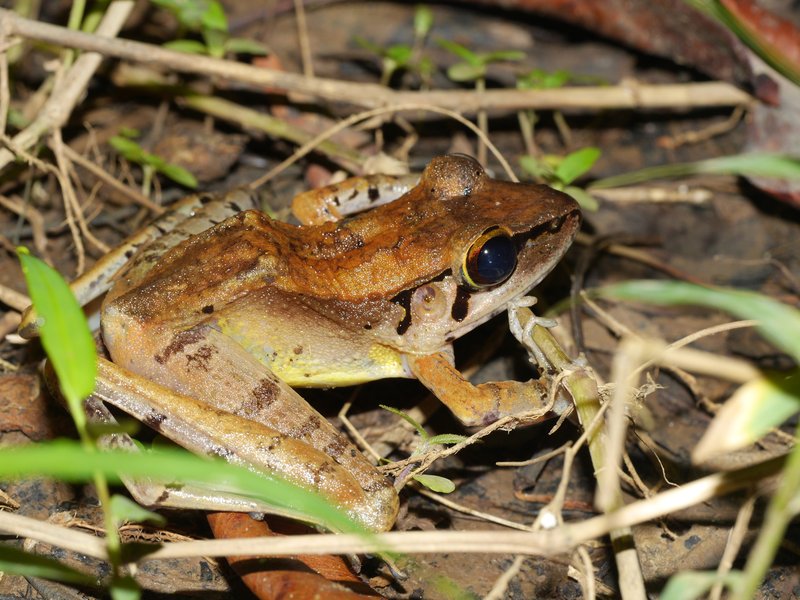
Sumatra Huia Frog
Huia sumatrana
Animal Events
2Gibbon Territorial Song Peaks
Lar Gibbons amplify their melodic morning calls to defend territory boundaries as seasonal resource competition shifts across the rainforest canopy.
3Hornbill Breeding and Nesting Season
Large hornbill species begin their unique cavity-sealing nesting behaviors, becoming prominent targets for birdwatchers across mature lowland trees.
1Primate Mating and Fruit Abundance
The peak fruiting season triggers heightened social interaction, vocalizations, and breeding activity among canopy dwellers like the Southern Pig-tailed Macaque and Siamang.
Sighting Calendar
Average chance of spotting the park's most-spotted species, month by month
- 1Primate Mating and Fruit Abundance
- 2Gibbon Territorial Song Peaks
- 3Hornbill Breeding and Nesting Season
Sighting Zones
Warm areas are where all species together are recorded most, so they track where people go as much as where animals are. For one species, see the map on its own page.
Where Wildlife Score
How good is this park for seeing wildlife?Biodiversity
ExcellentHow rich is the wildlife?
Sighting
GoodHow likely to see animals?
Quick answers
What animals can you see in Gunung Leuser National Park?
The most likely sightings are Sumatran Orangutan (seen by about 80% of wildlife watchers), Thomas’s Langur (seen by about 80% of wildlife watchers), Crab-eating Macaque (seen by about 70% of wildlife watchers), Wagler's Pit Viper (seen by about 70% of wildlife watchers), Southern Pig-tailed Macaque (seen by about 60% of wildlife watchers) — among 1160 recorded vertebrate species, based on citizen-science data from GBIF.
When is the best time to visit Gunung Leuser National Park for wildlife?
May has the highest combined sighting rate for the park's top species in our month-by-month GBIF data. The full sighting calendar on this page shows each species' best months.
Can you see Sumatran Orangutan in Gunung Leuser National Park?
Yes — about 80% of wildlife watchers report a Sumatran Orangutan sighting in Gunung Leuser National Park, based on 354 verified sightings from GBIF citizen-science data.
Can you see Thomas’s Langur in Gunung Leuser National Park?
Yes — about 80% of wildlife watchers report a Thomas’s Langur sighting in Gunung Leuser National Park, based on 263 verified sightings from GBIF citizen-science data.
Can you see Crab-eating Macaque in Gunung Leuser National Park?
Yes — about 70% of wildlife watchers report a Crab-eating Macaque sighting in Gunung Leuser National Park, based on 174 verified sightings from GBIF citizen-science data.
Can you see Rhinoceros Hornbill in Gunung Leuser National Park?
Yes — about 40% of wildlife watchers report a Rhinoceros Hornbill sighting in Gunung Leuser National Park, based on 158 verified sightings from GBIF citizen-science data.


