

Campo Grande Frog
Leptodactylus furnarius
Silhouette: Jose Carlos Arenas-Monroy · PhyloPic
- KingdomAnimalia (Animals)
- PhylumChordata (Chordates)
- ClassAmphibia (Amphibians)
- OrderAnura (Frogs and Toads)
- FamilyLeptodactylidae (Southern Frogs)
- GenusLeptodactylus (Neotropical Grass Frogs)
- SpeciesLeptodactylus furnarius (Campo Grande Frog)
About the Campo Grande Frog
Leptodactylus furnarius is a species of frogs in the family Leptodactylidae. It is found in Brazil, Uruguay, Argentina, and Paraguay. This frog lives in Brazil's cerrado, Atlantic forest, and pampa biomes and in ponds, swamps, and grassy places throughout its range. This frog has shown some tolerance to anthropogenic disturbance. For example, people have found it on Eucalyptus tree farms. Scientists have observed the frog between 200 and 1364 meters above sea level.
Scientists have reported the frog in some protected places, for example APA Corumbatai, Botucatu e Tejupa Perimetro Corumbatai, APA Jalapao, PARES do Jalapao, PARES Serra do Ouro Branco, PARNA da Chapada dos Veadeiros, PARNA Grande Sertao Veredas, RPPN Estancia Santa Ines, and RPPN Olavo Egydio Setubal.
The frog lays eggs underground. The tadpoles are washed into bodies of water after hatching. The IUCN classifies this species as least concern. In some places, habitat loss in favor of agriculture, mining, and dam and other infrastructure development poses some threat. Wikipedia →
Recent sightings of Campo Grande Frog in Serra da Canastra National Park
LIVEiNaturalistClosest Relatives at Serra da Canastra National Park

 Cuyaba Dwarf Frog
Physalaemus nattereri

Cuvier’s Foam Frog
Physalaemus cuvieri

 Rusty Toad
Rhinella rubescens

 Fazenda Salto tree frog
Bokermannohyla ibitiguara

 Yellow-spotted Tree Frog
Boana albopunctata

 Lutz's Poison Frog
Ameerega flavopicta

Cururu Toad
Rhinella diptycha
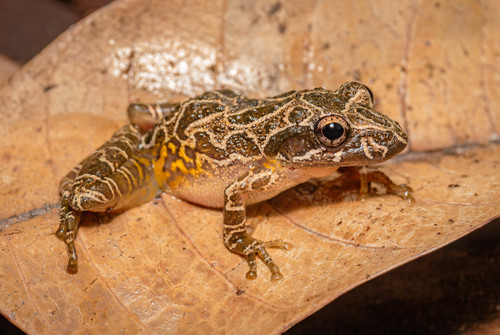
Alpinopolis Snouted Tree Frog
Scinax maracaya

Lesser Tree Frog
Dendropsophus minutus

Narrow-headed Tree Frog
Boana stenocephala

Ornate Forest toad
Rhinella ornata

Machado's Treefrog
Ololygon machadoi
Global Distribution
Warmer areas are where this animal is recorded most often.
Parks Where Found
| # | Park | Country | Daily sighting probability |
|---|---|---|---|
| 1 | Serra da Canastra National Park | 🇧🇷 Brazil |
More parks will be added in future updates.