

Yellow dyer tink frog
Diasporus citrinobapheus
Silhouette: Jose Carlos Arenas-Monroy · PhyloPic
- KingdomAnimalia (Animals)
- PhylumChordata (Chordates)
- ClassAmphibia (Amphibians)
- OrderAnura (Frogs and Toads)
- FamilyEleutherodactylidae (Rain Frogs)
- GenusDiasporus (Dink Frogs)
- SpeciesDiasporus citrinobapheus (Yellow dyer tink frog)
About the Yellow dyer tink frog
Diasporus citrinobapheus, the yellow dink frog or yellow dyer rainfrog, is a species of frog native to the Cordillera de Talamanca of western Panama. Adult males have snout–vent lengths of 17.3–19.7 mm (0.68–0.78 in) and adult females have one of 21.8 mm (0.86 in). The frog is almost entirely bright yellow and orange dorsally, with a colorless and mostly transparent underside. Males have yellow vocal sacs.
Diasporus citrinobapheus was formally described in 2012 based on an adult male specimen collected from Comarca Ngöbe-Buglé in Panama. The specific name citrinobapheus is derived from the Greek citrinos (citrin-yellow) and bapheus (dyer) referring to the yellow body color, which dyes one's fingers yellowish when the frog is handled. This species has the English common names yellow dink frog and yellow dyer rainfrog, as well as the Spanish common name Martillito Amarillo.
Diasporus citrinobapheus is most closely related to D. tigrillo. Adult males have snout–vent lengths of 17.3–19.7 mm (0.68–0.78 in) and adult females have one of 21.8 mm (0.86 in). The frog is almost entirely bright yellow and orange dorsally, with some individuals have dark grayish... Wikipedia →
Recent sightings of Yellow dyer tink frog in Soberanía National Park
LIVEiNaturalistClosest Relatives at Soberanía National Park

 Tink Frog
Diasporus diastema
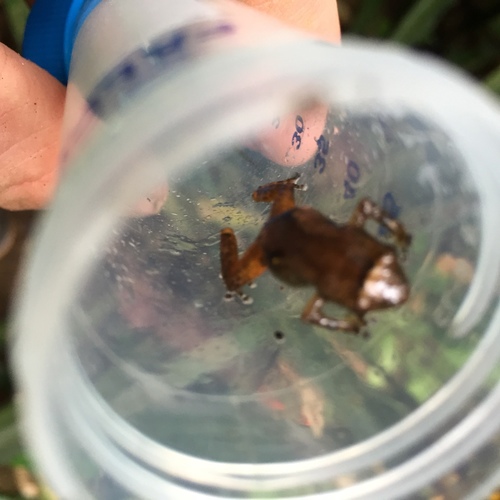
 Diasporus quidditus
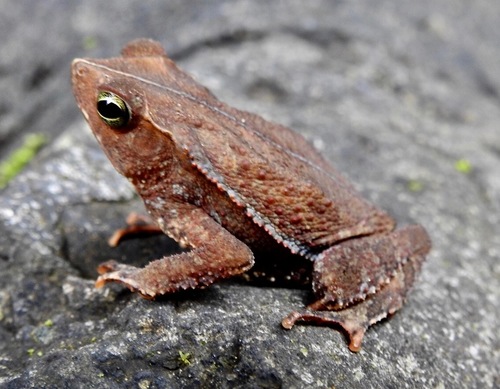
 Forest Toad
Rhinella alata

 Guayaquil Dwarf Frog
Engystomops pustulosus

 Red-eyed Treefrog
Agalychnis callidryas

Giant Marine Toad
Rhinella horribilis

 Rosenberg's Gladiator Frog
Boana rosenbergi

 Green and Black Dart-poison Frog
Dendrobates auratus

 Savage's Thin-toed Frog
Leptodactylus savagei
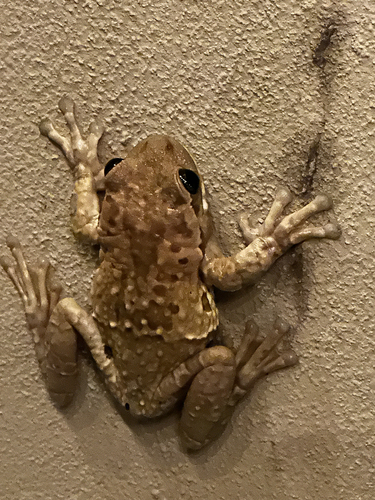
 Milk Frog
Trachycephalus macrotis

 Harlequin Treefrog
Dendropsophus ebraccatus

 Fitzinger's Robber Frog
Craugastor fitzingeri
Global Distribution
Warmer areas are where this animal is recorded most often.
Parks Where Found
| # | Park | Country | Daily sighting probability |
|---|---|---|---|
| 1 | Soberanía National Park | 🇵🇦 Panama |
More parks will be added in future updates.