



Green and Black Dart-poison Frog
Dendrobates auratus
Silhouette: Steven Traver · PhyloPic
- KingdomAnimalia (Animals)
- PhylumChordata (Chordates)
- ClassAmphibia (Amphibians)
- OrderAnura (Frogs and Toads)
- FamilyDendrobatidae (Poison Dart Frogs)
- GenusDendrobates
- SpeciesDendrobates auratus (Green and Black Dart-poison Frog)
About the Green and Black Dart-poison Frog
Dendrobates auratus, also known as the green-and-black poison dart frog, the green-and-black poison arrow frog, green-and-black poison frog, green poison dart frog, green poison arrow frog, and green poison frog, is a brightly-colored member of the order Anura native to southern Central America and Colombia. This species has also been introduced to Oahu, Hawaii in an effort to lower mosquito numbers. It is one of the most variably colored species of poison dart frogs, after D. tinctorius, Adelphobates galactonotus and some Oophaga species. From a conservation standpoint, it is considered to be of least concern by the International Union for Conservation of Nature.
D. auratus has the typical appearance of the members of its family; males average 0.75 in (1.9 cm) in snout–vent length, while females are slightly larger, averaging 1 in (2.5 cm) or longer. D. auratus is one of the most variable of all poison frogs in color and pattern. This variation is to some extent individual, but also depends heavily on exact location. Despite the common name green-and-black poison dart frog, some variants have no green or no black; a few, like the brown and cream-white Campana variant... Wikipedia →
Recent sightings of Green and Black Dart-poison Frog in Soberanía National Park
LIVEiNaturalistClosest Relatives at Soberanía National Park

 Rainforest Rocket Frog
Silverstoneia flotator

Panama Rocket Frog
Colostethus panamansis
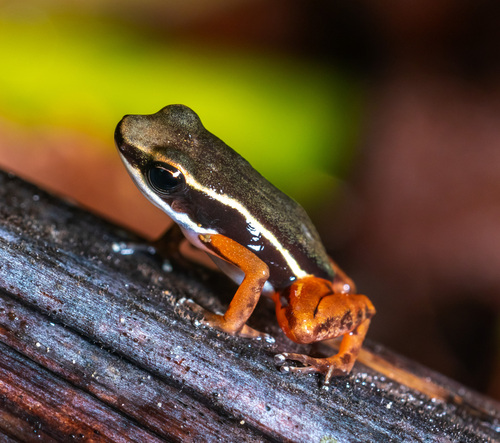
Boquete Rocket Frog
Silverstoneia nubicola

Pratt's Poison Frog
Colostethus pratti
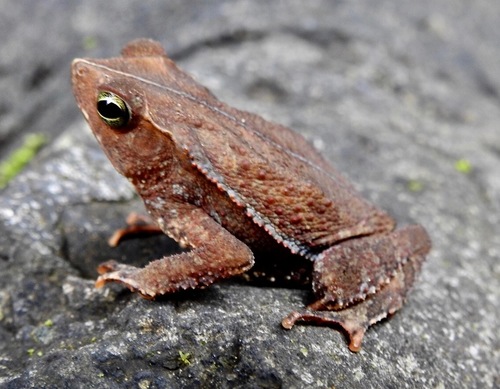
 Forest Toad
Rhinella alata

 Guayaquil Dwarf Frog
Engystomops pustulosus

 Red-eyed Treefrog
Agalychnis callidryas

Giant Marine Toad
Rhinella horribilis

 Rosenberg's Gladiator Frog
Boana rosenbergi

 Savage's Thin-toed Frog
Leptodactylus savagei
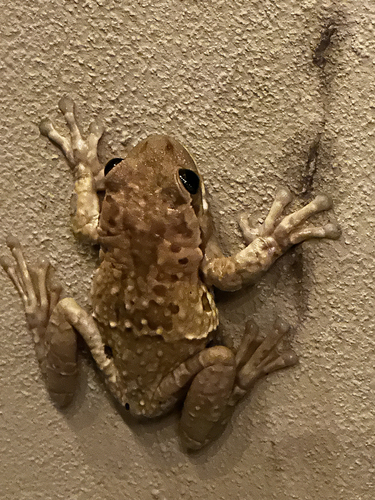
 Milk Frog
Trachycephalus macrotis

 Harlequin Treefrog
Dendropsophus ebraccatus
Global Distribution
Warmer areas are where this animal is recorded most often.
Parks Where Found
Quick answers
What are the chances of seeing a Green and Black Dart-poison Frog in Soberanía National Park?
About 40% of wildlife watchers report a Green and Black Dart-poison Frog sighting in Soberanía National Park, based on 158 verified sightings from GBIF citizen-science data.
When is the best time to see Green and Black Dart-poison Frog in Soberanía National Park?
May has the highest sighting rate for Green and Black Dart-poison Frog in Soberanía National Park in our monthly data.