

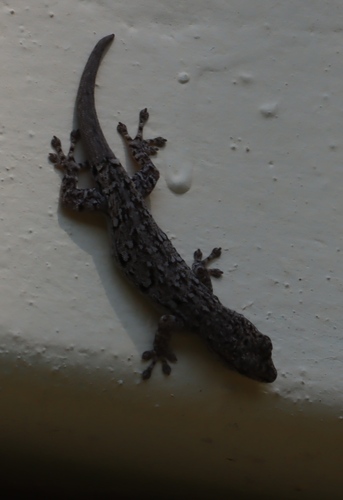
Fischer's Thick-toed Gecko
Chondrodactylus laevigatus
Silhouette: PhyloPic · PhyloPic
- KingdomAnimalia (Animals)
- PhylumChordata (Chordates)
- ClassSquamata
- FamilyGekkonidae (Typical Geckos)
- GenusChondrodactylus (Comb-toed Geckos)
- SpeciesChondrodactylus laevigatus (Fischer's Thick-toed Gecko)
7 Verified sightings at South Luangwa National Park From 2019 to 2026
230 Verified sightings across all 12 parks From 2019 to 2026
January Best month highest sighting rate
🌙 Nocturnal When it's spotted during nighttime hours (6pm–6am)
About the Fischer's Thick-toed Gecko
Button-scaled gecko (Chondrodactylus laevigatus) is a species of African gecko found in South Africa, Namibia, and Angola. Wikipedia →
Recent sightings of Fischer's Thick-toed Gecko in South Luangwa National Park
LIVEiNaturalist


Global Distribution
Warmer areas are where this animal is recorded most often.
Parks Where Found
| # | Park | Country | Daily sighting probability |
|---|---|---|---|
| 1 | Waterberg Plateau Park | 🇳🇦 Namibia | |
| 2 | Etosha National Park | 🇳🇦 Namibia | |
| 3 | Mana Pools National Park | 🇿🇼 Zimbabwe | |
| 4 | Liwonde National Park | 🇲🇼 Malawi | |
| 5 | Namib-Naukluft National Park | 🇳🇦 Namibia | |
| 6 | South Luangwa National Park | 🇿🇲 Zambia | |
| 7 | Hwange National Park | 🇿🇼 Zimbabwe | |
| 8 | Moremi Game Reserve | 🇧🇼 Botswana | |
| 9 | Chobe National Park | 🇧🇼 Botswana | |
| 10 | Lower Zambezi National Park | 🇿🇲 Zambia | |
| 11 | Kafue National Park | 🇿🇲 Zambia | |
| 12 | Ngorongoro Conservation Area | 🇹🇿 Tanzania |
Quick answers
What are the chances of seeing a Fischer's Thick-toed Gecko in South Luangwa National Park?
About 20% of wildlife watchers report a Fischer's Thick-toed Gecko sighting in South Luangwa National Park, based on 7 verified sightings from GBIF citizen-science data.
When is the best time to see Fischer's Thick-toed Gecko in South Luangwa National Park?
January has the highest sighting rate for Fischer's Thick-toed Gecko in South Luangwa National Park in our monthly data.