

Marsh Widowbird
Euplectes hartlaubi
Silhouette: Sheatherius · PhyloPic
- KingdomAnimalia (Animals)
- PhylumChordata (Chordates)
- ClassAves (Birds)
- OrderPasseriformes (Perching Birds)
- FamilyPloceidae (Weavers and Allies)
- GenusEuplectes (Bishops and Widowbirds)
- SpeciesEuplectes hartlaubi (Marsh Widowbird)
About the Marsh Widowbird
The marsh widowbird or Hartlaub's widowbird (Euplectes hartlaubi) is a bird in the family Ploceidae. The species was first described by José Vicente Barbosa du Bocage in 1878. It is found in Angola, Cameroon, the Republic of the Congo, the Democratic Republic of the Congo, Gabon, Kenya, Nigeria, Tanzania, Uganda, and Zambia. Wikipedia →
Recent sightings of Marsh Widowbird in South Luangwa National Park
LIVEiNaturalistClosest Relatives at South Luangwa National Park

 Red Bishop
Euplectes orix

Black-winged Bishop
Euplectes hordeaceus

White-winged Widowbird
Euplectes albonotatus

Yellow-rumped Widowbird
Euplectes capensis

Red-collared Widowbird
Euplectes ardens

Yellow-shouldered Widowbird
Euplectes macroura

Fan-tailed Widowbird
Euplectes axillaris

Red-billed Quelea
Quelea quelea

Red-billed Buffalo-Weaver
Bubalornis niger

Spectacled Weaver
Ploceus ocularis

Southern Masked Weaver
Ploceus velatus
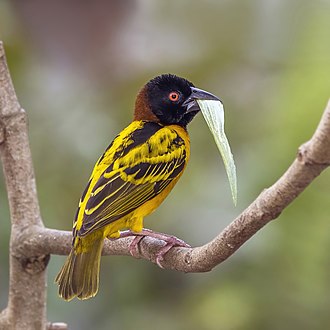
Village Weaver
Ploceus cucullatus
Global Distribution
Warmer areas are where this animal is recorded most often.
Parks Where Found
| # | Park | Country | Daily sighting probability |
|---|---|---|---|
| 1 | South Luangwa National Park | 🇿🇲 Zambia | |
| 2 | Kafue National Park | 🇿🇲 Zambia | |
| 3 | Queen Elizabeth National Park | 🇺🇬 Uganda | |
| 4 | Murchison Falls National Park | 🇺🇬 Uganda | |
| 5 | Virunga National Park | 🇨🇩 Democratic Republic of the Congo |
Quick answers
What are the chances of seeing a Marsh Widowbird in South Luangwa National Park?
About 10% of wildlife watchers report a Marsh Widowbird sighting in South Luangwa National Park, based on 33 verified sightings from GBIF citizen-science data.
When is the best time to see Marsh Widowbird in South Luangwa National Park?
December has the highest sighting rate for Marsh Widowbird in South Luangwa National Park in our monthly data.