



Land Mullet
Bellatorias major
Silhouette: David Orr · PhyloPic
- KingdomAnimalia (Animals)
- PhylumChordata (Chordates)
- ClassSquamata
- FamilyScincidae (Skinks)
- GenusBellatorias (Bellatorias Skinks)
- SpeciesBellatorias major (Land Mullet)
About the Land Mullet
The land mullet (Bellatorias major) is one of the largest members of the skink family (Scincidae). The species may reach total lengths of up to 60 cm (23.6 inches). They are uniform glossy black to brown, with a paler ring around the eye. Their colour, along with their large size, allow them to maintain a body temperature of 30 degrees Celsius; they spend much of the day basking in the sun. Adult males have slightly shorter bodies but slightly longer forelimbs and heads than adult females. The ventral side (belly) ranges in colouration from auburn (orange-brown) to white Juveniles have prominent cream lateral spots.
It is long-lived - with one captive female lizard known to have lived for at least 23 years. The common name "land mullet" is said to date back to Longman (1918), who reported it to be in common usage for the species around Tamborine Mountain. The name probably alludes to the superficial resemblance to the homonymous fish, which has a similarly blunt head, large scales and is of similar size and coloration.
Native to Australia, they are generally restricted to the rainforest of south-eastern Queensland, Australia. The... Wikipedia →
Recent sightings of Land Mullet in Springbrook National Park
LIVEiNaturalistClosest Relatives at Springbrook National Park

 Major Skink
Bellatorias frerei

Blue-speckled Forest Skink
Silvascincus murrayi

Eastern Water Skink
Eulamprus quoyii

 Pink-Tongued Lizard
Cyclodomorphus gerrardii

 Rainbow Skink
Lampropholis delicata

Dark Barsided Skink
Concinnia martini

Gully Shadeskink
Saproscincus spectabilis

Common Bluetongue
Tiliqua scincoides

Bar-sided Skink
Concinnia tenuis

Short-limbed Snake-skink
Ophioscincus truncatus

Open-litter Rainbow Skink
Carlia pectoralis
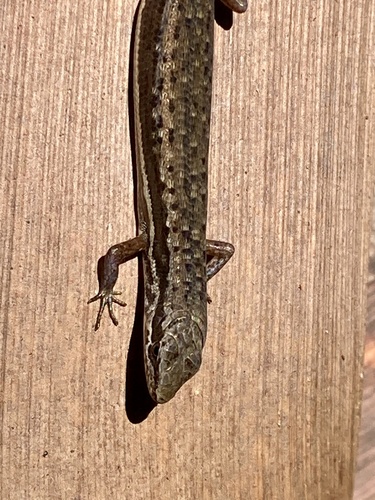
Highland Forest Skink
Saproscincus rosei
Global Distribution
Warmer areas are where this animal is recorded most often.
Parks Where Found
| # | Park | Country | Daily sighting probability |
|---|---|---|---|
| 1 | Lamington National Park | 🇦🇺 Australia | |
| 2 | Springbrook National Park | 🇦🇺 Australia |
Quick answers
What are the chances of seeing a Land Mullet in Springbrook National Park?
About 50% of wildlife watchers report a Land Mullet sighting in Springbrook National Park, based on 188 verified sightings from GBIF citizen-science data.
When is the best time to see Land Mullet in Springbrook National Park?
December has the highest sighting rate for Land Mullet in Springbrook National Park in our monthly data.