



Major Skink
Bellatorias frerei
Silhouette: David Orr · PhyloPic
- KingdomAnimalia (Animals)
- PhylumChordata (Chordates)
- ClassSquamata
- FamilyScincidae (Skinks)
- GenusBellatorias (Bellatorias Skinks)
- SpeciesBellatorias frerei (Major Skink)
About the Major Skink
The major skink (Bellatorias frerei) is a species of lizard in the family Scincidae. The species is native to part of Australia and part of Australasia. The specific name, frerei, refers to Mount Bartle Frere where the holotype was collected.
B. frerei is found in Australia in the states of Queensland and New South Wales, and in Papua New Guinea. B. frerei is found in a variety of habitats including forest, savanna, grassland, rocky areas, and suburban areas.
The holotype of B. frerei has a snout-to-vent length (SVL) of 9.3 cm (3.7 in), plus a tail length of 14 cm (5.5 in). B. frerei is terrestrial and diurnal, basking to thermoregulate, and living socially in small colonies.
B. frerei is omnivorous. B. frerei is ovoviviparous. Cogger HG (2014). Reptiles and Amphibians of Australia, Seventh Edition. Clayton, Victoria, Australia: CSIRO Publishing. xxx + 1,033 pp. ISBN 978-0643100350. Gardner MG, Hugall AF, Donnellan SC, Hutchinson MN, Foster R (2008). "Molecular systematics of social skinks: phylogeny and taxonomy of the Egernia group... Wikipedia →
Recent sightings of Major Skink in Springbrook National Park
LIVEiNaturalistClosest Relatives at Springbrook National Park

 Land Mullet
Bellatorias major

Blue-speckled Forest Skink
Silvascincus murrayi

Eastern Water Skink
Eulamprus quoyii

 Pink-Tongued Lizard
Cyclodomorphus gerrardii

 Rainbow Skink
Lampropholis delicata

Dark Barsided Skink
Concinnia martini

Gully Shadeskink
Saproscincus spectabilis

Common Bluetongue
Tiliqua scincoides

Bar-sided Skink
Concinnia tenuis

Short-limbed Snake-skink
Ophioscincus truncatus

Open-litter Rainbow Skink
Carlia pectoralis
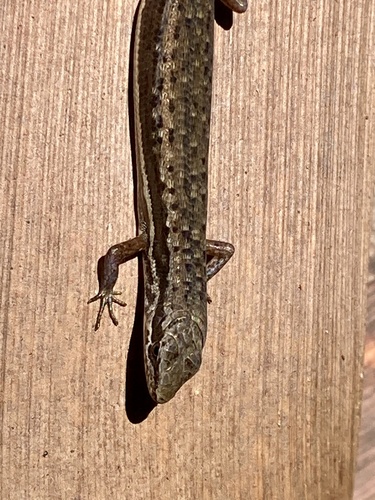
Highland Forest Skink
Saproscincus rosei
Global Distribution
Warmer areas are where this animal is recorded most often.
Parks Where Found
| # | Park | Country | Daily sighting probability |
|---|---|---|---|
| 1 | Noosa National Park | 🇦🇺 Australia | |
| 2 | Daintree National Park | 🇦🇺 Australia | |
| 3 | Lamington National Park | 🇦🇺 Australia | |
| 4 | Springbrook National Park | 🇦🇺 Australia |
Quick answers
What are the chances of seeing a Major Skink in Springbrook National Park?
About 20% of wildlife watchers report a Major Skink sighting in Springbrook National Park, based on 21 verified sightings from GBIF citizen-science data.
When is the best time to see Major Skink in Springbrook National Park?
December has the highest sighting rate for Major Skink in Springbrook National Park in our monthly data.