



Red-bellied Black Snake
Pseudechis porphyriacus
Silhouette: SeismicShrimp · PhyloPic
- KingdomAnimalia (Animals)
- PhylumChordata (Chordates)
- ClassSquamata
- FamilyElapidae (Elapid Snakes)
- GenusPseudechis (Australian Black Snakes)
- SpeciesPseudechis porphyriacus (Red-bellied Black Snake)
About the Red-bellied Black Snake
The red-bellied black snake (Pseudechis porphyriacus) is a species of venomous snake in the family Elapidae. The species is indigenous to Australia. Originally described by George Shaw in 1794 as a species new to science, it is one of eastern Australia's most commonly encountered snakes. Averaging around 1.25 m (4 ft 1 in) in total length (tail included), it has glossy black upperparts, bright red or orange flanks, and a pink or dull red belly. It is not aggressive and generally retreats from human encounters, but will defend itself if provoked. Although its venom can cause significant illness, no deaths have been recorded from its bite, which is less venomous than other Australian elapid snakes. The venom contains neurotoxins, myotoxins, and coagulants and has haemolytic properties. Victims can also lose their sense of smell.
Common in woodlands, forests, swamplands, along river banks and waterways, the red-bellied black snake often ventures into nearby urban areas. It forages in bodies of shallow water, commonly with tangles of water plants and logs, where it hunts its main prey item, frogs, as well as fish, reptiles, and small mammals. The snake is a least-concern species according to the IUCN, but its numbers are thought to be declining due to habitat fragmentation and decline of frog populations. Wikipedia →
Recent sightings of Red-bellied Black Snake in Springbrook National Park
LIVEiNaturalistClosest Relatives at Springbrook National Park

 Small-eyed Snake
Cryptophis nigrescens

Dwarf Crowned Snake
Cacophis krefftii

Golden Crowned Snake
Cacophis squamulosus

Rough-scaled Snake
Tropidechis carinatus

Black-bellied Swamp Snake
Hemiaspis signata

Yellow-faced Whipsnake
Demansia psammophis

Bandy Bandy
Vermicella annulata

Eastern Brown Snake
Pseudonaja textilis

Stephen's Banded Snake
Hoplocephalus stephensii

 Eastern Tiger Snake
Notechis scutatus
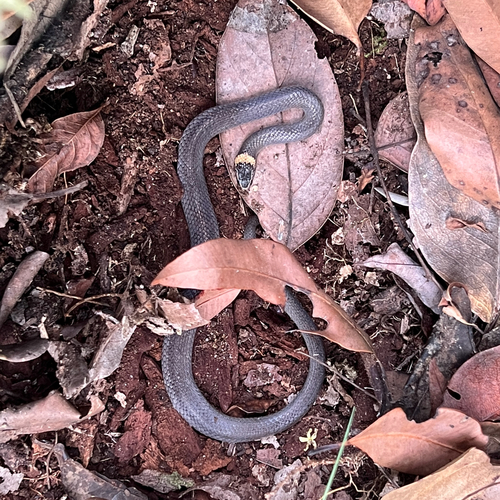
White-crowned Snake
Cacophis harriettae

Common Death Adder
Acanthophis antarcticus
Global Distribution
Warmer areas are where this animal is recorded most often.
Parks Where Found
| # | Park | Country | Daily sighting probability |
|---|---|---|---|
| 1 | Booderee National Park | 🇦🇺 Australia | |
| 2 | Lamington National Park | 🇦🇺 Australia | |
| 3 | Grampians National Park | 🇦🇺 Australia | |
| 4 | Blue Mountains National Park | 🇦🇺 Australia | |
| 5 | Daintree National Park | 🇦🇺 Australia | |
| 6 | Springbrook National Park | 🇦🇺 Australia | |
| 7 | Royal National Park | 🇦🇺 Australia | |
| 8 | Kosciuszko National Park | 🇦🇺 Australia | |
| 9 | Noosa National Park | 🇦🇺 Australia |
Quick answers
What are the chances of seeing a Red-bellied Black Snake in Springbrook National Park?
About 20% of wildlife watchers report a Red-bellied Black Snake sighting in Springbrook National Park, based on 27 verified sightings from GBIF citizen-science data.
When is the best time to see Red-bellied Black Snake in Springbrook National Park?
April has the highest sighting rate for Red-bellied Black Snake in Springbrook National Park in our monthly data.