


Great Argus
Argusianus argus
- KingdomAnimalia (Animals)
- PhylumChordata (Chordates)
- ClassAves (Birds)
- OrderGalliformes (Landfowl)
- FamilyPhasianidae (Pheasants, Grouse, and Allies)
- GenusArgusianus
- SpeciesArgusianus argus (Great Argus)
About the Great Argus
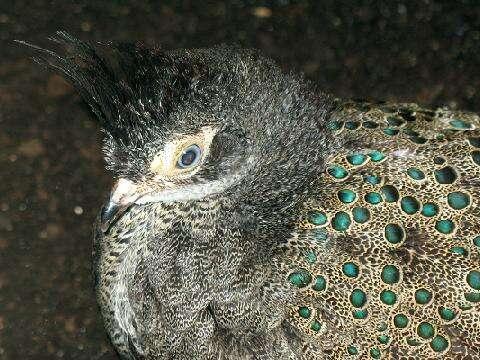
The great argus or greater argus (Argusianus argus) is a large species of pheasant native to the jungles of Borneo, Sumatra and the Malay Peninsula in southeast Asia. It is known for its impressive plumage and courtship behavior. It is not to be confused with the two species of closely related crested argus, genus Rheinardia.
Carl Linnaeus gave the great argus its specific name (from which its common name and genus name are derived) because of the intricate eye-like patterns on its wings, in reference to Argus, a hundred-eyed giant in Greek mythology. There are two subspecies recognized: Nominate argus of the Malay peninsula and Sumatra, and A. a. grayi of Borneo. William Beebe considered the two races to be distinct species, but they have since been lumped.
The genus Argusianus was introduced in 1849 by the English zoologist George Gray with the great argus as the type species. The double-banded argus (Argusianus bipunctatus), known only from a portion of a single primary flight feather, was long considered a potential second species. It was described in 1871 from this feather piece, found in a millinery shipment imported to London. Its origin... Wikipedia →
Closest Relatives at Taman Negara National Park

Bornean Crested Fireback
Lophura ignita

Malayan Crested Argus
Rheinardia nigrescens

Red Junglefowl
Gallus gallus
Malayan Peacock-Pheasant
Polyplectron malacense

Roulroul
Rollulus rouloul

Malay Crestless Fireback
Lophura erythrophthalma

Green Peafowl
Pavo muticus

Mountain Peacock-Pheasant
Polyplectron inopinatum
Global Distribution
Where this species is recorded worldwide. Restricted to human observations from 2019 onwards — the same kind of record and the same period the probabilities on this page are built from, so collar-tracking studies, camera-trap arrays and museum specimens are excluded. Around Santa Rosa that removes 5,924 GPS fixes from a handful of tagged jaguars.
where this species is recorded (GBIF density — it tracks where observers go, not how likely a sighting is) · parks where it occurs — tap a pin for the sighting probability there
Parks Where Found
| # | Park | Country | Daily sighting probability |
|---|---|---|---|
| 1 | Danum Valley Conservation Area | 🇲🇾 Malaysia | |
| 2 | Khao Luang National Park | 🇹🇭 Thailand | |
| 3 | Gunung Leuser National Park | 🇮🇩 Indonesia | |
| 4 | Taman Negara National Park | 🇲🇾 Malaysia | |
| 5 | Kinabatangan Wildlife Sanctuary | 🇲🇾 Malaysia | |
| 6 | Sepilok | 🇲🇾 Malaysia | |
| 7 | Khao Sok National Park | 🇹🇭 Thailand | |
| 8 | Kinabalu Park | 🇲🇾 Malaysia | |
| 9 | Kerinci Seblat National Park | 🇮🇩 Indonesia | |
| 10 | Way Kambas National Park | 🇮🇩 Indonesia |
Quick answers
What are the chances of seeing a Great Argus in Taman Negara National Park?
About 10% of wildlife watchers report a Great Argus sighting in Taman Negara National Park, based on 317 verified sightings from GBIF citizen-science data.
When is the best time to see Great Argus in Taman Negara National Park?
July has the highest sighting rate for Great Argus in Taman Negara National Park in our monthly data.