
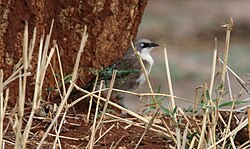


Northern Pied-Babbler
Turdoides hypoleuca
Silhouette: Sheatherius · PhyloPic
- KingdomAnimalia (Animals)
- PhylumChordata (Chordates)
- ClassAves (Birds)
- OrderPasseriformes (Perching Birds)
- FamilyLeiothrichidae (Laughingthrushes and Allies)
- GenusTurdoides (Turdoides Babblers)
- SpeciesTurdoides hypoleuca (Northern Pied-Babbler)
About the Northern Pied-Babbler
The northern pied babbler (Turdoides hypoleuca) is a species of bird in the family Leiothrichidae. It is found in Kenya and Tanzania. Its natural habitats are subtropical or tropical moist lowland forest and subtropical or tropical dry shrubland.
Collar, N. J. & Robson, C. 2007. Family Timaliidae (Babblers) pp. 70–291 in; del Hoyo, J., Elliott, A. & Christie, D.A. eds. Handbook of the Birds of the World, Vol. 12. Picathartes to Tits and Chickadees. Lynx Edicions, Barcelona. Wikipedia →
Recent sightings of Northern Pied-Babbler in Tarangire National Park
LIVEiNaturalistClosest Relatives at Tarangire National Park

 Arrow-marked Babbler
Turdoides jardineii

Black-lored Babbler
Turdoides sharpei

 Rufous Chatterer
Turdoides rubiginosa

 Superb Starling
Lamprotornis superbus

Ashy Starling
Lamprotornis unicolor

White-headed Buffalo-Weaver
Dinemellia dinemelli

 Northern White-crowned Shrike
Eurocephalus ruppelli

Magpie Shrike
Urolestes melanoleucus

 Fork-tailed Drongo
Dicrurus adsimilis

Red-billed Buffalo-Weaver
Bubalornis niger

Rufous-tailed Weaver
Histurgops ruficauda

Red-billed Oxpecker
Buphagus erythrorhynchus
Global Distribution
Warmer areas are where this animal is recorded most often.
Parks Where Found
| # | Park | Country | Daily sighting probability |
|---|---|---|---|
| 1 | Nairobi National Park | 🇰🇪 Kenya | |
| 2 | Tarangire National Park | 🇹🇿 Tanzania | |
| 3 | Mikumi National Park | 🇹🇿 Tanzania | |
| 4 | Ngorongoro Conservation Area | 🇹🇿 Tanzania | |
| 5 | Serengeti National Park | 🇹🇿 Tanzania | |
| 6 | Tsavo East National Park | 🇰🇪 Kenya | |
| 7 | Meru National Park | 🇰🇪 Kenya | |
| 8 | Lake Manyara National Park | 🇹🇿 Tanzania | |
| 9 | Aberdare National Park | 🇰🇪 Kenya | |
| 10 | Amboseli National Park | 🇰🇪 Kenya |
Quick answers
What are the chances of seeing a Northern Pied-Babbler in Tarangire National Park?
About 20% of wildlife watchers report a Northern Pied-Babbler sighting in Tarangire National Park, based on 341 verified sightings from GBIF citizen-science data.
When is the best time to see Northern Pied-Babbler in Tarangire National Park?
March has the highest sighting rate for Northern Pied-Babbler in Tarangire National Park in our monthly data.