
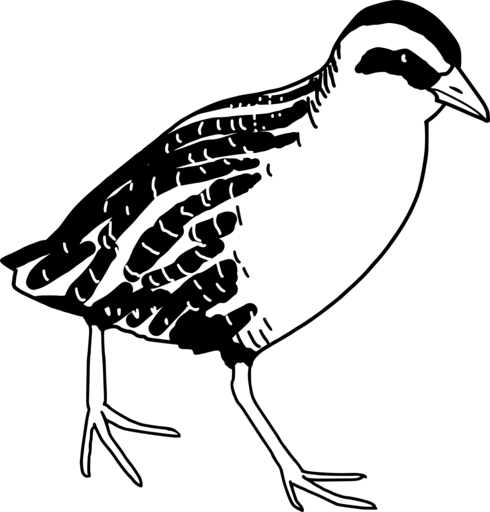
Yellow Rail
Coturnicops noveboracensis
Silhouette: Richard Rich · PhyloPic
- KingdomAnimalia (Animals)
- PhylumChordata (Chordates)
- ClassAves (Birds)
- OrderGruiformes (Cranes, Rails, and Allies)
- FamilyRallidae (Rails, Gallinules, and Coots)
- GenusCoturnicops (Coturnicops Rails)
- SpeciesCoturnicops noveboracensis (Yellow Rail)
About the Yellow Rail
The yellow rail (Coturnicops noveboracensis) is a small secretive marsh bird of the family Rallidae that is found in North America. The yellow rail was formally described in 1789 by the German naturalist Johann Friedrich Gmelin in his revised and expanded edition of Carl Linnaeus's Systema Naturae. He placed it with all the coots in the genus Fulica and coined the binomial name Fulica noveboracensis. Gmelin based his description on the "yellow breasted gallinule" that had been briefly described in 1785 by the Welsh naturalist Thomas Pennant in his book Arctic Zoology. The yellow rail is now placed in the genus Coturnicops that was erected in 1855 by the English zoologist George Robert Gray. The genus name combines coturnix, the Latin word for a "quail", with ōps, an Ancient Greek word meaning "appearance". The specific epithet noveboracensis is Latin for New York (novus means "new" and Eboracum is York, England).
Two subspecies are recognised: C. n. noveboracensis (Gmelin, JF, 1789) – Canada and north USA † C. n. goldmani (Nelson, 1904) – central Mexico (extinct) Adults have brown upperparts streaked with black, a yellowish-brown breast, a light belly... Wikipedia →
Recent sightings of Yellow Rail in Wood Buffalo National Park
LIVEiNaturalistClosest Relatives at Wood Buffalo National Park


Global Distribution
Warmer areas are where this animal is recorded most often.
Parks Where Found
| # | Park | Country | Daily sighting probability |
|---|---|---|---|
| 1 | Wood Buffalo National Park | 🇨🇦 Canada | |
| 2 | Point Pelee National Park | 🇨🇦 Canada | |
| 3 | Everglades National Park | 🇺🇸 United States |