



Spring Peeper
Pseudacris crucifer
Silhouette: Beth Reinke · PhyloPic
- KingdomAnimalia (Animals)
- PhylumChordata (Chordates)
- ClassAmphibia (Amphibians)
- OrderAnura (Frogs and Toads)
- FamilyHylidae (Hylid Tree Frogs)
- GenusPseudacris (Chorus Frogs)
- SpeciesPseudacris crucifer (Spring Peeper)
About the Spring Peeper
The spring peeper (Pseudacris crucifer) is a small chorus frog widespread throughout the eastern United States and eastern Canada. It prefers permanent ponds due to its advantage in avoiding predation; however, it is very adaptable with respect to the habitat it can live in. In northern regions, the frog is able to endure below freezing temperatures due to the capacity of its liver to exude and flush the bloodstream with a glucose cryoprotectant which acts both as an anti-freeze in its blood, and allows organs like the heart to enter into a state of protected dormancy. The peeper earned its name from its chirping call, which marks the beginning of spring. Crucifer is derived from the Latin root meaning "cross-bearing", a reference to the cross-like pattern on the spring peeper's dorsal side.
These chirping calls are significant for communication in mating as females choose their mates based on the frequency and volume associated with them. Satellite males who do not make any calls also strategically place themselves near those that make louder calls in an attempt to intercept females.
Temperature plays a large role in when the spring peeper begins breeding as well as the duration of mating. Warm spells result in a massive increased calling rate. Wikipedia →
Recent sightings of Spring Peeper in Acadia National Park
LIVEiNaturalistClosest Relatives at Acadia National Park

 Pacific chorus frog
Pseudacris regilla

 Gray Treefrog Species Complex
Dryophytes versicolor

 Cuban Treefrog
Osteopilus septentrionalis

 American Bullfrog
Lithobates catesbeianus
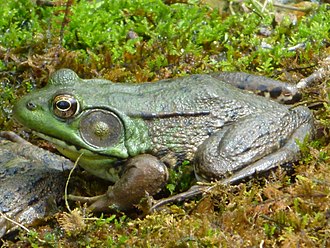
 Green Frog
Lithobates clamitans

Pickerel Frog
Lithobates palustris

Wood Frog
Lithobates sylvaticus

 American Toad
Anaxyrus americanus
Global Distribution
Warmer areas are where this animal is recorded most often.
Parks Where Found
| # | Park | Country | Daily sighting probability |
|---|---|---|---|
| 1 | Acadia National Park | 🇺🇸 United States | |
| 2 | Cape Breton Highlands National Park | 🇨🇦 Canada | |
| 3 | Congaree National Park | 🇺🇸 United States | |
| 4 | Shenandoah National Park | 🇺🇸 United States | |
| 5 | Isle Royale National Park | 🇺🇸 United States | |
| 6 | Point Pelee National Park | 🇨🇦 Canada |
Quick answers
What are the chances of seeing a Spring Peeper in Acadia National Park?
About 30% of wildlife watchers report a Spring Peeper sighting in Acadia National Park, based on 195 verified sightings from GBIF citizen-science data.
When is the best time to see Spring Peeper in Acadia National Park?
April has the highest sighting rate for Spring Peeper in Acadia National Park in our monthly data.