



Greater Antillean Bullfinch
Melopyrrha violacea
Silhouette: Sheatherius · PhyloPic
- KingdomAnimalia (Animals)
- PhylumChordata (Chordates)
- ClassAves (Birds)
- OrderPasseriformes (Perching Birds)
- FamilyThraupidae (Tanagers and Allies)
- GenusMelopyrrha (Greater Antillean Bullfinches)
- SpeciesMelopyrrha violacea (Greater Antillean Bullfinch)
About the Greater Antillean Bullfinch
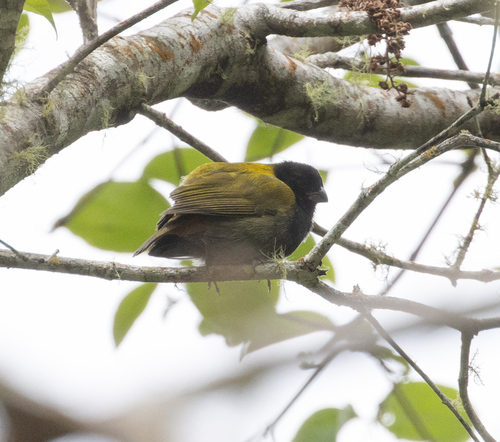
The Greater Antillean bullfinch (Melopyrrha violacea) is a species of bird in the family Thraupidae, the tanagers and allies. It is found in the Bahamas, Hispaniola (the Dominican Republic, Haiti, and their offshore islands), Jamaica, and the Turks and Caicos Islands.
The Greater Antillean bullfinch has a complicated taxonomic history. It was formally described by the Swedish naturalist Carl Linnaeus in 1758 in the tenth edition of his Systema Naturae under the binomial name Loxia violacea. The specific epithet violacea is from Latin violaceus meaning "violet-colored". Linnaeus based his description on "The Purple Gross-beak" that had been described and illustrated by Mark Catesby in 1731. The type locality is the Bahamas. The species was later placed in the genus Loxigilla.
A molecular phylogenetic study published in 2014 found that Loxigilla was polyphyletic and in the subsequent rearrangement, by 2020 most taxonomic systems had moved the Greater Antillean bullfinch and the Puerto Rican bullfinch to Melopyrrha. In 2016 BirdLife International's Handbook of the Birds of the World (HBW) had moved the two species to genus Pyrrhulagra but in 2022 moved them... Wikipedia →
Recent sightings of Greater Antillean Bullfinch in Blue and John Crow Mountains National Park
LIVEiNaturalistClosest Relatives at Blue and John Crow Mountains National Park

 Bananaquit
Coereba flaveola

 Orangequit
Euneornis campestris
Yellow-shouldered Grassquit
Loxipasser anoxanthus

Black-faced Grassquit
Melanospiza bicolor

Yellow-faced Grassquit
Tiaris olivaceus

 Loggerhead Kingbird
Tyrannus caudifasciatus

 White-chinned Thrush
Turdus aurantius

Jamaican Spindalis
Spindalis nigricephala

 American Redstart
Setophaga ruticilla

 Jamaican Oriole
Icterus leucopteryx

Black-throated Blue Warbler
Setophaga caerulescens

 Sad Flycatcher
Myiarchus barbirostris
Global Distribution
Warmer areas are where this animal is recorded most often.
Parks Where Found
| # | Park | Country | Daily sighting probability |
|---|---|---|---|
| 1 | Blue and John Crow Mountains National Park | 🇯🇲 Jamaica | |
| 2 | Jaragua National Park | 🇩🇴 Dominican Republic | |
| 3 | Los Haitises National Park | 🇩🇴 Dominican Republic |
Quick answers
What are the chances of seeing a Greater Antillean Bullfinch in Blue and John Crow Mountains National Park?
About 60% of wildlife watchers report a Greater Antillean Bullfinch sighting in Blue and John Crow Mountains National Park, based on 473 verified sightings from GBIF citizen-science data.
When is the best time to see Greater Antillean Bullfinch in Blue and John Crow Mountains National Park?
February has the highest sighting rate for Greater Antillean Bullfinch in Blue and John Crow Mountains National Park in our monthly data.