



Eastern Brown Snake
Pseudonaja textilis
Silhouette: SeismicShrimp · PhyloPic
- KingdomAnimalia (Animals)
- PhylumChordata (Chordates)
- ClassSquamata
- FamilyElapidae (Elapid Snakes)
- GenusPseudonaja (Australian Brown Snakes)
- SpeciesPseudonaja textilis (Eastern Brown Snake)
About the Eastern Brown Snake
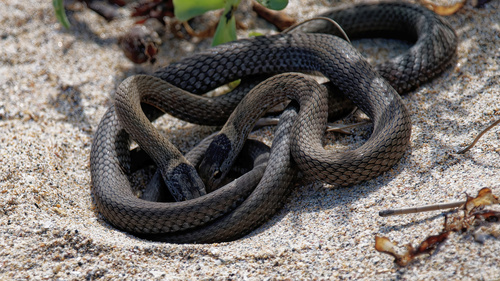
The eastern brown snake (Pseudonaja textilis), often referred to as the common brown snake, is a species of extremely venomous snake in the family Elapidae. The species is native to eastern and central Australia and southern New Guinea. It was first described by André Marie Constant Duméril, Gabriel Bibron, and Auguste Duméril in 1854. The adult eastern brown snake has a slender build and can grow to 2 m (7 ft) in length. The colour of its surface ranges from pale brown to black, while its underside is pale cream-yellow, often with orange or grey splotches. The eastern brown snake is found in most habitats except dense forests, often in farmland and on the outskirts of urban areas, as such places are populated by its main prey, the house mouse. The species is oviparous. The International Union for Conservation of Nature classifies the snake as a least-concern species, though its status in New Guinea is unclear.
It is considered the world's second-most venomous land snake after the inland taipan (Oxyuranus microlepidotus), based on its LD50 value (subcutaneous) in mice. The main effects of its venom are on the circulatory system: coagulopathy, haemorrhage (bleeding), cardiovascular collapse, and cardiac arrest. One of the main components of the venom is the prothrombinase complex pseutarin-C, which breaks down prothrombin. Wikipedia →
Recent sightings of Eastern Brown Snake in Blue Mountains National Park
LIVEiNaturalistClosest Relatives at Blue Mountains National Park

 Red-bellied Black Snake
Pseudechis porphyriacus

Highlands Copperhead
Austrelaps ramsayi

 Eastern Tiger Snake
Notechis scutatus
Mustard-bellied Snake
Drysdalia rhodogaster

Small-eyed Snake
Cryptophis nigrescens

Common Death Adder
Acanthophis antarcticus

Broad-headed Snake
Hoplocephalus bungaroides

Yellow-faced Whipsnake
Demansia psammophis

Golden Crowned Snake
Cacophis squamulosus

Bandy Bandy
Vermicella annulata

Red-naped Snake
Furina diadema

White-lipped Snake
Drysdalia coronoides
Global Distribution
Warmer areas are where this animal is recorded most often.
Parks Where Found
| # | Park | Country | Daily sighting probability |
|---|---|---|---|
| 1 | Grampians National Park | 🇦🇺 Australia | |
| 2 | Booderee National Park | 🇦🇺 Australia | |
| 3 | Kosciuszko National Park | 🇦🇺 Australia | |
| 4 | Blue Mountains National Park | 🇦🇺 Australia | |
| 5 | Royal National Park | 🇦🇺 Australia | |
| 6 | Great Otway National Park | 🇦🇺 Australia | |
| 7 | Noosa National Park | 🇦🇺 Australia | |
| 8 | Lamington National Park | 🇦🇺 Australia | |
| 9 | Springbrook National Park | 🇦🇺 Australia |
Quick answers
What are the chances of seeing a Eastern Brown Snake in Blue Mountains National Park?
About 10% of wildlife watchers report a Eastern Brown Snake sighting in Blue Mountains National Park, based on 41 verified sightings from GBIF citizen-science data.
When is the best time to see Eastern Brown Snake in Blue Mountains National Park?
September has the highest sighting rate for Eastern Brown Snake in Blue Mountains National Park in our monthly data.