


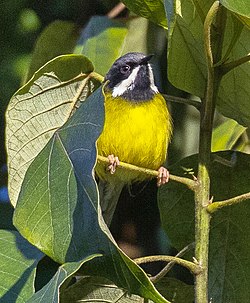

Black-throated Apalis
Apalis jacksoni
Silhouette: Sheatherius · PhyloPic
- KingdomAnimalia (Animals)
- PhylumChordata (Chordates)
- ClassAves (Birds)
- OrderPasseriformes (Perching Birds)
- FamilyCisticolidae (Cisticolas and Allies)
- GenusApalis (Apalises)
- SpeciesApalis jacksoni (Black-throated Apalis)
About the Black-throated Apalis
The black-throated apalis (Apalis jacksoni) is a species of bird in the family Cisticolidae. It is native to the Western High Plateau, the Albertine Rift montane forests and the east African montane forests and isolated lowland areas of Cameroon, the DRC and Angola. Wikipedia →
Recent sightings of Black-throated Apalis in Bwindi Impenetrable National Park
LIVEiNaturalistClosest Relatives at Bwindi Impenetrable National Park

 Gray Apalis
Apalis cinerea

Black-faced Apalis
Apalis personata

Chestnut-throated Apalis
Apalis porphyrolaema

Buff-throated Apalis
Apalis rufogularis

Masked Apalis
Apalis binotata

Yellow-breasted Apalis
Apalis flavida

Black-capped Apalis
Apalis nigriceps

Chubb's Cisticola
Cisticola chubbi

Black-faced Rufous-Warbler
Bathmocercus rufus

Green-backed Camaroptera
Camaroptera brachyura

White-chinned Prinia
Schistolais leucopogon

Banded Prinia
Prinia bairdii
Global Distribution
Warmer areas are where this animal is recorded most often.
Parks Where Found
| # | Park | Country | Daily sighting probability |
|---|---|---|---|
| 1 | Bwindi Impenetrable National Park | 🇺🇬 Uganda | |
| 2 | Nyungwe National Park | 🇷🇼 Rwanda | |
| 3 | Virunga National Park | 🇨🇩 Democratic Republic of the Congo | |
| 4 | Aberdare National Park | 🇰🇪 Kenya | |
| 5 | Kibale National Park | 🇺🇬 Uganda | |
| 6 | Semuliki National Park | 🇺🇬 Uganda | |
| 7 | Volcanoes National Park | 🇷🇼 Rwanda | |
| 8 | Queen Elizabeth National Park | 🇺🇬 Uganda | |
| 9 | Murchison Falls National Park | 🇺🇬 Uganda | |
| 10 | Lake Mburo National Park | 🇺🇬 Uganda |
Quick answers
What are the chances of seeing a Black-throated Apalis in Bwindi Impenetrable National Park?
About 40% of wildlife watchers report a Black-throated Apalis sighting in Bwindi Impenetrable National Park, based on 873 verified sightings from GBIF citizen-science data.
When is the best time to see Black-throated Apalis in Bwindi Impenetrable National Park?
March has the highest sighting rate for Black-throated Apalis in Bwindi Impenetrable National Park in our monthly data.