Kibale National Park
🇺🇬 Uganda
🦧 Chimpanzee Calls Through Kibale ForestKibale National Park is a protected tropical rainforest in East Africa, positioned within Uganda. This dense, green expanse differs from neighboring savanna parks by offering a towering, closed canopy and a damp understory that supports an exceptional variety of primates and resident forest birds.
0.521° N 30.420° E
Wildlife
⭐ Iconic Species
 ★
 Chimpanzee
Pan troglodytes
 ★
 Ashy Red Colobus
Piliocolobus tephrosceles
 ★
 Red-tailed Monkey
Cercopithecus ascanius
📊 Most Spotted

 Olive Baboon
Papio anubis

 Mantled Guereza
Colobus guereza

 grey-mantled grey-cheeked mangabey
Lophocebus albigena

 Common Bulbul
Pycnonotus barbatus

 Black-and-white-casqued Hornbill
Bycanistes subcylindricus

 Red-eyed Dove
Streptopelia semitorquata

 Great Blue Turaco
Corythaeola cristata

 Olive-bellied Sunbird
Cinnyris chloropygius

 Speckled Mousebird
Colius striatus

 Yellow-rumped Tinkerbird
Pogoniulus bilineatus

 Little Greenbul
Eurillas virens

 Uganda blue-headed tree agama
Acanthocercus ugandaensis
⭐ Iconic Species
★ Chimpanzee
Pan troglodytes
★ Ashy Red Colobus
Piliocolobus tephrosceles
★ Red-tailed Monkey
Cercopithecus ascanius
📊 Most Spotted
Olive Baboon
Papio anubis
Mantled Guereza
Colobus guereza
grey-mantled grey-cheeked mangabey
Lophocebus albigena

 Red-legged Sun Squirrel
Heliosciurus rufobrachium

L'Hoest's Guenon
Allochrocebus lhoesti

 Northern Bushbuck
Tragelaphus scriptus

 Tantalus Monkey
Chlorocebus tantalus

 East African Potto
Perodicticus ibeanus

Boehm's Bush Squirrel
Paraxerus boehmi
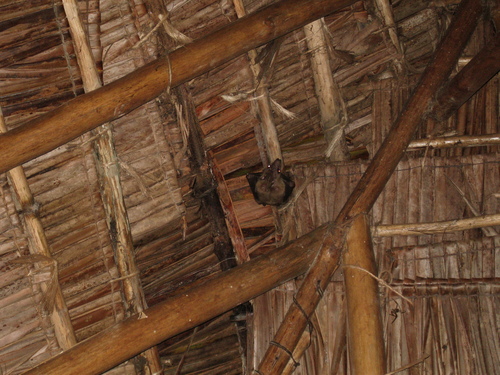
 Angolan Rousette
Myonycteris angolensis

 African Forest Elephant
Loxodonta cyclotis

 Spectacled Lesser Galago
Galago matschiei
📊 Most Spotted
Common Bulbul
Pycnonotus barbatus
Black-and-white-casqued Hornbill
Bycanistes subcylindricus
Red-eyed Dove
Streptopelia semitorquata
Great Blue Turaco
Corythaeola cristata
Olive-bellied Sunbird
Cinnyris chloropygius
Speckled Mousebird
Colius striatus
Yellow-rumped Tinkerbird
Pogoniulus bilineatus
Little Greenbul
Eurillas virens

 Bronze Mannikin
Lonchura cucullata

Green-backed Camaroptera
Camaroptera brachyura

Tambourine Dove
Turtur tympanistria

Gray-headed Negrofinch
Nigrita canicapillus
📊 Most Spotted
Uganda blue-headed tree agama
Acanthocercus ugandaensis

 Montane side-striped chameleon
Trioceros ellioti

 African Striped Skink
Trachylepis striata

 Tropical House Gecko
Hemidactylus mabouia

 African Bush Viper
Atheris squamigera

Speckle-lipped Mabuya
Trachylepis maculilabris

 Jameson's Mamba
Dendroaspis jamesoni

Rhinoceros Viper
Bitis nasicornis

Forest Night Adder
Causus lichtensteinii

 Large-eyed Green Treesnake
Rhamnophis aethiopissa

 Jackson's Forest Lizard
Adolfus jacksoni

 Finch’s agama
Agama finchi
📊 Most Spotted

 Common Reed Frog
Hyperolius viridiflavus

Four-striped Tree-folding Frog
Afrixalus quadrivittatus

Balfour's Reed Frog
Hyperolius balfouri

 Müller's Platanna
Xenopus muelleri

Banded Banana Frog
Afrixalus fulvovittatus

Kivu Reed Frog
Hyperolius kivuensis

 Kisenyi Forest Tree Frog
Leptopelis kivuensis
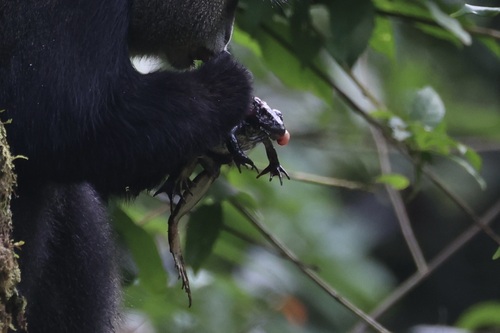
 Nutt's River Frog
Amietia nutti

Cinnamon-bellied Reed Frog
Hyperolius cinnamomeoventris

Senegal Kassina
Kassina senegalensis

 Forest White-lipped Frog
Amnirana albolabris
Recent sightings in Kibale National Park
LIVEiNaturalistAnimal Events
1Chimpanzee Nesting Surveys
Chimpanzees construct night nests in trees each evening, visible during guided morning tracking. Researchers and tourists observe nest-building patterns to estimate troop movements and population density.
3Red Colobus Troop Foraging
Ashy Red Colobus troops feed on young leaves and unripe fruits in the upper canopy, often descending to mid-levels during fruit scarcity. Their acrobatic leaps and social grooming create dynamic viewing opportunities.
2Forest Birdsong Dawn Chorus
The dense forest canopy erupts in a cacophony of calls at dawn, dominated by turacos, hornbills, and sunbirds. Guides use sound to locate rare species like the Great Blue Turaco and Black-and-white-casqued Hornbill.
Sighting Calendar
Average chance of spotting the park's most-spotted species, month by month
- 1Chimpanzee Nesting Surveys
- 2Forest Birdsong Dawn Chorus
- 3Red Colobus Troop Foraging
Sighting Zones
Warmer areas are where all species together are recorded most often.
Essentials
Climate
What visitors saw
After we finished with the chimpanzees we headed to the Bigodi swamp, sorry Bigodi Wetland Sanctuary, where monkeys have found a haven away from chimpanzees.
At the top of that list are the chimpanzees and that’s what we were there to see.
If chimpanzee trekking gives you a glimpse into the lives of our closest relatives, chimpanzee habituation offers something much richer… an immersive, behind-the-scenes experience that few travellers ever get.
Also appropriately, on this very tour, we heard stories while walking with a guide around the Bigodi Swamp about chimpanzees hunting red colobus monkeys.
Quick answers
What animals can you see in Kibale National Park?
The most likely sightings are Chimpanzee (seen by about 80% of wildlife watchers), Ashy Red Colobus (seen by about 80% of wildlife watchers), Olive Baboon (seen by about 80% of wildlife watchers), Red-tailed Monkey (seen by about 80% of wildlife watchers), Mantled Guereza (seen by about 70% of wildlife watchers) — among 1576 recorded vertebrate species, based on citizen-science data from GBIF.
When is the best time to visit Kibale National Park for wildlife?
January has the highest combined sighting rate for the park's top species in our month-by-month GBIF data. The full sighting calendar on this page shows each species' best months.
Can you see Chimpanzee in Kibale National Park?
Yes — about 80% of wildlife watchers report a Chimpanzee sighting in Kibale National Park, based on 163 verified sightings from GBIF citizen-science data.
Can you see Ashy Red Colobus in Kibale National Park?
Yes — about 80% of wildlife watchers report a Ashy Red Colobus sighting in Kibale National Park, based on 126 verified sightings from GBIF citizen-science data.
Can you see Red-tailed Monkey in Kibale National Park?
Yes — about 80% of wildlife watchers report a Red-tailed Monkey sighting in Kibale National Park, based on 111 verified sightings from GBIF citizen-science data.
Where Wildlife Score
How good is this park for seeing wildlife?Biodiversity
ExcellentHow rich is the wildlife?
Sighting
Very goodHow likely to see animals?
Experience
Very goodHow easy and pleasant is the visit?


