


Northern Spiny-tailed Gecko
Strophurus ciliaris
- KingdomAnimalia (Animals)
- PhylumChordata (Chordates)
- ClassSquamata
- FamilyDiplodactylidae (Australasian Geckos)
- GenusStrophurus (Spiny-tailed, Striped and Phasmid Geckos)
- SpeciesStrophurus ciliaris (Northern Spiny-tailed Gecko)
About the Northern Spiny-tailed Gecko
The northern spiny-tailed gecko (Strophurus ciliaris) is a species of lizard in the family Diplodactylidae. The species is endemic to Australia. The meaning of the scientific name or binomial, Strophurus ciliaris, comes from strophurus meaning "turning-tail" and ciliaris meaning "eyelashed", referring to the spines above the eyes.
S. ciliaris is highly variable in colour. This species can vary from a uniform grey colour, with few black or orange scales, to rich brown, with a mottled pattern of grey, white, and orange scales. Spines are present along the tail, and long spines are generally present above the eyes, giving the impression of being eye-lashed.
The average length for a member of this species is 89 mm (3.5 in). Females are known to be significantly larger than males. S. ciliaris an oviparous species that has a clutch size of two. Members of the genus Strophurus have the ability to squirt a harmless, smelly, fluid from their tails. This is used as a deterrent for birds and other predations whilst they are perching in shrubs. Another defence mechanism that S. ciliaris has is bright palate colour. Wikipedia →
Closest Relatives at Cape Range
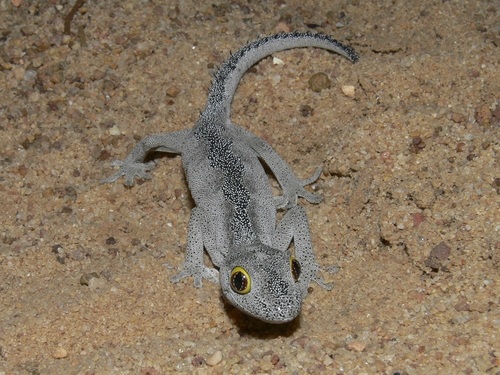
Western Spiny-tailed Gecko
Strophurus strophurus

Jewelled Gecko
Strophurus elderi
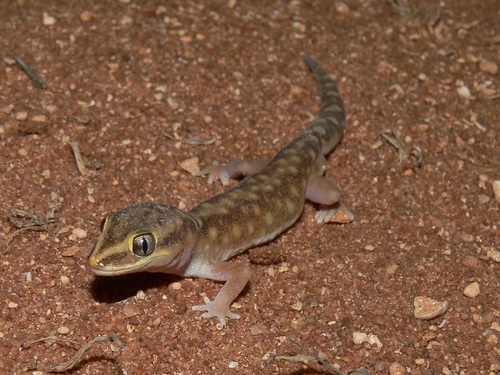
Pilbara Ground Gecko
Lucasium woodwardi
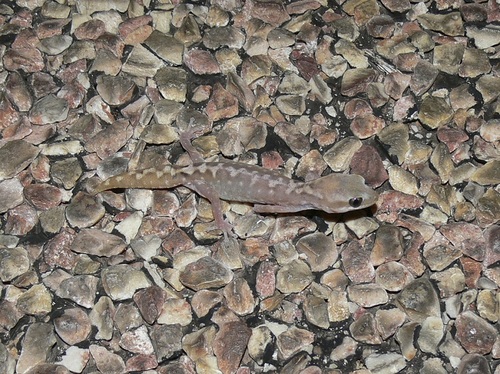
Cape Range Stone Gecko
Diplodactylus capensis
Cape Range Clawless Gecko
Crenadactylus tuberculatus

Western Fat-tailed Gecko
Diplodactylus bilybara
Global Distribution
Where this species is recorded worldwide. Restricted to human observations from 2019 onwards — the same kind of record and the same period the probabilities on this page are built from, so collar-tracking studies, camera-trap arrays and museum specimens are excluded. Around Santa Rosa that removes 5,924 GPS fixes from a handful of tagged jaguars.
where this species is recorded (GBIF density — it tracks where observers go, not how likely a sighting is) · parks where it occurs — tap a pin for the sighting probability there
Parks Where Found
| # | Park | Country | Daily sighting probability |
|---|---|---|---|
| 1 | Cape Range | 🇦🇺 Australia | |
| 2 | Uluru-Kata Tjuta National Park | 🇦🇺 Australia | |
| 3 | Ningaloo Marine Park | 🇦🇺 Australia | |
| 4 | Litchfield National Park | 🇦🇺 Australia | |
| 5 | Kakadu National Park | 🇦🇺 Australia | |
| 6 | Nitmiluk National Park | 🇦🇺 Australia |
Quick answers
What are the chances of seeing a Northern Spiny-tailed Gecko in Cape Range?
About 40% of wildlife watchers report a Northern Spiny-tailed Gecko sighting in Cape Range, based on 22 verified sightings from GBIF citizen-science data.
When is the best time to see Northern Spiny-tailed Gecko in Cape Range?
March has the highest sighting rate for Northern Spiny-tailed Gecko in Cape Range in our monthly data.