



Aesculapian False Coral Snake
Erythrolamprus aesculapii
Silhouette: Alex Slavenko · PhyloPic
- KingdomAnimalia (Animals)
- PhylumChordata (Chordates)
- ClassSquamata
- FamilyColubridae (Colubrid Snakes)
- GenusErythrolamprus (Coral Snake Mimics)
- SpeciesErythrolamprus aesculapii (Aesculapian False Coral Snake)
About the Aesculapian False Coral Snake
Erythrolamprus aesculapii, also known commonly as the Aesculapian false coral snake, the South American false coral snake, and in Portuguese as bacorá, or falsa-coral, is a species of mildly venomous snake in the family Colubridae. The species is endemic to South America.
The specific name, aesculapii, refers to Aesculapius, the Greek mythological god of medicine, who is depicted with a snake-entwined staff. Erythrolamprus aesculapii belongs to the genus Erythrolamprus, which contains over 50 species. The genus Erythrolamprus belongs to the subfamily Dipsadinae, which is sometimes referred to as the family Dipsadidae.
Molecular phylogenetic DNA analysis has shown that Erythrolamprus aesculapii is likely paraphyletic, as shown in the cladogram below of Erythrolamprus species located in northern South America: E. aesculapii is found in the Amazon rainforest of South America. It is also found on the island of Trinidad (in the Republic of Trinidad and Tobago). E. aesculapii is often found in the leaf litter or burrowing in the soil in rain forests, at altitudes from sea level to 2,300 m (7,500 ft).... Wikipedia →
Recent sightings of Aesculapian False Coral Snake in Iguaçu National Park
LIVEiNaturalistClosest Relatives at Iguaçu National Park
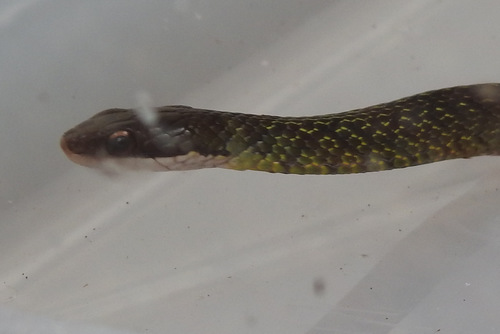
 Cobra-d’água
Erythrolamprus macrosomus

Blind Ground Snake
Erythrolamprus typhlus

Chicken Snake
Spilotes pullatus

Lichtenstein's Green Racer
Philodryas olfersii

Wagler's Snake
Xenodon merremii

 Forest Flame Snake
Oxyrhopus petolarius

Guibe's Flame Snake
Oxyrhopus guibei

Pampas Snake
Tomodon dorsatus

Brazilian Slug-eating Snake
Dipsas mikanii
Global Distribution
Warmer areas are where this animal is recorded most often.
Parks Where Found
| # | Park | Country | Daily sighting probability |
|---|---|---|---|
| 1 | Iguazú National Park | 🇦🇷 Argentina | |
| 2 | Iguaçu National Park | 🇧🇷 Brazil | |
| 3 | Canaima National Park | 🇻🇪 Venezuela | |
| 4 | Emas National Park | 🇧🇷 Brazil | |
| 5 | Amboró National Park | 🇧🇴 Bolivia | |
| 6 | Itatiaia National Park | 🇧🇷 Brazil | |
| 7 | Cordillera Azul National Park | 🇵🇪 Peru |
Quick answers
What are the chances of seeing a Aesculapian False Coral Snake in Iguaçu National Park?
About 10% of wildlife watchers report a Aesculapian False Coral Snake sighting in Iguaçu National Park, based on 6 verified sightings from GBIF citizen-science data.
When is the best time to see Aesculapian False Coral Snake in Iguaçu National Park?
July has the highest sighting rate for Aesculapian False Coral Snake in Iguaçu National Park in our monthly data.