

Guibe's Flame Snake
Oxyrhopus guibei
Silhouette: Beth Reinke · PhyloPic
- KingdomAnimalia (Animals)
- PhylumChordata (Chordates)
- ClassSquamata
- FamilyColubridae (Colubrid Snakes)
- GenusOxyrhopus
- SpeciesOxyrhopus guibei (Guibe's Flame Snake)
About the Guibe's Flame Snake
Oxyrhopus guibei is a species of snake in the family Colubridae. The species is endemic to South America. It is often called the false coral snake, but this common name can refer to any of a long list of other species, genera, and even entire families of snakes. Many nonvenomous snakes have evolved coloration that mimics that of venomous true coral snakes, a trait which helps them avoid predation.
The specific name, guibei, is in honor of French herpetologist Jean Guibé. O. guibei is native to central sections of South America, in parts of Bolivia, Brazil, Paraguay, and Argentina. The species O. guibei has been described as common to abundant.
O. guibei can reach 1 m (3.3 ft) to 1.25 m (4.1 ft) in total length (including tail). Females can reach much larger sizes than males. The preferred natural habitat of O. guibei is forest, including forest edges and open areas. The snake is sometimes seen near human activity and habitation, for example, on farms and in backyards.
O. guibei is mostly nocturnal, but is sometimes out basking during the day. It spends most of its time on... Wikipedia →
Recent sightings of Guibe's Flame Snake in Emas National Park
LIVEiNaturalistClosest Relatives at Emas National Park

 Amazon False Coral Snake
Oxyrhopus rhombifer

 Brazilian Green Racer
Philodryas aestiva

Wagler's Snake
Xenodon merremii

Patagonian Racer
Philodryas patagoniensis

Aesculapian False Coral Snake
Erythrolamprus aesculapii
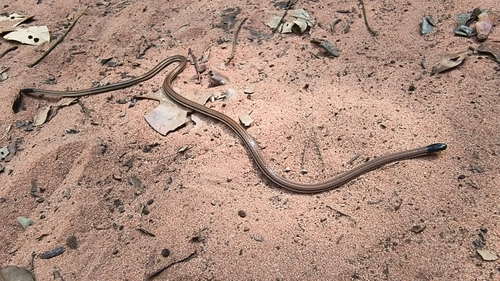
Mato Grosso Burrowing Snake
Apostolepis intermedia

Argentine Pampas Snake
Phimophis guerini
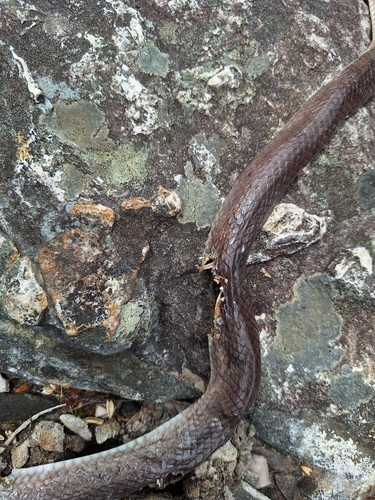
Brazilian Bird Snake
Rhachidelus brazili

Lichtenstein's Green Racer
Philodryas olfersii

Paraguay Green Racer
Philodryas nattereri

Fura-terra
Phalotris nasutus
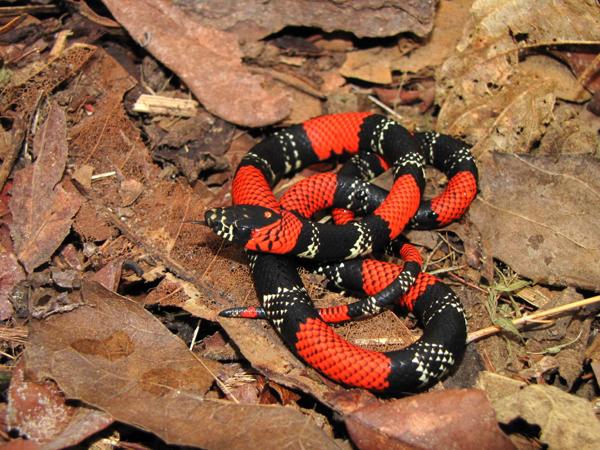
São Paulo False Coral Snake
Simophis rhinostoma
Global Distribution
Warmer areas are where this animal is recorded most often.
Parks Where Found
| # | Park | Country | Daily sighting probability |
|---|---|---|---|
| 1 | Serra da Canastra National Park | 🇧🇷 Brazil | |
| 2 | Emas National Park | 🇧🇷 Brazil | |
| 3 | Iguaçu National Park | 🇧🇷 Brazil | |
| 4 | Iguazú National Park | 🇦🇷 Argentina |