
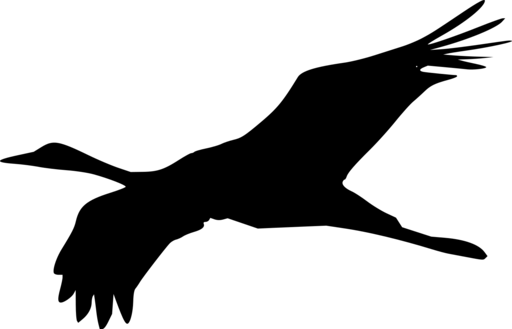
Blue Crane
Anthropoides paradiseus
Silhouette: Mathieu Pélissié · PhyloPic
- KingdomAnimalia (Animals)
- PhylumChordata (Chordates)
- ClassAves (Birds)
- OrderGruiformes (Cranes, Rails, and Allies)
- FamilyGruidae (Cranes)
- GenusAnthropoides
- SpeciesAnthropoides paradiseus (Blue Crane)
About the Blue Crane
The blue crane (Grus paradisea), also known as the Stanley crane and the paradise crane, is the national bird of South Africa. The species is listed as Vulnerable by the IUCN. The blue crane is a tall, ground-dwelling bird, but is fairly small by the standards of the crane family. It is 100–120 cm (3 ft 3 in – 3 ft 11 in) tall, with a wingspan of 180–200 cm (5 ft 11 in – 6 ft 7 in) and weighs 3.6–6.2 kg (7.9–13.7 lb). Among standard measurements, the wing chord measures 51.4–59 cm (20.2–23.2 in), the exposed culmen measures 8–10 cm (3.1–3.9 in) and the tarsus measures 20.5–25.2 cm (8.1–9.9 in). This crane is pale blue-gray in color becoming darker on the upper head, neck and nape. From the crown to the lores, the plumage is distinctly lighter, sometimes whitish. The bill is ochre to greyish, with a pink tinge. The long wingtip feathers which trail to the ground. The primaries are black to slate grey, with dark coverts and blackish on the secondaries. Unlike most cranes, it has a relatively large head and a proportionately thin neck. Juveniles are similar but slightly lighter, with tawny coloration on the head, and no long wing plumes.
Blue cranes are... Wikipedia →
Recent sightings of Blue Crane in Etosha National Park
LIVEiNaturalistClosest Relatives at Etosha National Park
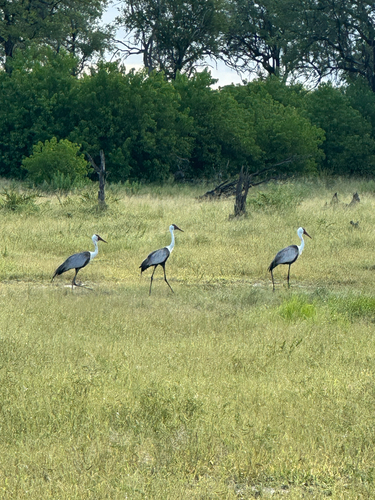
 Wattled Crane
Bugeranus carunculatus

 Black Crake
Amaurornis flavirostra

 Common Moorhen
Gallinula chloropus

 Red-knobbed Coot
Fulica cristata

Lesser Moorhen
Gallinula angulata

 African Rail
Rallus caerulescens

 Allen's Gallinule
Porphyrio alleni

Western Swamphen
Porphyrio porphyrio

 African Crake
Crex egregia
Global Distribution
Warmer areas are where this animal is recorded most often.
Parks Where Found
| # | Park | Country | Daily sighting probability |
|---|---|---|---|
| 1 | Etosha National Park | 🇳🇦 Namibia | |
| 2 | Pilanesberg National Park | 🇿🇦 South Africa | |
| 3 | Addo Elephant National Park | 🇿🇦 South Africa | |
| 4 | Garden Route National Park | 🇿🇦 South Africa | |
| 5 | Golden Gate Highlands National Park | 🇿🇦 South Africa | |
| 6 | iSimangaliso Wetland Park | 🇿🇦 South Africa | |
| 7 | Table Mountain National Park | 🇿🇦 South Africa |
Quick answers
What are the chances of seeing a Blue Crane in Etosha National Park?
About 10% of wildlife watchers report a Blue Crane sighting in Etosha National Park, based on 186 verified sightings from GBIF citizen-science data.
When is the best time to see Blue Crane in Etosha National Park?
February has the highest sighting rate for Blue Crane in Etosha National Park in our monthly data.