



Red-knobbed Coot
Fulica cristata
Silhouette: Andy Wilson · PhyloPic
- KingdomAnimalia (Animals)
- PhylumChordata (Chordates)
- ClassAves (Birds)
- OrderGruiformes (Cranes, Rails, and Allies)
- FamilyRallidae (Rails, Gallinules, and Coots)
- GenusFulica (Coots)
- SpeciesFulica cristata (Red-knobbed Coot)
About the Red-knobbed Coot
The red-knobbed coot or crested coot (Fulica cristata) is a member of the rail and crake bird family, the Rallidae. It is a resident breeder across much of Africa and in southernmost Spain on freshwater lakes and ponds. It builds a nest of dead reeds near the water's edge or more commonly afloat, laying about 7 eggs (or more in good conditions).
The red-knobbed coot was formally described in 1789 by the German naturalist Johann Friedrich Gmelin in his revised and expanded edition of Carl Linnaeus's Systema Naturae. He placed it with all the other coots in the genus Fulica and coined the binomial name Fulica cristata. Gmelin based his account on the earlier descriptions by the French naturalist Georges-Louis Leclerc, Comte de Buffon and the English ornithologist John Latham, neither of whom had included a binomial name. They gave the type locality as Madagascar. The genus Fulica had been introduced in 1758 by the Swedish naturalist Carl Linnaeus in the tenth edition of his Systema Naturae. The genus name is the Latin word for a Eurasian coot. The specific epithet cristata is from Latin cristatus meaning "crested" or "plumed". The species is monotypic: no subspecies are... Wikipedia →
Recent sightings of Red-knobbed Coot in Etosha National Park
LIVEiNaturalistClosest Relatives at Etosha National Park

 Black Crake
Amaurornis flavirostra

 Common Moorhen
Gallinula chloropus

Lesser Moorhen
Gallinula angulata

 African Rail
Rallus caerulescens

 Allen's Gallinule
Porphyrio alleni

Western Swamphen
Porphyrio porphyrio

 African Crake
Crex egregia

 Blue Crane
Anthropoides paradiseus
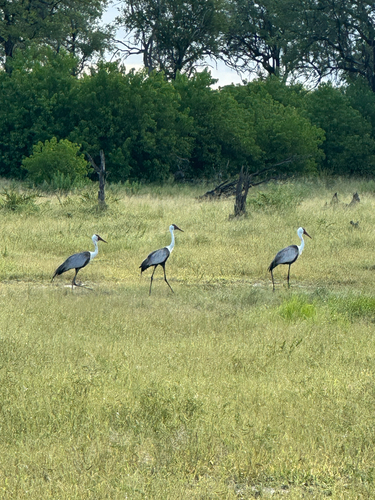
Wattled Crane
Bugeranus carunculatus
Global Distribution
Warmer areas are where this animal is recorded most often.
Parks Where Found
Quick answers
What are the chances of seeing a Red-knobbed Coot in Etosha National Park?
Under 5% of wildlife watchers report a Red-knobbed Coot sighting in Etosha National Park, based on 32 verified sightings from GBIF citizen-science data.
When is the best time to see Red-knobbed Coot in Etosha National Park?
January has the highest sighting rate for Red-knobbed Coot in Etosha National Park in our monthly data.