
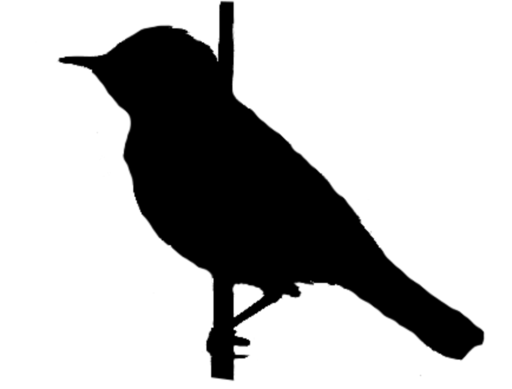
Paddyfield Warbler
Acrocephalus agricola
Silhouette: Yves Hoebeke · PhyloPic
- KingdomAnimalia (Animals)
- PhylumChordata (Chordates)
- ClassAves (Birds)
- OrderPasseriformes (Perching Birds)
- FamilyAcrocephalidae (Reed Warblers and Allies)
- GenusAcrocephalus (Reed Warblers)
- SpeciesAcrocephalus agricola (Paddyfield Warbler)
About the Paddyfield Warbler
The paddyfield warbler (Acrocephalus agricola) is a species of marsh warbler (family Acrocephalidae). It was formerly included in the "Old World warbler" assemblage. The Manchurian reed warbler (A. tangorum) was (and sometimes still is) included in A. agricola as a subspecies.
The genus name Acrocephalus is from Ancient Greek akros, "highest", and kephale, "head". It is possible that Naumann and Naumann thought akros meant "sharp-pointed". The specific agricola is from Latin and means "farmer".
It breeds in the temperate central Palearctic. It is migratory, wintering in Bangladesh, India and Pakistan. It is a rare vagrant to western Europe although there are small breeding populations along the western shores of the Black Sea around the border between Bulgaria and Romania. This passerine bird is a species found in low vegetation such as long grass, reeds and rice. 4–5 eggs are laid in a nest in grass.
At 13 cm (5.1 in) long with a wingspan of 15–17.5 cm (5.9–6.9 in), the paddyfield warbler is close in size to the Eurasian reed warbler but with shorter bill and wingspan. The adult has an unstreaked pale brown back and buff underparts, with a warm brown rump. There is a clearer whitish supercilium and the bill is short and pointed. The sexes are identical, as with most warblers, but young birds are richer buff below. Like most warblers, it is insectivorous.
The song is fast and similar to marsh warbler, with much mimicry and typically acrocephaline whistles added. Its song is weaker and more rhythmic than that of its relative. Wikipedia →
Recent sightings of Paddyfield Warbler in Gobi Gurvansaikhan National Park
LIVEiNaturalistClosest Relatives at Gobi Gurvansaikhan National Park

 Thick-billed Warbler
Iduna aedon

 Horned Lark
Eremophila alpestris

 Isabelline Wheatear
Oenanthe isabellina

 Isabelline Shrike
Lanius isabellinus

 Eurasian Tree Sparrow
Passer montanus

Desert Wheatear
Oenanthe deserti

 Common Raven
Corvus corax

 White-winged Snowfinch
Montifringilla nivalis

 Asian Short-toed Lark
Alaudala cheleensis

Rock Petronia
Petronia petronia

Eurasian Crag Martin
Ptyonoprogne rupestris

Crested Lark
Galerida cristata
Global Distribution
Warmer areas are where this animal is recorded most often.
Parks Where Found
| # | Park | Country | Daily sighting probability |
|---|---|---|---|
| 1 | Keoladeo National Park | 🇮🇳 India | |
| 2 | Gobi Gurvansaikhan National Park | 🇲🇳 Mongolia | |
| 3 | Manas National Park | 🇮🇳 India | |
| 4 | Chitwan National Park | 🇳🇵 Nepal | |
| 5 | Kanha National Park | 🇮🇳 India | |
| 6 | Sundarbans National Park | 🇮🇳 India | |
| 7 | Kaziranga National Park | 🇮🇳 India | |
| 8 | Ranthambore National Park | 🇮🇳 India | |
| 9 | Wadden Sea National Park | 🇩🇪 Germany |
Quick answers
What are the chances of seeing a Paddyfield Warbler in Gobi Gurvansaikhan National Park?
Under 5% of wildlife watchers report a Paddyfield Warbler sighting in Gobi Gurvansaikhan National Park, based on 13 verified sightings from GBIF citizen-science data.
When is the best time to see Paddyfield Warbler in Gobi Gurvansaikhan National Park?
May has the highest sighting rate for Paddyfield Warbler in Gobi Gurvansaikhan National Park in our monthly data.