


Chestnut-winged Whistling-Thrush
Myophonus castaneus
Silhouette: Martin Bulla, based on François Desbordes' illustration · PhyloPic
- KingdomAnimalia (Animals)
- PhylumChordata (Chordates)
- ClassAves (Birds)
- OrderPasseriformes (Perching Birds)
- FamilyMuscicapidae (Old World Flycatchers, Robins, and Chats)
- GenusMyophonus (Whistling-Thrushes)
- SpeciesMyophonus castaneus (Chestnut-winged Whistling-Thrush)
About the Chestnut-winged Whistling-Thrush
The brown-winged whistling thrush (Myophonus castaneus), also known as the Sumatran whistling thrush or chestnut-winged whistling thrush, is a passerine bird belonging to the whistling thrush genus Myophonus in the family Muscicapidae. It is endemic to the island of Sumatra in Indonesia. In the past, it has often been lumped together with the Javan whistling thrush (M. glaucinus) and Bornean whistling thrush (M. borneensis) as the "Sunda whistling thrush" (M. glaucinus) but it is now often regarded as a separate species based on differences in plumage and measurements.
It is about 25 centimetres long. The black bill has an average depth of 7.3 millimetres, slenderer than the bills of the Bornean and Javan whistling thrushes. The legs and feet are dark brown. The adult male has a dark blue head, breast and shoulders with the rest of the plumage being chestnut. The adult female and immature are mostly dull chestnut-brown with a blue patch on the shoulder. The Bornean and Javan whistling thrushes lack any chestnut coloration.
It has a loud whistling call and a harsh grating call. It occurs in montane forest from 400 to 1500 metres above sea-level. It is usually found near streams and typically keeps to the middle and subcanopy layers of the forest. It is a scarce bird and is believed to be declining as a result of deforestation. Wikipedia →
Recent sightings of Chestnut-winged Whistling-Thrush in Gunung Leuser National Park
LIVEiNaturalistClosest Relatives at Gunung Leuser National Park

 Blue Whistling-Thrush
Myophonus caeruleus

Shiny Whistling-Thrush
Myophonus melanurus

Fulvous-chested Jungle Flycatcher
Rhinomyias olivaceus

Grey-chested Jungle Flycatcher
Rhinomyias umbratilis

 Asian Brown Flycatcher
Muscicapa latirostris

 Chestnut-naped Forktail
Enicurus ruficapillus

 Korean Flycatcher
Ficedula zanthopygia

Large Niltava
Niltava grandis

Dark-sided Flycatcher
Muscicapa sibirica

Verditer Flycatcher
Eumyias thalassinus
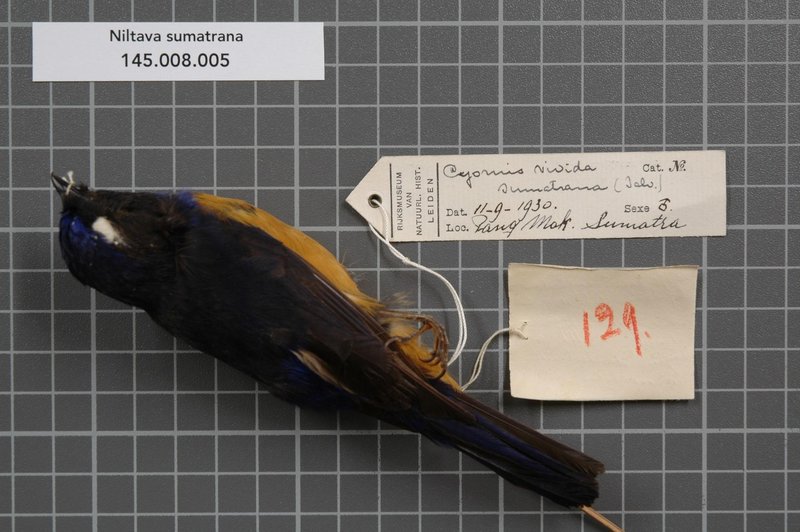
Rufous-vented Niltava
Niltava sumatrana

 Pale Blue-Flycatcher
Cyornis unicolor
Global Distribution
Warmer areas are where this animal is recorded most often.
Parks Where Found
| # | Park | Country | Daily sighting probability |
|---|---|---|---|
| 1 | Kerinci Seblat National Park | 🇮🇩 Indonesia | |
| 2 | Gunung Leuser National Park | 🇮🇩 Indonesia |