



Black-headed Monitor
Varanus tristis
Silhouette: Steven Traver · PhyloPic
- KingdomAnimalia (Animals)
- PhylumChordata (Chordates)
- ClassSquamata
- FamilyVaranidae (Monitor Lizards)
- GenusVaranus (Monitor Lizards)
- SpeciesVaranus tristis (Black-headed Monitor)
About the Black-headed Monitor
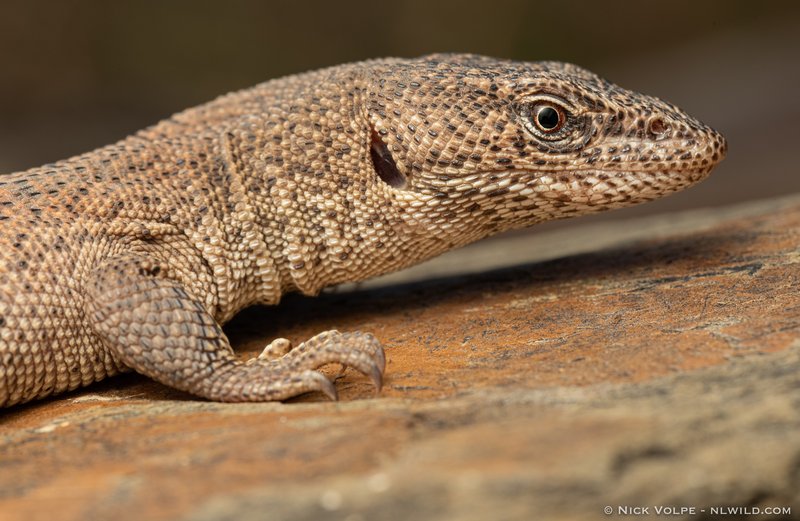
The black-headed monitor or black-tailed monitor (Varanus tristis) is a relatively small species of monitor lizards native to Australia. It is occasionally also called the mournful monitor, freckled monitor (Varanus tristis orientalis) or the racehorse monitor, a name it shares with the Gould's monitor due to their exceptional speed. It is placed in the subgenus Odatria.
Its specific name, tristis, means "sad", in reference to the completely black colouration of V. t. tristis populations around Perth. This is the most widespread monitor species in Australia, occurring throughout the mainland and even on some northern islands such as Magnetic Island. It is only absent in the southernmost and south-easternmost regions of Australia. V. t. tristis is found mainly to the west of Australia, while V. t. orientalis is confined mainly to eastern Australia. The two subspecies are sympatric in some areas such as the east coast of Queensland. This arboreal monitor lizard is usually found near rivers in forests, scrublands, woodlands, but also inhabits deserts. It takes shelter in tight spaces such as loose bark, tree hollows, and rocky crevices. Wikipedia →
Recent sightings of Black-headed Monitor in Kakadu National Park
LIVEiNaturalistClosest Relatives at Kakadu National Park

 Argus Monitor
Varanus panoptes

Mertens's Water Monitor
Varanus mertensi

 Gould's Goanna
Varanus gouldii

Black-spotted Ridge-tailed Monitor
Varanus insulanicus

Glauert's Monitor
Varanus glauerti

Black-palmed Rock Monitor
Varanus glebopalma

Mitchell's Water Monitor
Varanus mitchelli
Northern Blunt-spined Monitor
Varanus primordius

Banded Tree Monitor
Varanus scalaris
Global Distribution
Warmer areas are where this animal is recorded most often.
Parks Where Found
| # | Park | Country | Daily sighting probability |
|---|---|---|---|
| 1 | Uluru-Kata Tjuta National Park | 🇦🇺 Australia | |
| 2 | Kakadu National Park | 🇦🇺 Australia | |
| 3 | Nitmiluk National Park | 🇦🇺 Australia | |
| 4 | Cape Range | 🇦🇺 Australia | |
| 5 | Ningaloo Marine Park | 🇦🇺 Australia |
Quick answers
What are the chances of seeing a Black-headed Monitor in Kakadu National Park?
About 20% of wildlife watchers report a Black-headed Monitor sighting in Kakadu National Park, based on 16 verified sightings from GBIF citizen-science data.
When is the best time to see Black-headed Monitor in Kakadu National Park?
January has the highest sighting rate for Black-headed Monitor in Kakadu National Park in our monthly data.