



Specklebelly Keelback
Rhabdophis chrysargos
Silhouette: V. Deepak · PhyloPic
- KingdomAnimalia (Animals)
- PhylumChordata (Chordates)
- ClassSquamata
- FamilyColubridae (Colubrid Snakes)
- GenusRhabdophis
- SpeciesRhabdophis chrysargos (Specklebelly Keelback)
About the Specklebelly Keelback
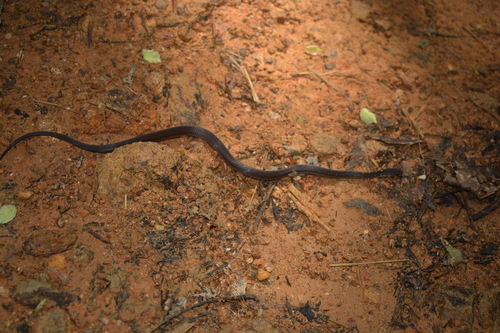
The specklebelly keelback (Rhabdophis chrysargos) is a species of colubrid snake found in southeast Asia. Food: Lizards, small mammals and birds Size: Up to 600 mm Distribution: the Philippines (Palawan), Borneo, Sumatra, Java, Bali
Habitat: Various forest Venom: Harmless Wikipedia →
Recent sightings of Specklebelly Keelback in Kerinci Seblat National Park
LIVEiNaturalistClosest Relatives at Kerinci Seblat National Park

 Blue-necked Keelback
Rhabdophis rhodomelas

 Oriental Whipsnake
Ahaetulla prasina

Black Copper Rat Snake
Coelognathus flavolineatus

Common Bronze-back
Dendrelaphis pictus

Gray Bronzeback
Dendrelaphis caudolineatus

 Variable Reed Snake
Calamaria lumbricoidea

Triangle Keelback
Xenochrophis trianguligerus

Brown Kukri Snake
Oligodon purpurascens

Brown Rat Snake
Ptyas fusca
Orange-bellied Snake
Gongylosoma baliodeira

Malayan Banded Wolf Snake
Lycodon subcinctus

Javanese Reed Snake
Calamaria javanica
Global Distribution
Warmer areas are where this animal is recorded most often.
Parks Where Found
| # | Park | Country | Daily sighting probability |
|---|---|---|---|
| 1 | Kerinci Seblat National Park | 🇮🇩 Indonesia | |
| 2 | Khao Sok National Park | 🇹🇭 Thailand | |
| 3 | Gunung Leuser National Park | 🇮🇩 Indonesia | |
| 4 | Kinabalu Park | 🇲🇾 Malaysia | |
| 5 | Khao Yai National Park | 🇹🇭 Thailand | |
| 6 | Khao Luang National Park | 🇹🇭 Thailand | |
| 7 | Kaeng Krachan National Park | 🇹🇭 Thailand | |
| 8 | Taman Negara National Park | 🇲🇾 Malaysia |
Quick answers
What are the chances of seeing a Specklebelly Keelback in Kerinci Seblat National Park?
About 20% of wildlife watchers report a Specklebelly Keelback sighting in Kerinci Seblat National Park, based on 5 verified sightings from GBIF citizen-science data.
When is the best time to see Specklebelly Keelback in Kerinci Seblat National Park?
January has the highest sighting rate for Specklebelly Keelback in Kerinci Seblat National Park in our monthly data.