
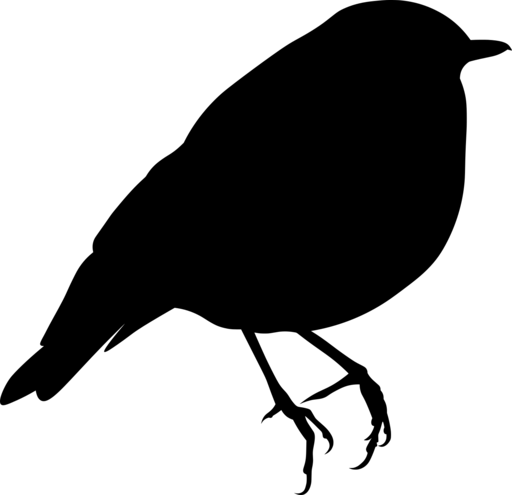
Mugimaki Flycatcher
Ficedula mugimaki
Silhouette: Rachael Joakim · PhyloPic
- KingdomAnimalia (Animals)
- PhylumChordata (Chordates)
- ClassAves (Birds)
- OrderPasseriformes (Perching Birds)
- FamilyMuscicapidae (Old World Flycatchers, Robins, and Chats)
- GenusFicedula (Ficedula Flycatchers)
- SpeciesFicedula mugimaki (Mugimaki Flycatcher)
About the Mugimaki Flycatcher
The mugimaki flycatcher (Ficedula mugimaki) is a small passerine bird of eastern Asia belonging to the genus Ficedula in the Old World flycatcher family, Muscicapidae. The name "mugimaki" comes from Japanese and means "wheat-sower". The bird is also known as the robin flycatcher.
The mugimaki flycatcher is 13 to 13.5 centimetres long. It has a rattling call and often flicks its wings and tail. The adult male has blackish upperparts with a short white supercilium behind the eye, a white wing-patch, white edges to the tertials and white at the base of the outer tail-feathers. The breast and throat are orange-red while the belly and undertail-coverts are white. The female is grey-brown above with a pale orange-brown breast and throat. She lacks white in the tail, has one or two pale wingbars rather than a white wing-patch and has a supercilium that is either faint or absent entirely. Young males are similar to the female but have a brighter orange breast, white in the tail and a more obvious supercilium.
It breeds in eastern Siberia and north-east China. Migrating birds pass through eastern China, Korea and Japan in spring and autumn. The... Wikipedia →
Recent sightings of Mugimaki Flycatcher in Kinabalu Park
LIVEiNaturalistClosest Relatives at Kinabalu Park

 Little Pied Flycatcher
Ficedula westermanni

Snowy-browed Flycatcher
Ficedula hyperythra

Pygmy Blue-Flycatcher
Ficedula hodgsoni

Rufous-chested Flycatcher
Ficedula dumetoria

Narcissus Flycatcher
Ficedula narcissina

 Indigo Flycatcher
Eumyias indigo

Bornean Whistling-Thrush
Myophonus borneensis

Eyebrowed Jungle Flycatcher
Rhinomyias gularis

Oriental Magpie-Robin
Copsychus saularis

White-crowned Shama
Copsychus stricklandii

Fulvous-chested Jungle Flycatcher
Rhinomyias olivaceus

 Asian Brown Flycatcher
Muscicapa latirostris
Global Distribution
Warmer areas are where this animal is recorded most often.
Parks Where Found
| # | Park | Country | Daily sighting probability |
|---|---|---|---|
| 1 | Kinabalu Park | 🇲🇾 Malaysia | |
| 2 | Khao Sok National Park | 🇹🇭 Thailand | |
| 3 | Kerinci Seblat National Park | 🇮🇩 Indonesia | |
| 4 | Khao Yai National Park | 🇹🇭 Thailand | |
| 5 | Cuc Phuong National Park | 🇻🇳 Vietnam | |
| 6 | Khao Luang National Park | 🇹🇭 Thailand | |
| 7 | Taroko National Park | 🇹🇼 Taiwan | |
| 8 | Taman Negara National Park | 🇲🇾 Malaysia | |
| 9 | Kaeng Krachan National Park | 🇹🇭 Thailand | |
| 10 | Sepilok | 🇲🇾 Malaysia | |
| 11 | Doi Inthanon National Park | 🇹🇭 Thailand |
Quick answers
What are the chances of seeing a Mugimaki Flycatcher in Kinabalu Park?
About 10% of wildlife watchers report a Mugimaki Flycatcher sighting in Kinabalu Park, based on 225 verified sightings from GBIF citizen-science data.
When is the best time to see Mugimaki Flycatcher in Kinabalu Park?
December has the highest sighting rate for Mugimaki Flycatcher in Kinabalu Park in our monthly data.