



Red-headed Krait
Bungarus flaviceps
Silhouette: Michael Scroggie, from original photograph by Gary M. Stolz, USFWS (original photograph in public domain). · PhyloPic
- KingdomAnimalia (Animals)
- PhylumChordata (Chordates)
- ClassSquamata
- FamilyElapidae (Elapid Snakes)
- GenusBungarus (Kraits)
- SpeciesBungarus flaviceps (Red-headed Krait)
About the Red-headed Krait
The red-headed krait (Bungarus flaviceps) is a large and highly venomous elapid snake with dramatic coloration. The red-headed krait can grow to a length of up to 2.1 metres (7 ft). It lives in lowland rain forest, including those on islands, but it is considered uncommon. It feeds primarily on specific snakes, probably semiaquatic and fossorial snakes. In Southeast Asia, the red-headed krait occurs in Malaysia, Singapore, Thailand and Indonesia (Sumatra), with a subspecies in Borneo. The venom potency is little-studied, as bites from this species are extremely rare.
The species presents a very striking and distinctive coloration – namely a bright red head and tail with a black body that includes a low-lateral narrow bluish white stripe. Having large, smooth scales, the general appearance of the red-headed krait is glossy and attractive. Captives will generally refuse to strike until they have been subjected to prolonged teasing. The average length of a red-headed krait is 4 to 5 feet (1.2 to 1.5 m), with a maximum of 7 feet (2.1 m). They have short, hollow fangs on their maxillary bones, with inlets at the bases and outlets near their tips. The venom is ducted to... Wikipedia →
Recent sightings of Red-headed Krait in Kinabalu Park
LIVEiNaturalist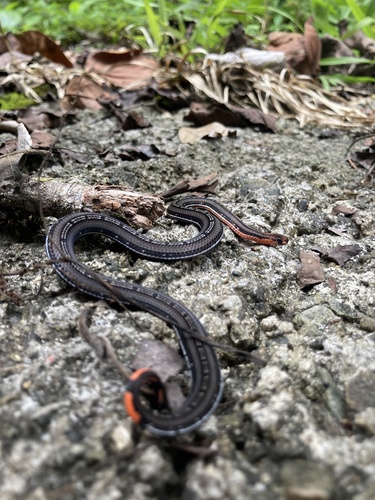


Global Distribution
Warmer areas are where this animal is recorded most often.
Parks Where Found
| # | Park | Country | Daily sighting probability |
|---|---|---|---|
| 1 | Kinabalu Park | 🇲🇾 Malaysia | |
| 2 | Khao Sok National Park | 🇹🇭 Thailand | |
| 3 | Gunung Leuser National Park | 🇮🇩 Indonesia | |
| 4 | Kerinci Seblat National Park | 🇮🇩 Indonesia | |
| 5 | Kinabatangan Wildlife Sanctuary | 🇲🇾 Malaysia | |
| 6 | Kaeng Krachan National Park | 🇹🇭 Thailand |
Quick answers
What are the chances of seeing a Red-headed Krait in Kinabalu Park?
About 30% of wildlife watchers report a Red-headed Krait sighting in Kinabalu Park, based on 26 verified sightings from GBIF citizen-science data.
When is the best time to see Red-headed Krait in Kinabalu Park?
February has the highest sighting rate for Red-headed Krait in Kinabalu Park in our monthly data.