



Triangle Keelback
Xenochrophis trianguligerus
Silhouette: Alex Slavenko · PhyloPic
- KingdomAnimalia (Animals)
- PhylumChordata (Chordates)
- ClassSquamata
- FamilyColubridae (Colubrid Snakes)
- GenusXenochrophis
- SpeciesXenochrophis trianguligerus (Triangle Keelback)
About the Triangle Keelback
The triangle keelback (Xenochrophis trianguligerus) is a species of snake found in Brunei Darussalam, Burma (Myanmar), Cambodia, India (Nicobar Islands; Arunachal Pradesh (Deban - Changlang district)), Indonesia (Nias, Mentawai, Sumatra, Laos, Malaysia (Malaya and East Malaysia), Singapore, Thailand, and Vietnam.
The type locality is Java. Friedrich Boie 1827 Bemerkungen über Merrem's Versuch eines Systems der Amphibien, 1. Lieferung: Ophidier. Isis van Oken, Jena, 20: 508–566. Bisby F.A.; Roskov Y.R.; Orrell T.M.; Nicolson D.; Paglinawan L.E.; Bailly N.; Kirk P.M.; Bourgoin T.; Baillargeon G.; Ouvrard D. (red.) (2011). "Species 2000 & ITIS Catalogue of Life: 2011 Annual Checklist". Species 2000: Reading, UK. Wikipedia →
Recent sightings of Triangle Keelback in Kinabalu Park
LIVEiNaturalistClosest Relatives at Kinabalu Park

 Schmidt's Reed Snake
Calamaria schmidti

Lined Reed Snake
Calamaria griswoldi

 Sarawak Keelback
Hebius sarawacensis

Gold-ringed Cat Snake
Boiga dendrophila
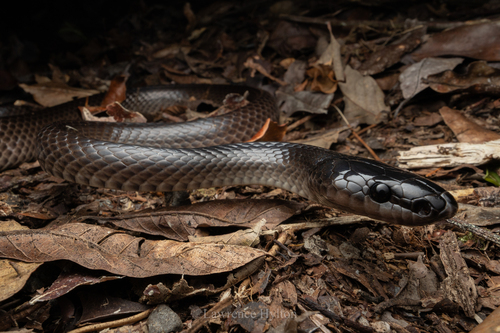
Dark-headed Sabah Groundsnake
Stegonotus caligocephalus

Gray Bronzeback
Dendrelaphis caudolineatus

Brown Rat Snake
Ptyas fusca

Sabah Keelback
Hebius flavifrons

Elegant Bronzeback
Dendrelaphis formosus
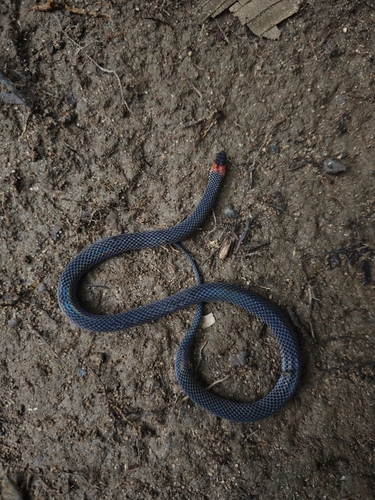
White-collared Reed Snake
Pseudorabdion albonuchalis

White-spotted Cat Snake
Boiga drapiezii

Jasper Cat Snake
Boiga jaspidea
Global Distribution
Warmer areas are where this animal is recorded most often.
Parks Where Found
| # | Park | Country | Daily sighting probability |
|---|---|---|---|
| 1 | Danum Valley Conservation Area | 🇲🇾 Malaysia | |
| 2 | Khao Luang National Park | 🇹🇭 Thailand | |
| 3 | Bako National Park | 🇲🇾 Malaysia | |
| 4 | Khao Sok National Park | 🇹🇭 Thailand | |
| 5 | Gunung Leuser National Park | 🇮🇩 Indonesia | |
| 6 | Kinabalu Park | 🇲🇾 Malaysia | |
| 7 | Tanjung Puting National Park | 🇮🇩 Indonesia | |
| 8 | Kerinci Seblat National Park | 🇮🇩 Indonesia | |
| 9 | Taman Negara National Park | 🇲🇾 Malaysia | |
| 10 | Kaeng Krachan National Park | 🇹🇭 Thailand |
Quick answers
What are the chances of seeing a Triangle Keelback in Kinabalu Park?
About 20% of wildlife watchers report a Triangle Keelback sighting in Kinabalu Park, based on 10 verified sightings from GBIF citizen-science data.
When is the best time to see Triangle Keelback in Kinabalu Park?
October has the highest sighting rate for Triangle Keelback in Kinabalu Park in our monthly data.