



Southern Weasel Skink
Saproscincus mustelinus
Silhouette: David Orr · PhyloPic
- KingdomAnimalia (Animals)
- PhylumChordata (Chordates)
- ClassSquamata
- FamilyScincidae (Skinks)
- GenusSaproscincus (Shadeskinks)
- SpeciesSaproscincus mustelinus (Southern Weasel Skink)
About the Southern Weasel Skink
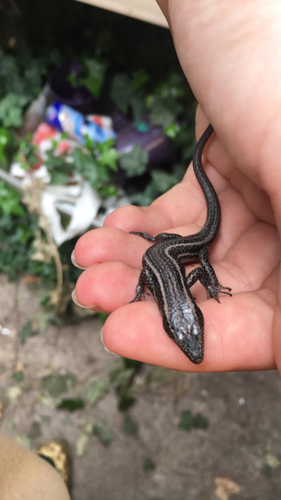
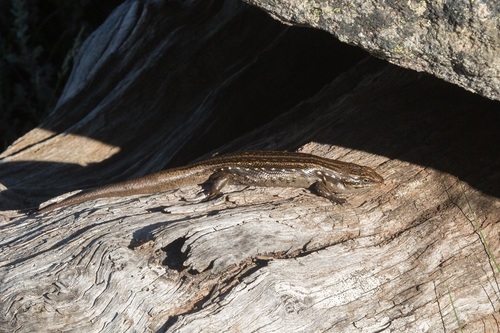
Saproscincus mustelinus, commonly known as the southern weasel skink or weasel shadeskink, is a small species of skink which is endemic to Australia. S. mustelinus is usually nocturnal, but is most active in the evening and warm mornings.
S. mustelinus hunts and feeds on small insects and other small invertebrates. The southern weasel skink is around 45 mm (1.8 in) from snout to vent, is covered in iridescent reddish brown (fine) scales, and has several distinctive white marks behind and below the eye.
If frightened this skink has the ability to lose its tail as a defence mechanism; the tail lies on the ground twitching, distracting the predator so the skink can escape. The southern weasel skink tends to utilize existing vegetation and fallen timber for shelter.
The southern weasel skink's distribution forms a coastal strip from south Victoria to southern Queensland. Females lay up to four eggs per clutch in a communal nest. The nests are normally a dugout, a burrow, which contain the eggs of numerous females. Laying normally occurs between spring and late summer... Wikipedia →
Recent sightings of Southern Weasel Skink in Kosciuszko National Park
LIVEiNaturalistClosest Relatives at Kosciuszko National Park

 Blotched Bluetongue
Tiliqua nigrolutea

 Cunningham's Skink
Egernia cunninghami

Southern Water Skink
Eulamprus heatwolei

 Entrecasteaux's Skink
Pseudemoia entrecasteauxii

 Pale-flecked Garden Sunskink
Lampropholis guichenoti

Cool-temperate Water Skink
Eulamprus tympanum
Trunk-climbing Cool-skink
Pseudemoia spenceri
Guthega Skink
Liopholis guthega

Alpine Meadow-skink
Eulamprus kosciuskoi

Black Crevice-skink
Egernia saxatilis

Eastern Three-lined Skink
Acritoscincus duperreyi

Copper-tailed Ctenotus
Ctenotus taeniolatus
Global Distribution
Warmer areas are where this animal is recorded most often.
Parks Where Found
| # | Park | Country | Daily sighting probability |
|---|---|---|---|
| 1 | Blue Mountains National Park | 🇦🇺 Australia | |
| 2 | Wilsons Promontory National Park | 🇦🇺 Australia | |
| 3 | Great Otway National Park | 🇦🇺 Australia | |
| 4 | Royal National Park | 🇦🇺 Australia | |
| 5 | Kosciuszko National Park | 🇦🇺 Australia |