


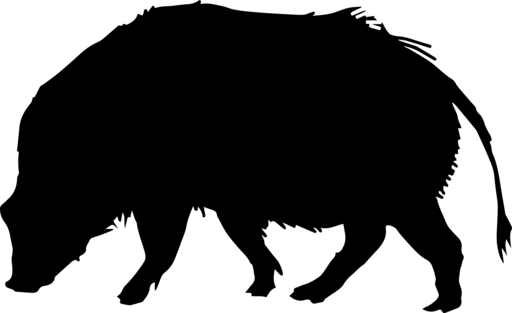
Bushpig
Potamochoerus larvatus
Silhouette: PhyloPic · PhyloPic
- KingdomAnimalia (Animals)
- PhylumChordata (Chordates)
- ClassMammalia (Mammals)
- OrderArtiodactyla (Even-toed Ungulates and Cetaceans)
- FamilySuidae (Suids)
- GenusPotamochoerus (Bushpigs)
- SpeciesPotamochoerus larvatus (Bushpig)
About the Bushpig
The bushpig (Potamochoerus larvatus) is a member of the pig family that inhabits forests, woodland, riverine vegetation and cultivated areas in East and Southern Africa. Introduced populations are also probably present in Madagascar. There have also been unverified reports of their presence on the Comoro island of Mayotte. Bushpigs are mainly nocturnal. There are several subspecies.
The vernacular name 'bushpig' may be used for either Potamochoerus species. Adult bushpigs stand from 66 to 100 cm (26 to 39 in) at the shoulder, and mature boars can reach a weight of 150 kg (330 lb), although 60 to 80 kg (130 to 180 lb) is more common. Sows are 45 to 70 kg (99 to 154 lb). They resemble the domestic pig, and can be identified by their pointed, tufted ears and face mask.
Bushpigs vary in hair colour and skin colour over their range. Southern koiropotamus and nyasae populations are dark reddish, sometimes almost black. The coat colour darkens with age. Their heads may have a 'face mask' with a contrasting pattern of blackish to dark brown and white to dark grey markings, or may sometimes be completely whitish. The ears have tassels of long hairs. Their very sharp tusks... Wikipedia →
Recent sightings of Bushpig in Kruger National Park
LIVEiNaturalistClosest Relatives at Kruger National Park

 Common Warthog
Phacochoerus africanus

 Southern Giraffe
Giraffa giraffa

 Impala
Aepyceros melampus

 Common Hippopotamus
Hippopotamus amphibius

 African Buffalo
Syncerus caffer

 Greater Kudu
Tragelaphus strepsiceros

 Waterbuck
Kobus ellipsiprymnus

Blue Wildebeest
Connochaetes taurinus

Steenbok
Raphicerus campestris

Northern Bushbuck
Tragelaphus scriptus

 Nyala
Tragelaphus angasii

Klipspringer
Oreotragus oreotragus
Global Distribution
Warmer areas are where this animal is recorded most often.
Parks Where Found
| # | Park | Country | Daily sighting probability |
|---|---|---|---|
| 1 | Liwonde National Park | 🇲🇼 Malawi | |
| 2 | Gorongosa National Park | 🇲🇿 Mozambique | |
| 3 | Kafue National Park | 🇿🇲 Zambia | |
| 4 | Hluhluwe-Imfolozi Park | 🇿🇦 South Africa | |
| 5 | Garden Route National Park | 🇿🇦 South Africa | |
| 6 | Addo Elephant National Park | 🇿🇦 South Africa | |
| 7 | Kruger National Park | 🇿🇦 South Africa | |
| 8 | Selous Game Reserve | 🇹🇿 Tanzania | |
| 9 | Meru National Park | 🇰🇪 Kenya | |
| 10 | Bale Mountains National Park | 🇪🇹 Ethiopia | |
| 11 | Gonarezhou National Park | 🇿🇼 Zimbabwe | |
| 12 | Lake Mburo National Park | 🇺🇬 Uganda | |
| 13 | Nairobi National Park | 🇰🇪 Kenya | |
| 14 | iSimangaliso Wetland Park | 🇿🇦 South Africa | |
| 15 | Ngorongoro Conservation Area | 🇹🇿 Tanzania | |
| 16 | Masai Mara National Reserve | 🇰🇪 Kenya |
Quick answers
What are the chances of seeing a Bushpig in Kruger National Park?
Under 5% of wildlife watchers report a Bushpig sighting in Kruger National Park, based on 5 verified sightings from GBIF citizen-science data.
When is the best time to see Bushpig in Kruger National Park?
May has the highest sighting rate for Bushpig in Kruger National Park in our monthly data.