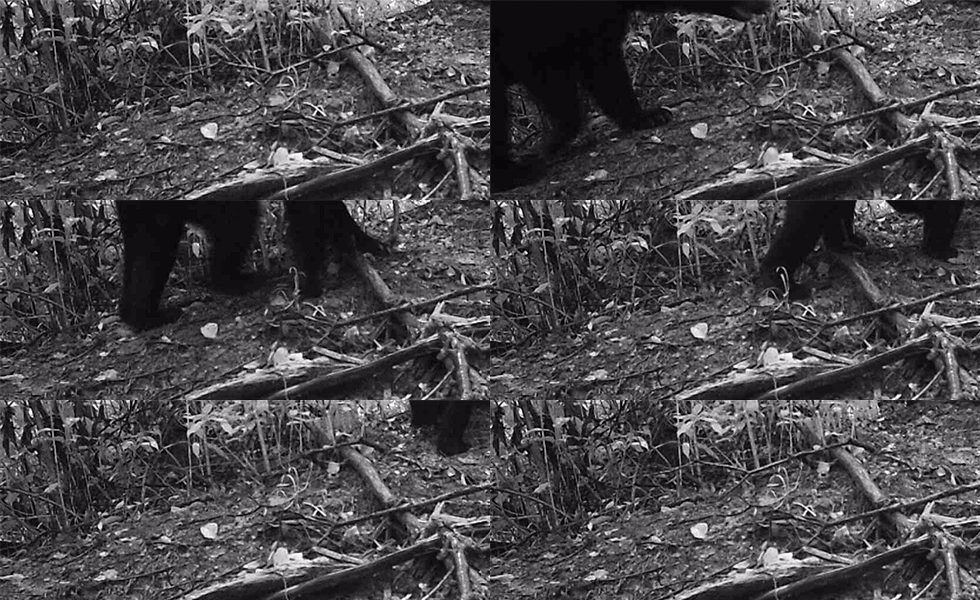


Asiatic Black Bear
Ursus thibetanus
Silhouette: Tracy A. Heath · PhyloPic
- KingdomAnimalia (Animals)
- PhylumChordata (Chordates)
- ClassMammalia (Mammals)
- OrderCarnivora (Carnivorans)
- FamilyUrsidae (Bears)
- GenusUrsus (Holarctic Bears)
- SpeciesUrsus thibetanus (Asiatic Black Bear)
About the Asiatic Black Bear
The Asian black bear (Ursus thibetanus), also known as the Asiatic black bear, moon bear and white-chested bear, is a medium-sized bear species native to Asia that is largely adapted to an arboreal lifestyle. It is distributed from southeastern Iran, Pakistan, India and the Himalayas to mainland Southeast Asia, the Korean Peninsula, Taiwan, China and the Russian Far East to the islands of Honshū and Shikoku in Japan. It is listed as vulnerable on the IUCN Red List, and is threatened by deforestation and poaching for its body parts, which are used in traditional medicine.
Biologically and morphologically, the Asian black bear represents the beginning of the arboreal specializations attained by sloth bears and sun bears. It has karyotypes nearly identical to those of the five other ursine bears, and has 74 chromosomes. It is considered the least derived of the Old World bears. It is either a surviving, albeit modified, form of Ursus etruscus, specifically the early, small variety of the Middle Villafranchian or a larger form of Ursus minimus, an extinct species that arose 4 million years ago. With the exception of the age of the bones, it... Wikipedia →
Recent sightings of Asiatic Black Bear in Langtang National Park
LIVEiNaturalist




Global Distribution
Warmer areas are where this animal is recorded most often.
Parks Where Found
| # | Park | Country | Daily sighting probability |
|---|---|---|---|
| 1 | Nikko National Park | 🇯🇵 Japan | |
| 2 | Khao Yai National Park | 🇹🇭 Thailand | |
| 3 | Langtang National Park | 🇳🇵 Nepal | |
| 4 | Kaeng Krachan National Park | 🇹🇭 Thailand |