Gandoca-Manzanillo Wildlife Refuge
🇨🇷 Costa Rica
🦥 Poison Dart Frog & Sloth RainforestGandoca-Manzanillo protects 19 km of pristine Caribbean coastline — from coral reefs and mangrove wetlands to lowland tropical forest stretching to the Panamanian border. The refuge is a critical nesting site for leatherback, hawksbill, and green sea turtles, while its offshore waters are home to bottlenose and tucuxi dolphins, and one of Costa Rica's last remaining manatee populations.
9.630° N 82.625° W
Wildlife
⭐ Iconic Species
 ★
★  Leatherback Sea Turtle
Dermochelys coriacea
 ★
★  Strawberry Poison-dart Frog
Oophaga pumilio
 ★
★  Hoffmann's Two-toed Sloth
Choloepus hoffmanni
 ★
★  Mantled Howler Monkey
Alouatta palliata
📊 Most Spotted

 White-throated Gecko
Gonatodes albogularis

 Great Kiskadee
Pitangus sulphuratus

 Black Vulture
Coragyps atratus

 Montezuma Oropendola
Psarocolius montezuma

 Black-cheeked Woodpecker
Melanerpes pucherani

 Central American Agouti
Dasyprocta punctata

 Brown-throated Sloth
Bradypus variegatus

Green and Black Dart-poison Frog
Dendrobates auratus

 Border Anole
Anolis limifrons

 Black-mandibled Toucan
Ramphastos ambiguus

 Red-eyed Treefrog
Agalychnis callidryas

Lesser Greenlet
Hylophilus decurtatus
⭐ Iconic Species
📊 Most Spotted
Central American Agouti
Dasyprocta punctata
Brown-throated Sloth
Bradypus variegatus

 Central American White-faced Capuchin
Cebus imitator

 Red-tailed Squirrel
Sciurus granatensis

 Kinkajou
Potos flavus

 Central American Spider Monkey
Ateles geoffroyi

 Common Raccoon
Procyon lotor

 Proboscis Bat
Rhynchonycteris naso

Variegated Squirrel
Sciurus variegatoides

 Sumichrast's Vesper Rat
Nyctomys sumichrasti

 Common Opossum
Didelphis marsupialis

 Derby's Woolly Opossum
Caluromys derbianus
📊 Most Spotted
Great Kiskadee
Pitangus sulphuratus
Black Vulture
Coragyps atratus
Montezuma Oropendola
Psarocolius montezuma
Black-cheeked Woodpecker
Melanerpes pucherani
Black-mandibled Toucan
Ramphastos ambiguus
Lesser Greenlet
Hylophilus decurtatus

 Turkey Vulture
Cathartes aura

 Keel-billed Toucan
Ramphastos sulfuratus

 Hudsonian Whimbrel
Numenius hudsonicus

Scarlet-rumped Tanager
Ramphocelus passerinii

 Red-lored Parrot
Amazona autumnalis

 Bananaquit
Coereba flaveola
⭐ Iconic Species
📊 Most Spotted
White-throated Gecko
Gonatodes albogularis
Border Anole
Anolis limifrons

 Green Iguana
Iguana iguana

 Middle American Ameiva
Holcosus festivus

 Brown Basilisk
Basiliscus vittatus

Helmeted Iguana
Corytophanes cristatus

 Mourning Gecko
Lepidodactylus lugubris

Basiisk Verde
Basiliscus plumifrons

 Crested Anole
Anolis cristatellus

Four-lined Ameiva
Holcosus quadrilineatus

 Common Caiman
Caiman crocodilus

 Neotropical Green Anole
Anolis biporcatus
⭐ Iconic Species
📊 Most Spotted
Green and Black Dart-poison Frog
Dendrobates auratus
Red-eyed Treefrog
Agalychnis callidryas

 Sylvia's Tree Frog
Cruziohyla sylviae

Masked Tree Frog
Smilisca phaeota

 Striped Poison-Dart Frog
Phyllobates lugubris

 Giant Marine Toad
Rhinella horribilis

Harlequin Treefrog
Dendropsophus ebraccatus

Striped Rocket Frog
Allobates talamancae

 Savage's Thin-toed Frog
Leptodactylus savagei

 Sipurio Snouted Treefrog
Scinax elaeochroa

 Atlantic Broad-headed Litter Frog
Craugastor megacephalus

 Green Climbing Toad
Incilius coniferus
Recent sightings in Gandoca-Manzanillo Wildlife Refuge
LIVEiNaturalistAnimal Events
1Leatherback Sea Turtle Nesting
The world's largest sea turtle, a leathery-shelled giant that can top two meters, hauls onto these dark-sand beaches under cover of night to dig deep nests and lay clutches of eggs. Watching a leatherback drag her enormous body up the shore is one of the great spectacles of the Caribbean coast.
3Red-eyed Treefrog Breeding Chorus
After nightfall the rains draw red-eyed treefrogs to pond edges, where males cling to overhanging leaves and call in ringing choruses to attract mates. Their vivid green bodies, orange feet, and startling ruby eyes make this one of the most photographed frogs of the neotropics.
2Poison Dart Frog Breeding Season
When the rains swell the leaf litter, tiny Strawberry and Green-and-Black poison-dart frogs turn boldly territorial, the males calling and wrestling for the best spots. The females carry hatched tadpoles up into water-filled bromeliads one by one, an intimate act of parental care from thumbnail-sized jewels of the forest floor.
Sighting Calendar
Average chance of spotting the park's most-spotted species, month by month
- 1Leatherback Sea Turtle Nesting
- 2Poison Dart Frog Breeding Season
- 3Red-eyed Treefrog Breeding Chorus
Sighting Zones
Warmer areas are where all species together are recorded most often.
Essentials
Climate
What visitors saw
Here, we saw another helmeted iguana and a coati (a raccoon-like animal with a long snout) up in a tree.
We see a squirrel determined to gnaw the hard shell of one of the many coconuts in a heavy bunch and then secure breakfast from there.
There, on the advice of a local, we spotted sloths in the trees and small iguanas on palms...
For wildlife photographers, we definitely recommend visiting the Ara Manzanillo project, which is a great spot for observing and photographing the Green Macaw.
Quick answers
What animals can you see in Gandoca-Manzanillo Wildlife Refuge?
The most likely sightings are Strawberry Poison-dart Frog (seen by about 80% of wildlife watchers), White-throated Gecko (seen by about 70% of wildlife watchers), Mantled Howler Monkey (seen by about 70% of wildlife watchers), Hoffmann's Two-toed Sloth (seen by about 70% of wildlife watchers), Great Kiskadee (seen by about 70% of wildlife watchers) — among 983 recorded vertebrate species, based on citizen-science data from GBIF.
When is the best time to visit Gandoca-Manzanillo Wildlife Refuge for wildlife?
February has the highest combined sighting rate for the park's top species in our month-by-month GBIF data. The full sighting calendar on this page shows each species' best months.
Can you see Leatherback Sea Turtle in Gandoca-Manzanillo Wildlife Refuge?
It's possible but not guaranteed: about 10% of wildlife watchers report a Leatherback Sea Turtle sighting in Gandoca-Manzanillo Wildlife Refuge, based on 1 verified sighting from GBIF citizen-science data. Sightings take luck and time in the field.
Can you see Strawberry Poison-dart Frog in Gandoca-Manzanillo Wildlife Refuge?
Yes — about 80% of wildlife watchers report a Strawberry Poison-dart Frog sighting in Gandoca-Manzanillo Wildlife Refuge, based on 222 verified sightings from GBIF citizen-science data.
Can you see Hoffmann's Two-toed Sloth in Gandoca-Manzanillo Wildlife Refuge?
Yes — about 70% of wildlife watchers report a Hoffmann's Two-toed Sloth sighting in Gandoca-Manzanillo Wildlife Refuge, based on 155 verified sightings from GBIF citizen-science data.
Can you see Mantled Howler Monkey in Gandoca-Manzanillo Wildlife Refuge?
Yes — about 70% of wildlife watchers report a Mantled Howler Monkey sighting in Gandoca-Manzanillo Wildlife Refuge, based on 176 verified sightings from GBIF citizen-science data.
Where Wildlife Score
How good is this park for seeing wildlife?Biodiversity
ExcellentHow rich is the wildlife?
Sighting
ExcellentHow likely to see animals?
Experience
Very goodHow easy and pleasant is the visit?
Explore Other Parks
.jpg/330px-Strawberry_poison_dart_frog_(70539).jpg) 📍 22 km 🦥 Poison Dart Frogs & Sloths
📍 22 km 🦥 Poison Dart Frogs & Sloths Cahuita National Park
 📍 57 km 🐸 Strawberry Poison Dart Frogs Underfoot
 Bastimentos Island National Marine Park
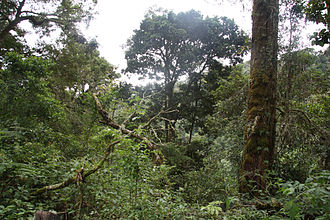 📍 59 km 🐸 Poison Dart Frog & Quetzal Cloudforest
 La Amistad International Park (Panama)
 📍 93 km 🐦 Quetzals and Solitaires on Volcán Barú