



Red-lored Parrot
Amazona autumnalis
Silhouette: Ferran Sayol · PhyloPic
- KingdomAnimalia (Animals)
- PhylumChordata (Chordates)
- ClassAves (Birds)
- OrderPsittaciformes (Parrots)
- FamilyPsittacidae (New World and African Parrots)
- GenusAmazona (Amazon Parrots)
- SpeciesAmazona autumnalis (Red-lored Parrot)
About the Red-lored Parrot
The red-lored amazon or red-lored parrot (Amazona autumnalis) is a species of amazon parrot, native to tropical regions of the Americas, from eastern Mexico south to Ecuador where it occurs in humid evergreen to semi-deciduous forests up to 1,100 m altitude. It is absent from the Pacific side of Central America north of Costa Rica. Not originally known from El Salvador, a pair - perhaps escaped from captivity - nested successfully in 1995 and 1996 in the outskirts of San Salvador and the species might expand its range permanently into that country in the future. This species has also established feral populations in several California cities.
The red-lored amazon was formally described in 1758 by the Swedish naturalist Carl Linnaeus in the tenth edition of his Systema Naturae. He placed it with all the other parrots in the genus Psittacus and coined the binomial name Psittacus autumnalis. Linnaeus based his description on the "lesser green parrot" that had been described and illustrated in 1751 by the English naturalist George Edwards in the fourth volume of his A Natural History of Uncommon Birds. Edwards mistakenly believed his specimen had come from the West Indies... Wikipedia →
Recent sightings of Red-lored Parrot in Gandoca-Manzanillo Wildlife Refuge
LIVEiNaturalistClosest Relatives at Gandoca-Manzanillo Wildlife Refuge

 Mealy Parrot
Amazona farinosa

 Great Green Macaw
Ara ambiguus

 Orange-chinned Parakeet
Brotogeris jugularis

 Olive-throated Parakeet
Aratinga nana

 White-crowned Parrot
Pionus senilis

Blue-headed Parrot
Pionus menstruus
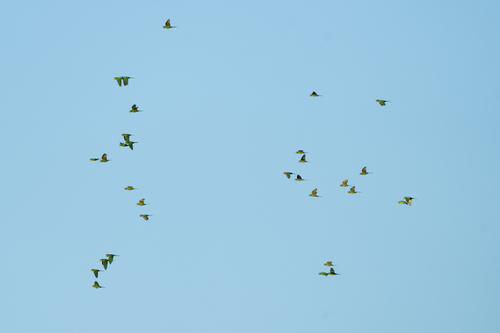
Crimson-fronted Parakeet
Aratinga finschi

Brown-hooded Parrot
Pionopsitta haematotis

Brown-throated Parakeet
Aratinga pertinax

Scarlet Macaw
Ara macao
Global Distribution
Warmer areas are where this animal is recorded most often.
Parks Where Found
Quick answers
What are the chances of seeing a Red-lored Parrot in Gandoca-Manzanillo Wildlife Refuge?
About 50% of wildlife watchers report a Red-lored Parrot sighting in Gandoca-Manzanillo Wildlife Refuge, based on 701 verified sightings from GBIF citizen-science data.
When is the best time to see Red-lored Parrot in Gandoca-Manzanillo Wildlife Refuge?
May has the highest sighting rate for Red-lored Parrot in Gandoca-Manzanillo Wildlife Refuge in our monthly data.