

Dark-fronted Babbler
Rhopocichla atriceps
Silhouette: Jiekun He · PhyloPic
- KingdomAnimalia (Animals)
- PhylumChordata (Chordates)
- ClassAves (Birds)
- OrderPasseriformes (Perching Birds)
- FamilyTimaliidae (Tree-Babblers, Scimitar-Babblers, and Allies)
- GenusRhopocichla
- SpeciesRhopocichla atriceps (Dark-fronted Babbler)
About the Dark-fronted Babbler
The dark-fronted babbler (Dumetia atriceps) is an Old World babbler found in the Western Ghats of India and the forests of Sri Lanka. They are small chestnut brown birds with a dark black cap, a whitish underside and pale yellow iris. They forage in flocks in the undergrowth of forests constantly making calls and uttering alarm calls when disturbed.
The dark-fronted babbler was formally described in 1839 by the English naturalist Thomas Jerdon under the binomial name Brachypteryx atriceps. He specified the range as Thrissur, Wadakkancherry, Coonoor and the Wayanad of southwest India. The type locality was restricted to Wayanad by Hugh Whistler in 1935. The dark-fronted babbler was formerly placed in the monotypic genus Rhopocichla. It was moved to Dumetia with the tawny-bellied babbler based on the results of a large molecular phylogenetic study published in 2019. The genus Dumetia was introduced in 1852 by the English zoologist Edward Blyth. The genus name is from Latin dumetum, dumeti meaning "thicket". The specific epithet atriceps combines the Latin ater meaning "black" with -ceps meaning "-capped" or "-headed".
Four subspecies are recognised: D. a. atriceps (Jerdon... Wikipedia →
Recent sightings of Dark-fronted Babbler in Minneriya National Park
LIVEiNaturalistClosest Relatives at Minneriya National Park

 Tawny-bellied Babbler
Dumetia hyperythra

 Indian Robin
Saxicoloides fulicatus

Purple-rumped Sunbird
Leptocoma zeylonica

 Black-hooded Oriole
Oriolus xanthornus
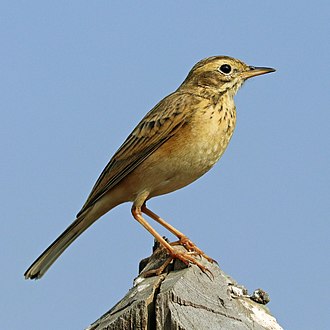
 Oriental Pipit
Anthus rufulus

 Large-billed Crow
Corvus macrorhynchos

 Yellow-billed Babbler
Turdoides affinis

Common Iora
Aegithina tiphia

Common Tailorbird
Orthotomus sutorius

Oriental Magpie-Robin
Copsychus saularis

 Pale-billed Flowerpecker
Dicaeum erythrorhynchos

 Barn Swallow
Hirundo rustica
Global Distribution
Warmer areas are where this animal is recorded most often.
Parks Where Found
| # | Park | Country | Daily sighting probability |
|---|---|---|---|
| 1 | Sinharaja Forest Reserve | 🇱🇰 Sri Lanka | |
| 2 | Horton Plains National Park | 🇱🇰 Sri Lanka | |
| 3 | Periyar National Park | 🇮🇳 India | |
| 4 | Wilpattu National Park | 🇱🇰 Sri Lanka | |
| 5 | Nagarhole National Park | 🇮🇳 India | |
| 6 | Minneriya National Park | 🇱🇰 Sri Lanka | |
| 7 | Yala National Park | 🇱🇰 Sri Lanka | |
| 8 | Mudumalai National Park | 🇮🇳 India | |
| 9 | Eravikulam National Park | 🇮🇳 India |
Quick answers
What are the chances of seeing a Dark-fronted Babbler in Minneriya National Park?
Under 5% of wildlife watchers report a Dark-fronted Babbler sighting in Minneriya National Park, based on 11 verified sightings from GBIF citizen-science data.
When is the best time to see Dark-fronted Babbler in Minneriya National Park?
November has the highest sighting rate for Dark-fronted Babbler in Minneriya National Park in our monthly data.