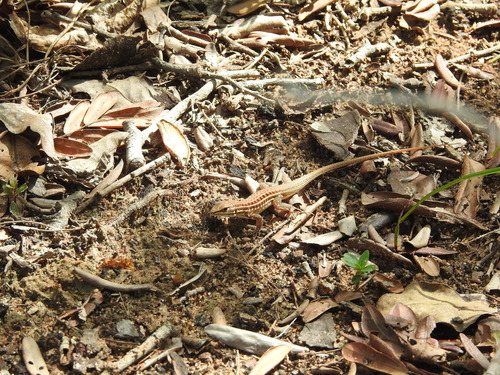

Speke’s sand lizard
Heliobolus spekii
Silhouette: Gustav Mützel · PhyloPic
- KingdomAnimalia (Animals)
- PhylumChordata (Chordates)
- ClassSquamata
- FamilyLacertidae (Wall Lizards)
- GenusHeliobolus
- SpeciesHeliobolus spekii (Speke’s sand lizard)
About the Speke’s sand lizard
Heliobolus spekii, also known commonly as Speke's sand lizard, is a species of lizard in the family Lacertidae. The species is native to East Africa and the Horn of Africa. There are three recognized subspecies. The specific name, spekii, is in honor of British explorer John Hanning Speke.
H. spekii is found in Somalia, Ethiopia, South Sudan, Kenya, Uganda, and Tanzania. H. spekii is oviparous. Three subspecies are recognized as being valid, including the nominotypical subspecies. Heliobolus spekii scorteccii (Arillo, Balletto & Spanò, 1965)
Heliobolus spekii sextaeniata (Stejneger, 1893) Heliobolus spekii spekii (Günther, 1872) Nota bene: A trinomial authority in parentheses indicates that the subspecies was originally described in a genus other than Heliobolus.
Arillo A, Balletto E, Spanò S (1965). "II e III spedizione Scortecci in Migiurtinia: il genere Eremias Wiegmann (Reptilia, Lacertidae)". Bollettino dei Musei e degli Istituti Biologici della Università di Genova 33: 85–109. (Eremias spekii scorteccii, new subspecies). (in Italian).
Goldberg SR (2009). "Reproduction... Wikipedia →
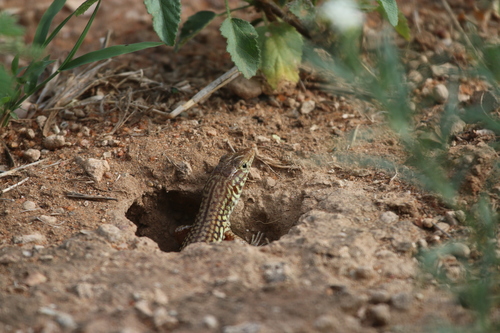
Recent sightings of Speke’s sand lizard in Mkomazi National Park
LIVEiNaturalistClosest Relatives at Mkomazi National Park

Global Distribution
Warmer areas are where this animal is recorded most often.
Parks Where Found
| # | Park | Country | Daily sighting probability |
|---|---|---|---|
| 1 | Tsavo East National Park | 🇰🇪 Kenya | |
| 2 | Mkomazi National Park | 🇹🇿 Tanzania | |
| 3 | Tsavo West National Park | 🇰🇪 Kenya | |
| 4 | Samburu National Reserve | 🇰🇪 Kenya | |
| 5 | Ngorongoro Conservation Area | 🇹🇿 Tanzania | |
| 6 | Tarangire National Park | 🇹🇿 Tanzania | |
| 7 | Serengeti National Park | 🇹🇿 Tanzania |
Quick answers
What are the chances of seeing a Speke’s sand lizard in Mkomazi National Park?
About 20% of wildlife watchers report a Speke’s sand lizard sighting in Mkomazi National Park, based on 5 verified sightings from GBIF citizen-science data.
When is the best time to see Speke’s sand lizard in Mkomazi National Park?
November has the highest sighting rate for Speke’s sand lizard in Mkomazi National Park in our monthly data.