Tsavo West National Park
🇰🇪 Kenya
🦏 Black Rhinoceros Roam Volcanic LandscapesTsavo West is a protected tropical savanna reserve in southern Kenya, featuring open grasslands, thorny bushland, and volcanic rocky ridges. This wild habitat differs from neighboring parks through its striking black lava flows and hidden underground water sources that sustain year-round vegetation.
-2.928° S 38.207° E
Wildlife
⭐ Iconic Species
 ★
★  African Bush Elephant
Loxodonta africana
 ★
★  Black Rhinoceros
Diceros bicornis
 ★
★  Common Hippopotamus
Hippopotamus amphibius
📊 Most Spotted

 East African Giraffe
Giraffa tippelskirchi

 Plains Zebra
Equus quagga

 Superb Starling
Lamprotornis superbus

 White-browed Sparrow-Weaver
Plocepasser mahali

 African Buffalo
Syncerus caffer

 Common Bulbul
Pycnonotus barbatus

 East African Oryx
Oryx beisa

 Von der Decken's Hornbill
Tockus deckeni

Northern Red-billed Hornbill
Tockus erythrorhynchus

 White-Bellied Go-Away-Bird
Corythaixoides leucogaster

Emerald-spotted Wood-Dove
Turtur chalcospilos

 Fork-tailed Drongo
Dicrurus adsimilis
⭐ Iconic Species
★ African Bush Elephant
Loxodonta africana
★ Black Rhinoceros
Diceros bicornis
★ Common Hippopotamus
Hippopotamus amphibius
📊 Most Spotted
East African Giraffe
Giraffa tippelskirchi
Plains Zebra
Equus quagga
African Buffalo
Syncerus caffer
East African Oryx
Oryx beisa

 Lion
Lion
Panthera leo

 Hartebeest
Alcelaphus buselaphus

 Lesser Kudu
Tragelaphus imberbis

 Impala
Aepyceros melampus

 Yellow Baboon
Papio cynocephalus

 Vervet Monkey
Chlorocebus pygerythrus

 Common Eland
Taurotragus oryx

 Waterbuck
Kobus ellipsiprymnus
📊 Most Spotted
Superb Starling
Lamprotornis superbus
White-browed Sparrow-Weaver
Plocepasser mahali
Common Bulbul
Pycnonotus barbatus
Von der Decken's Hornbill
Tockus deckeni
Northern Red-billed Hornbill
Tockus erythrorhynchus
White-Bellied Go-Away-Bird
Corythaixoides leucogaster
Emerald-spotted Wood-Dove
Turtur chalcospilos
Fork-tailed Drongo
Dicrurus adsimilis

 Cape Turtle Dove
Streptopelia capicola

 Northern White-crowned Shrike
Eurocephalus ruppelli

 Yellow-necked Francolin
Pternistis leucoscepus

 D'Arnaud's Barbet
Trachyphonus darnaudii
📊 Most Spotted

 Leopard Tortoise
Stigmochelys pardalis

 Kenyan Rock Agama
Agama lionotus

 Nile Crocodile
Crocodylus niloticus

 Böhme’s Two-horned Chamaeleon
Kinyongia boehmei

 Rock Monitor
Varanus albigularis

 Flap-necked Chameleon
Chamaeleo dilepis

 Rainbow Skink
Trachylepis margaritifera

Nile Monitor
Varanus niloticus

 Tropical House Gecko
Hemidactylus mabouia

 Kenya leaf chameleon
Rieppeleon kerstenii

Sudan Mabuya
Trachylepis brevicollis

 Puff Adder
Bitis arietans
📊 Most Spotted

 Taita Hills Caecilian
Boulengerula taitana

 Gong Rock Frog
Hyperolius glandicolor

 Taita Warty Frog
Callulina dawida

Anchieta's Ridged Frog
Ptychadena anchietae

 Garman's Toad
Sclerophrys garmani

Senegal Kassina
Kassina senegalensis
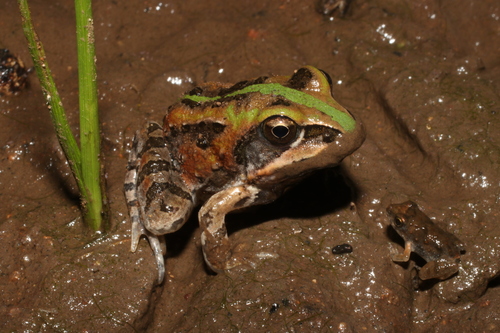
Ornate frog
Hildebrandtia ornata

Marbled sand frog
Tomopterna marmorata

 Dwarf Squeaker
Arthroleptis xenodactyloides

 African Split-skin Toad
Schismaderma carens

African Common Toad
Sclerophrys gutturalis

 Shovel-nosed Frog
Hemisus marmoratus
Recent sightings in Tsavo West National Park
LIVEiNaturalistAnimal Events
1Mzima Springs Dry Season Concentration
During the dry season, the crystal-clear oasis of Mzima Springs attracts high concentrations of thirsty African Bush Elephants and Common Hippopotamuses looking for permanent water and lush vegetation.
2Wet Season Amphibian Breeding Choruses
The onset of seasonal rains triggers massive breeding choruses across the park's temporary water pools, featuring specialized amphibians like the Gong Rock Frog and local toads.
3Ngulia Hills Migratory Bird Wave
The rugged Ngulia Hills serve as a major migratory bottleneck where nocturnal passerines and raptors collide with resident species like Upupa africana during seasonal transit.


Sighting Calendar
Average chance of spotting the park's most-spotted species, month by month
- 1Mzima Springs Dry Season Concentration
- 2Wet Season Amphibian Breeding Choruses
- 3Ngulia Hills Migratory Bird Wave
Sighting Zones
Warmer areas are where all species together are recorded most often.
Essentials
Climate
What visitors saw
Lots of European rollers about and we also get to see our first Fringe Eared Oryx (also called a Besia Oryx – of which there are two sub-species – Fringe Eared and common – but I like the name Fringe Eared).
We see spotted and striped hyenas and jackals, giraffes, baboons and elephants.
From here, I spotted a herd of buffalo moving in the distance.
As we drove in the darkness, we talked about all the animals we'd seen at the watering hole: zebras, warthogs, gazelles, topi, water buffalos, giraffes, hyenas, elephants, and many others.
Quick answers
What animals can you see in Tsavo West National Park?
The most likely sightings are African Bush Elephant (seen by about 70% of wildlife watchers), East African Giraffe (seen by about 70% of wildlife watchers), Plains Zebra (seen by about 70% of wildlife watchers), Superb Starling (seen by about 60% of wildlife watchers), White-browed Sparrow-Weaver (seen by about 50% of wildlife watchers) — among 1407 recorded vertebrate species, based on citizen-science data from GBIF.
When is the best time to visit Tsavo West National Park for wildlife?
March has the highest combined sighting rate for the park's top species in our month-by-month GBIF data. The full sighting calendar on this page shows each species' best months.
Can you see African Bush Elephant in Tsavo West National Park?
Yes — about 70% of wildlife watchers report a African Bush Elephant sighting in Tsavo West National Park, based on 206 verified sightings from GBIF citizen-science data.
Can you see Black Rhinoceros in Tsavo West National Park?
Yes — about 30% of wildlife watchers report a Black Rhinoceros sighting in Tsavo West National Park, based on 29 verified sightings from GBIF citizen-science data.
Can you see Common Hippopotamus in Tsavo West National Park?
Yes — about 40% of wildlife watchers report a Common Hippopotamus sighting in Tsavo West National Park, based on 44 verified sightings from GBIF citizen-science data.
Where Wildlife Score
How good is this park for seeing wildlife?Biodiversity
ExcellentHow rich is the wildlife?
Sighting
ExcellentHow likely to see animals?
Experience
Very goodHow easy and pleasant is the visit?


