
Australian Pratincole
Stiltia isabella
- KingdomAnimalia (Animals)
- PhylumChordata (Chordates)
- ClassAves (Birds)
- OrderCharadriiformes (Shorebirds and Allies)
- FamilyGlareolidae (Pratincoles and Coursers)
- GenusStiltia
- SpeciesStiltia isabella (Australian Pratincole)
About the Australian Pratincole
The Australian pratincole (Glareola isabella) is a species of bird in the family Glareolidae. It breeds in Australia's interior and winters in northern and eastern parts of the continent, Indonesia and New Guinea. It is a medium-sized nomadic shorebird but is commonly found in arid inland Australia. It breeds predominantly from south-western Queensland to northern Victoria, and through central Australia to the Kimberley region in Western Australia. The Australian population is estimated at 60,000 individuals.
They are a migratory species that generally move to the southern parts of their distribution range to breed during spring and summer. During winter they migrate to northern Australia, New Guinea, Java, Sulawesi and southern Borneo. Although they are common, their occurrence is unpredictable and varies in location.
The Australian pratincole was formerly placed in the monotypic genus Stiltia. It was moved to the genus Glareola based on a 2022 molecular genetic study of the Charadriiformes by David Černý and Rossy Natale that showed that the species was embedded within the genus Glareola.
The pratincole is also known as the Arnhem Land grouse... Wikipedia →
Closest Relatives at Raja Ampat

Oriental Pratincole
Glareola maldivarum
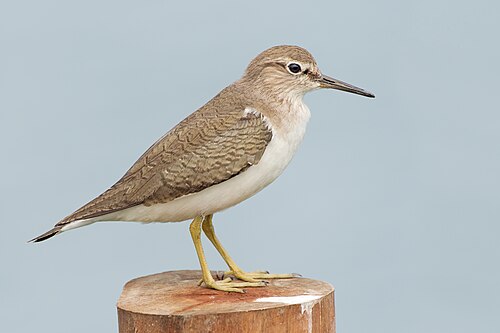
Common Sandpiper
Actitis hypoleucos

Crested Tern
Thalasseus bergii

Whimbrel
Numenius phaeopus

Common Tern
Sterna hirundo

Pacific Golden-Plover
Pluvialis fulva

Bridled Tern
Onychoprion anaethetus

Red-necked Phalarope
Phalaropus lobatus

Black-naped Tern
Sterna sumatrana

Grey-tailed Tattler
Tringa brevipes

Great Knot
Calidris tenuirostris

Curlew Sandpiper
Calidris ferruginea
Global Distribution
Where this species is recorded worldwide. Restricted to human observations from 2019 onwards — the same kind of record and the same period the probabilities on this page are built from, so collar-tracking studies, camera-trap arrays and museum specimens are excluded. Around Santa Rosa that removes 5,924 GPS fixes from a handful of tagged jaguars.
where this species is recorded (GBIF density — it tracks where observers go, not how likely a sighting is) · parks where it occurs — tap a pin for the sighting probability there
Parks Where Found
| # | Park | Country | Daily sighting probability |
|---|---|---|---|
| 1 | Kakadu National Park | 🇦🇺 Australia | |
| 2 | Litchfield National Park | 🇦🇺 Australia | |
| 3 | Ningaloo Marine Park | 🇦🇺 Australia | |
| 4 | Cape Range | 🇦🇺 Australia | |
| 5 | Uluru-Kata Tjuta National Park | 🇦🇺 Australia | |
| 6 | Daintree National Park | 🇦🇺 Australia | |
| 7 | Raja Ampat | 🇮🇩 Indonesia |