



Pink-breasted Lark
Calendulauda poecilosterna
Silhouette: Gossipguy and T. Michael Keesey · PhyloPic
- KingdomAnimalia (Animals)
- PhylumChordata (Chordates)
- ClassAves (Birds)
- OrderPasseriformes (Perching Birds)
- FamilyAlaudidae (Larks)
- GenusCalendulauda (Calendulauda Larks)
- SpeciesCalendulauda poecilosterna (Pink-breasted Lark)
About the Pink-breasted Lark
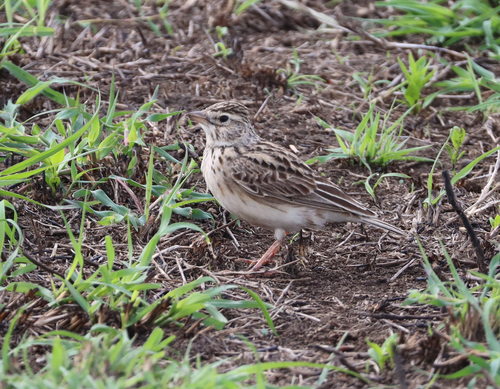
The pink-breasted lark (Calendulauda poecilosterna) or pink-breasted bushlark is a species of passerine bird in the family Alaudidae. This species was originally classified in the genus Alauda and then Mirafra until moved to the new genus Calendulauda in 2009 by the IOC. Not all authorities have followed this taxonomy change.
The pink-breasted lark is estimated to have a global extent of occurrence of 560,000 km2, covering a broad range from south-eastern South Sudan and southern Ethiopia through Kenya to southern Somalia, north-eastern Tanzania and eastern Uganda.
Its natural habitat is dry savannah, open bush and wooded areas, in particular dry acacia and Commiphora scrub. It is generally found singly or in pairs foraging on the ground for insects and seeds. When disturbed it flies to a safe, elevated position on the branch of a tree or the top of a bush. These are also its favoured perches for engaging in territorial song.
Species factsheet - BirdLife International Wikipedia →
Recent sightings of Pink-breasted Lark in Samburu National Reserve
LIVEiNaturalistClosest Relatives at Samburu National Reserve

 Fawn-colored Lark
Calendulauda africanoides

 Fischer's Sparrow-Lark
Eremopterix leucopareia

 Chestnut-headed Sparrow-Lark
Eremopterix signatus

Australasian Bushlark
Mirafra javanica

 Chestnut-backed Sparrow-Lark
Eremopterix leucotis

Williams's Lark
Mirafra williamsi
Somali Short-toed Lark
Calandrella somalica

Crested Lark
Galerida cristata

Friedmann's Lark
Mirafra pulpa

 Superb Starling
Lamprotornis superbus

 White-browed Sparrow-Weaver
Plocepasser mahali

White-headed Buffalo-Weaver
Dinemellia dinemelli
Global Distribution
Warmer areas are where this animal is recorded most often.
Parks Where Found
| # | Park | Country | Daily sighting probability |
|---|---|---|---|
| 1 | Samburu National Reserve | 🇰🇪 Kenya | |
| 2 | Tsavo West National Park | 🇰🇪 Kenya | |
| 3 | Tsavo East National Park | 🇰🇪 Kenya | |
| 4 | Mkomazi National Park | 🇹🇿 Tanzania | |
| 5 | Amboseli National Park | 🇰🇪 Kenya | |
| 6 | Meru National Park | 🇰🇪 Kenya | |
| 7 | Tarangire National Park | 🇹🇿 Tanzania | |
| 8 | Arusha National Park | 🇹🇿 Tanzania | |
| 9 | Ngorongoro Conservation Area | 🇹🇿 Tanzania |
Quick answers
What are the chances of seeing a Pink-breasted Lark in Samburu National Reserve?
About 60% of wildlife watchers report a Pink-breasted Lark sighting in Samburu National Reserve, based on 707 verified sightings from GBIF citizen-science data.
When is the best time to see Pink-breasted Lark in Samburu National Reserve?
April has the highest sighting rate for Pink-breasted Lark in Samburu National Reserve in our monthly data.