

Underwood's Bonneted Bat
Eumops underwoodi
Silhouette: T. Michael Keesey · PhyloPic
- KingdomAnimalia (Animals)
- PhylumChordata (Chordates)
- ClassMammalia (Mammals)
- OrderChiroptera (Bats)
- FamilyMolossidae (Free-tailed Bats)
- GenusEumops (Bonneted Bats)
- SpeciesEumops underwoodi (Underwood's Bonneted Bat)
About the Underwood's Bonneted Bat
Underwood's bonneted bat (Eumops underwoodi) is a species of bat in the family Molossidae. Underwood's bonneted bat is sandy brown in color. It is a large bat with a wingspan of 20-22 inches, making it the second-largest bat found within the US, after the greater mastiff bat. Its long, narrow wings and the bones and muscles in its shoulder suggest this bat can fly very swiftly, and E. underwoodi possibly flies all through the night. Like many other species in the genus Eumops, it has a free-hanging tail that sticks far out of its tail membrane.
E. underwoodi is known to eat grasshoppers, leafhoppers, moths and beetles. It prefers to roost in tree hollows and under palm fronds, far off the ground. It favors dry roosting sites. The bat's winter habits are poorly known. In northern parts of its range, it may migrate south for winter. One pup is born in June or July.
It is found in Belize, Costa Rica, El Salvador, Guatemala, Honduras, Mexico, Nicaragua and the southwestern United States. Wikipedia →
Recent sightings of Underwood's Bonneted Bat in Santa Rosa National Park
LIVEiNaturalistClosest Relatives at Santa Rosa National Park

 Espirito Santo Free-tailed Bat
Nyctinomops laticaudatus

Pallas' Free-tailed Bat
Molossus molossus

Alvarez's Mastiff Bat
Molossus alvarezi

Greater Bulldog Bat
Noctilio leporinus

Greater Sac-winged Bat
Saccopteryx bilineata

 Pallas's Long-tongued Bat
Glossophaga soricina
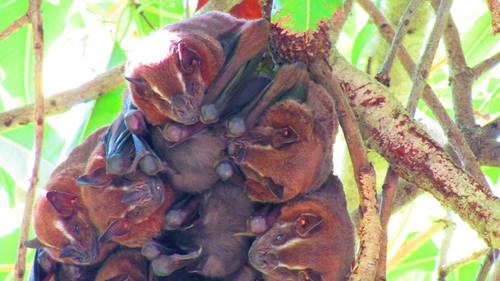
 Great Fruit-eating Bat
Artibeus lituratus

Wagner's moustached bat
Pteronotus personatus

 Seba's Short-tailed Bat
Carollia perspicillata

Vampire Bat
Desmodus rotundus

Yellow-throated Big-eared Bat
Lampronycteris brachyotis

Jamaican Fruit-eating Bat
Artibeus jamaicensis
Global Distribution
Warmer areas are where this animal is recorded most often.
Parks Where Found
| # | Park | Country | Daily sighting probability |
|---|---|---|---|
| 1 | Santa Rosa National Park | 🇨🇷 Costa Rica |
More parks will be added in future updates.