



Sudan Plated Lizard
Broadleysaurus major
Silhouette: Beth Reinke · PhyloPic
- KingdomAnimalia (Animals)
- PhylumChordata (Chordates)
- ClassSquamata
- FamilyGerrhosauridae (Plated Lizards)
- GenusBroadleysaurus
- SpeciesBroadleysaurus major (Sudan Plated Lizard)
About the Sudan Plated Lizard
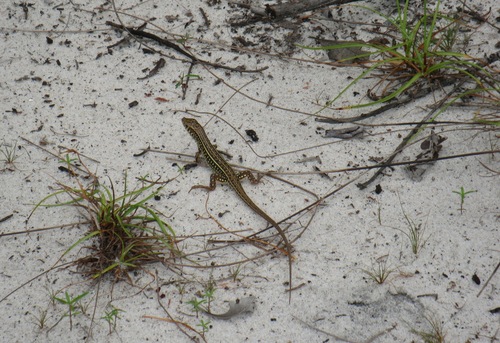
The Sudan plated lizard (Broadleysaurus major), also known as the western plated lizard, great plated lizard, or Broadley's rough-scaled plated lizard, is a medium-sized, diurnal African lizard. The Sudan plated lizard is a medium-sized lizard that can grow up to 20–24 inches (51–61 cm) long, with the tail being less than half of total length. They have stout bodies, short limbs, and moderately broad tails.
This species is easily recognised by its heavily armored appearance. The body and tail is covered in transverse bands of more or less square plate-like keeled scales, and head shields are fused to the skull. The armour makes the animals look a bit like the uncommon perception of Mesozoic reptiles.
Coloration varies from tawny to grayish brown to dark brown with cream-colored spots or striping, with a pale underside. Males tend to be larger than females, and can develop bright-colored throats during breeding season.
The Sudan plated lizard can be found in parts of eastern and central Africa, including the countries Tanzania (including the island archipelago of Zanzibar), Kenya and Mozambique. They prefer rocky, semi-open areas within coastal woodland... Wikipedia →
Recent sightings of Sudan Plated Lizard in Tarangire National Park
LIVEiNaturalistClosest Relatives at Tarangire National Park

Global Distribution
Warmer areas are where this animal is recorded most often.
Parks Where Found
| # | Park | Country | Daily sighting probability |
|---|---|---|---|
| 1 | Tarangire National Park | 🇹🇿 Tanzania | |
| 2 | Tsavo East National Park | 🇰🇪 Kenya | |
| 3 | Samburu National Reserve | 🇰🇪 Kenya | |
| 4 | Kruger National Park | 🇿🇦 South Africa | |
| 5 | Liwonde National Park | 🇲🇼 Malawi | |
| 6 | Selous Game Reserve | 🇹🇿 Tanzania | |
| 7 | Meru National Park | 🇰🇪 Kenya | |
| 8 | Ruaha National Park | 🇹🇿 Tanzania | |
| 9 | Gonarezhou National Park | 🇿🇼 Zimbabwe | |
| 10 | Murchison Falls National Park | 🇺🇬 Uganda | |
| 11 | Tsavo West National Park | 🇰🇪 Kenya | |
| 12 | Gorongosa National Park | 🇲🇿 Mozambique | |
| 13 | Mkomazi National Park | 🇹🇿 Tanzania | |
| 14 | Hwange National Park | 🇿🇼 Zimbabwe | |
| 15 | Ngorongoro Conservation Area | 🇹🇿 Tanzania |
Quick answers
What are the chances of seeing a Sudan Plated Lizard in Tarangire National Park?
About 20% of wildlife watchers report a Sudan Plated Lizard sighting in Tarangire National Park, based on 14 verified sightings from GBIF citizen-science data.
When is the best time to see Sudan Plated Lizard in Tarangire National Park?
March has the highest sighting rate for Sudan Plated Lizard in Tarangire National Park in our monthly data.